
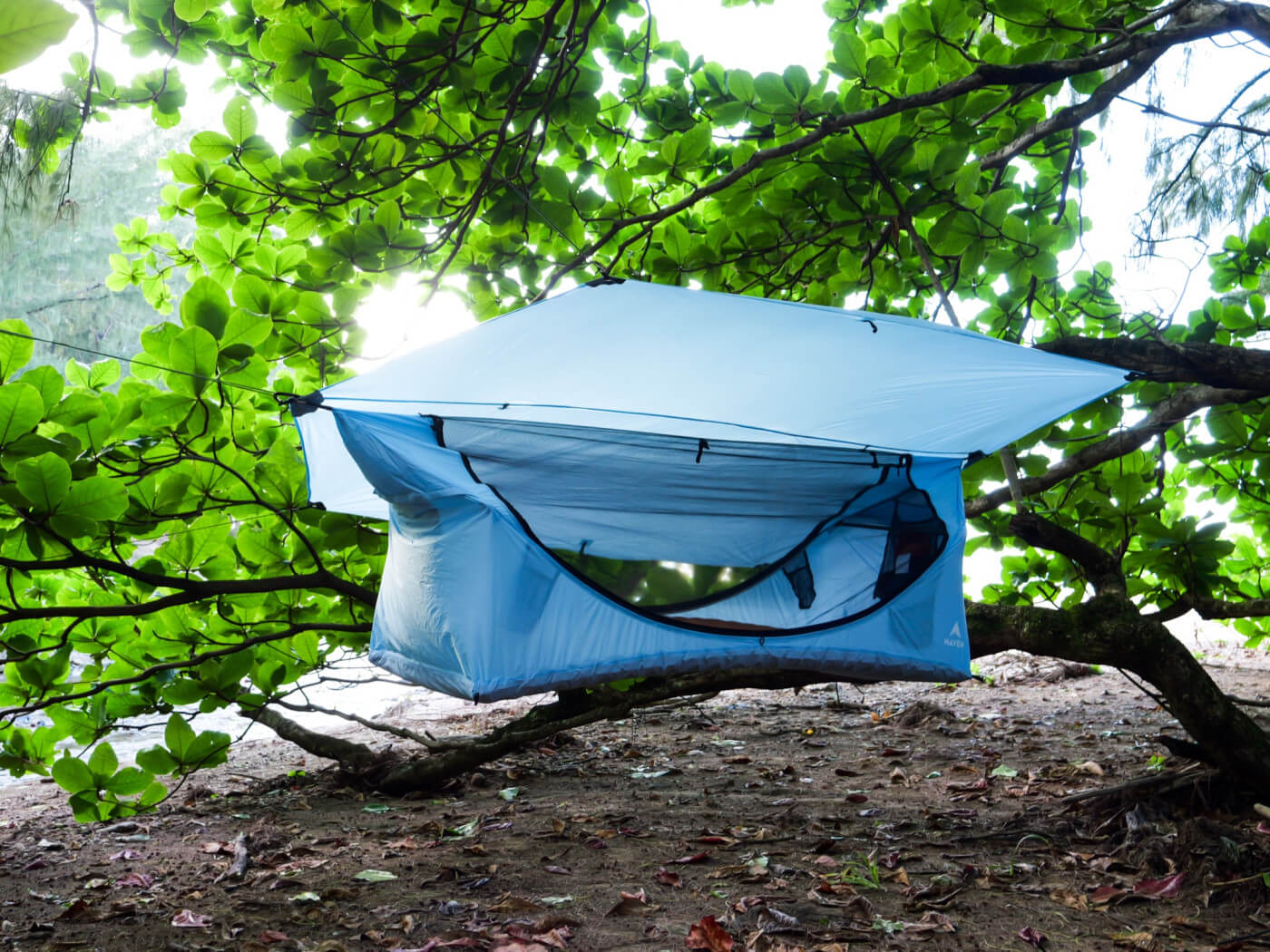
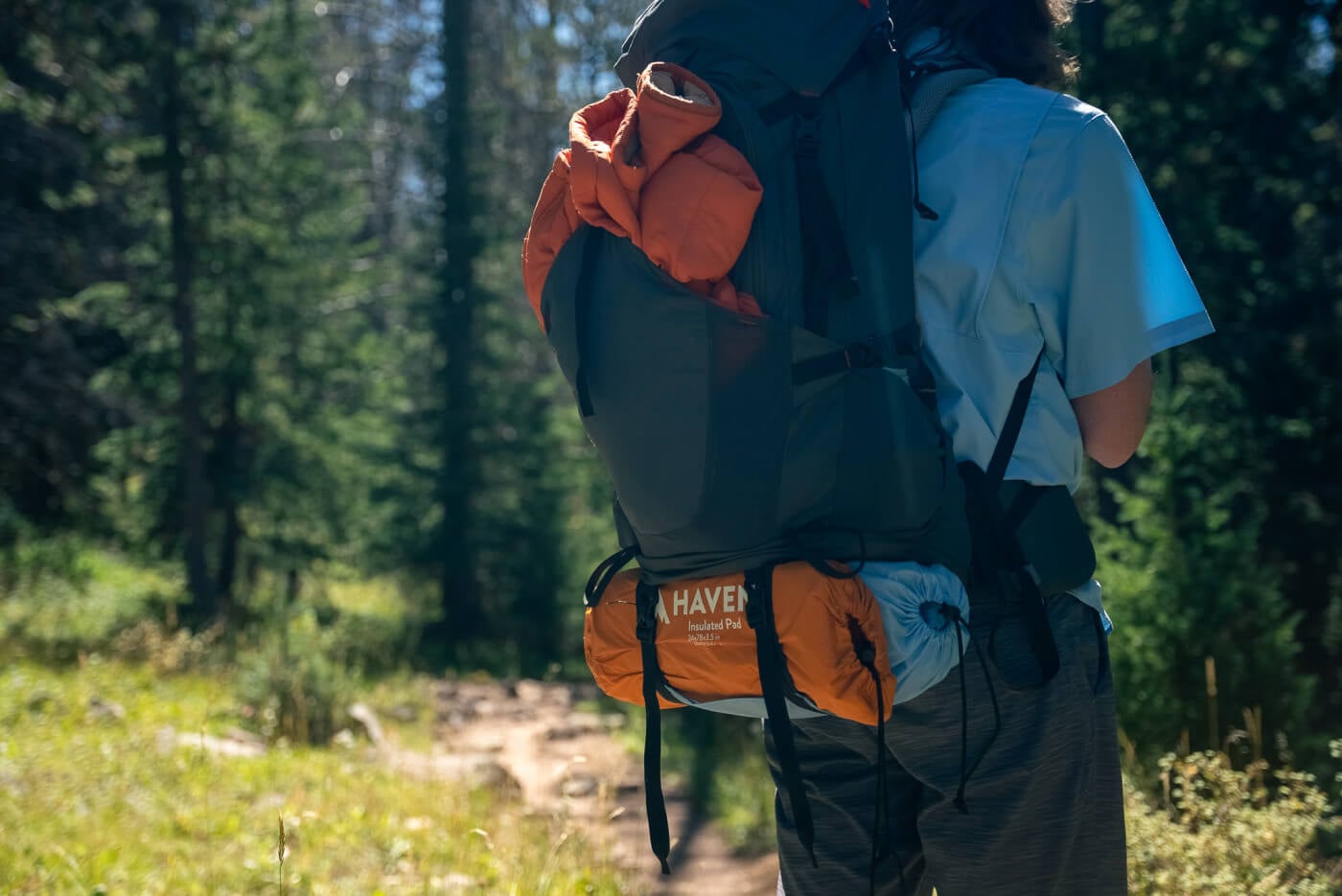
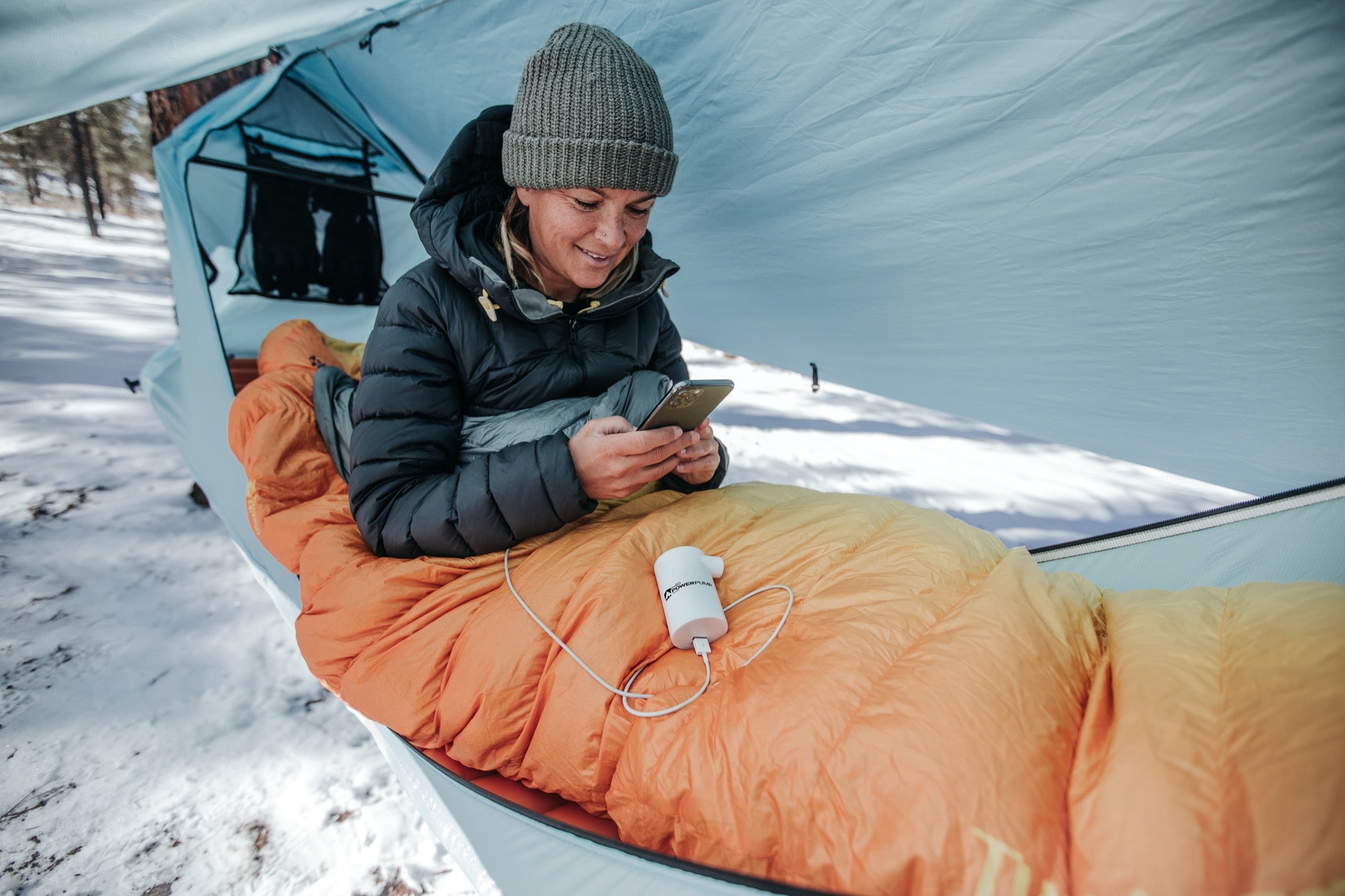
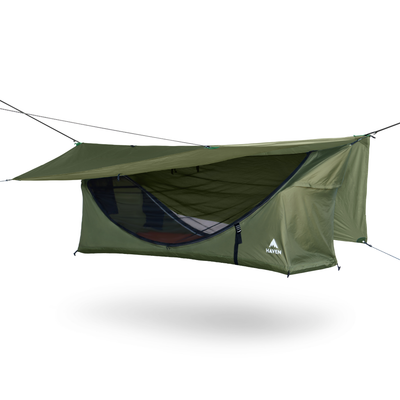
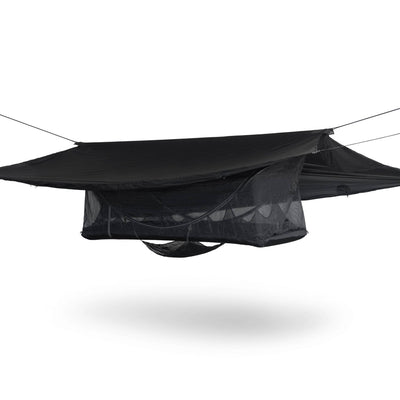
Can you use a Haven for backpacking? Yes. For the lightest kit, choose the Haven Spectre, which comes with an R2.5 pad and a Dyneema or Silpoly rainfly. The Haven Tent and Haven XL work too if you accept a bit more weight. A Haven is for backpackers who make sleep a priority.
Each product page lists the current kit weights; compare them with your tent plus sleeping pad, or your full hammock kit with underquilt, not with a shelter on its own. A Haven won't beat an ultralight 1-person shelter and a thin pad on weight.
From the start, our focus has been sleep quality. We designed the Haven to be the most comfortable way we know to sleep outside. It isn't the lightest or most compact option, but here's how it can earn its place in your pack.
My background
Before developing the Haven Tent, I was drifting further and further into a UL (ultralight) obsession. Maybe you're there now... counting ounces and cutting your toothbrush in half. A pound on your feet is worth five on your back and all that.
Over time, my sleep system evolved into a lightweight rainfly, a stretch of paracord and a thin air mattress. I'd start each hike bragging about my minimal system to anyone who would listen, and probably mention it a few more times on the trail.
At camp, I'd find a couple of trees or bushes, string my line across and make my A-frame shelter. I went to bed beaming with ultralight pride and inevitably woke up at 3 am completely miserable. Wind would be whipping through the A-frame, or I had slid off my pad, or the rock in my back was finally winning. Probably all of the above.
I still loved camping, but I thought a miserable night was just par for the course.
A better way to sleep outside
Frustrated with restless nights, I decided there had to be a better way to sleep in the backcountry.
On the ground, you deal with uneven terrain, sliding off the pad, rocks or roots in your back, and crawling in and out on tired knees. Hammocks were never an option for me, because I hated being wrapped up and bent like a banana. Even asymmetric and bridge hammocks felt a long way from the flat, open bed I sleep on at home.
Rounds of prototyping and trial and error led to the Haven Tent you see today. You can read about its development in Life Before Haven, but this post is about whether it's a practical system for backpacking. So let's skip to that.
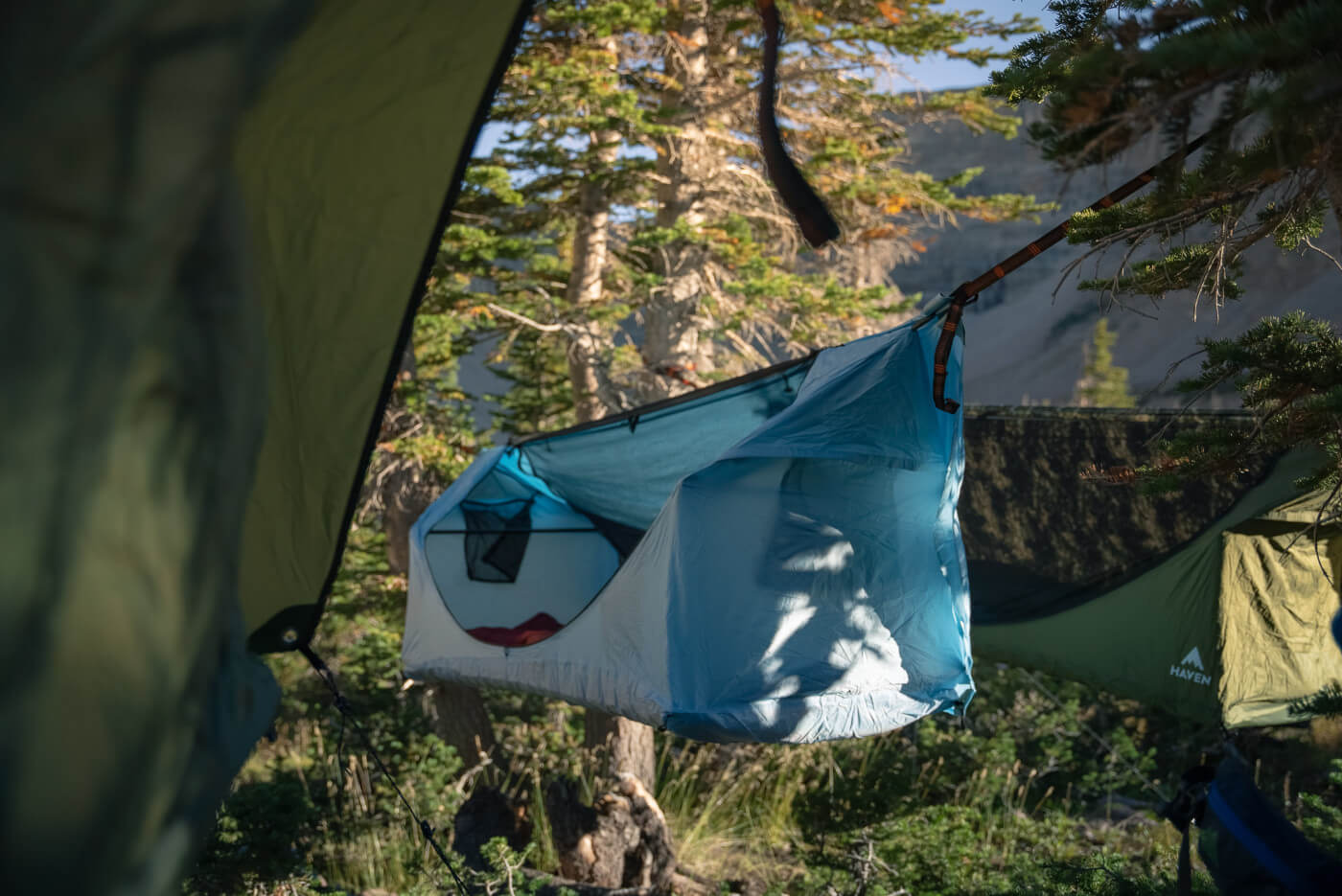
Comparing weights fairly
The biggest mistake I see is people comparing the weight of our whole system with the weight of their tent or hammock alone. A Haven kit includes the hammock body, insulated air mattress, bug net, rainfly, tree straps, guylines and stakes.
So compare a Haven with your tent and sleeping pad, or with your entire hammock kit (hammock, underquilt, rainfly, bug net, suspension and guylines). When you add it all up, the Haven starts looking better and better. Even so, it usually ends up heavier than an ultralight tent and a minimal pad. Those tents can use lighter, more delicate fabrics because they only span above you; our hammock has to hold you, and your stuff, in the air.
Here is how the three backpacking-friendly models compare:
| Model | Platform | Pad | Best for |
|---|---|---|---|
| Haven Spectre | 30 x 80 in | Spectre pad (R2.5) | Our lightest kit, built for backpacking |
| Haven Tent | 24 x 78 in | Premium pad (R5) | Smaller to average builds who want the more compact original |
| Haven XL | 30 x 80 in | True Level pad | Bigger frames and taller campers who accept more weight |
Each product page has an "All weights" tab with trail and packaged weights for every configuration. Weights change as we update materials, so treat the product page as the source of truth.
Haven Spectre: built for backpacking
Since I first wrote this post, we built the Haven Spectre specifically for backpackers. It has the same 30 x 80 in platform as the XL, a mesh hammock body, carbon fiber spreader bars and 12 ft tree straps, with a choice of Silpoly or Dyneema rainfly. The mesh body isn't waterproof, so the rainfly does that job. The full story is in Ultralight Backpacking: Haven Spectre Has Entered the Chat, and you can browse other trail gear in our backpacking collection.
Above treeline: bivy mode
No trees? Every Haven pitches on the ground in bivy mode, using trekking poles or sturdy sticks to hold up the rainfly. The bug net, pockets and spreader bars all work as usual. You give up the ground clearance in bivy mode, so pick a flat, well-drained spot. If you'll be above treeline most nights, a ground tent may suit you better (see Hammock Tent vs Ground Tent).
Ways to lighten the load
I've used each of these on my own backpacking trips:
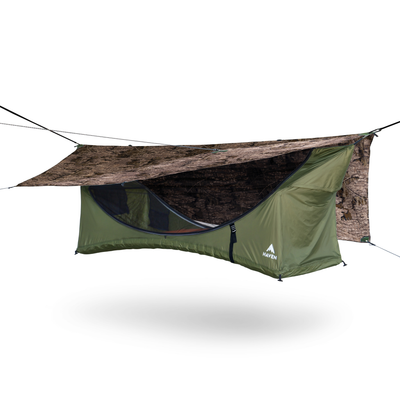
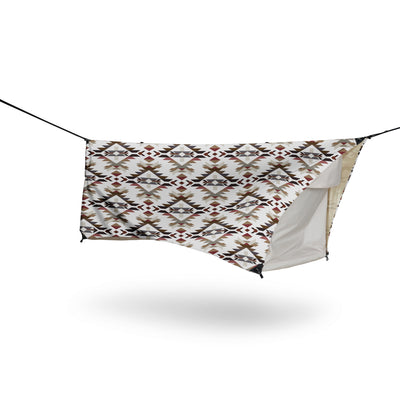
- Choose the lighter rainfly. The Haven Tent and Haven XL rainflies are now lightweight 20d ripstop nylon. On the Spectre, the Dyneema rainfly is the lightest option.
- Leave non-essentials behind. You may not need all four guylines and stakes: lock down three corners of the rainfly and use one guyline for ventilation. The spreader bars increase the interior space but don't create the flat lay, so you can leave the foot-end bar at home and bring only the head-end bar.
- Upgrade the spreader bars. Carbon fiber spreader bars are about 45% lighter than the standard aluminum bars (3.6 oz for the standard-size pair).
- Upgrade the carabiners. Our ultralight carabiners trim a little more weight.
Make sleep your priority
A Haven is a comfortable, practical sleep system for backpacking. It isn't the lightest option, but for many of us a flat bed off the ground is worth the extra weight. With the right model and a few changes, you can bring it closer to your target pack weight. If you value a good night's sleep and want to enjoy the outdoors in comfort, it's worth considering for your next trip. More answers are in our outdoor sleep systems FAQ. Weighing a Haven against a bridge hammock or the Amok Draumr? See Haven vs Warbonnet and Amok.
And the best part... you still get to brag about your sleep system. Just let the snores do the talking Zzz
Derek Tillotson
Haven Tents Founder
Comments (0)
No comments yet — be the first!
Leave a Comment