
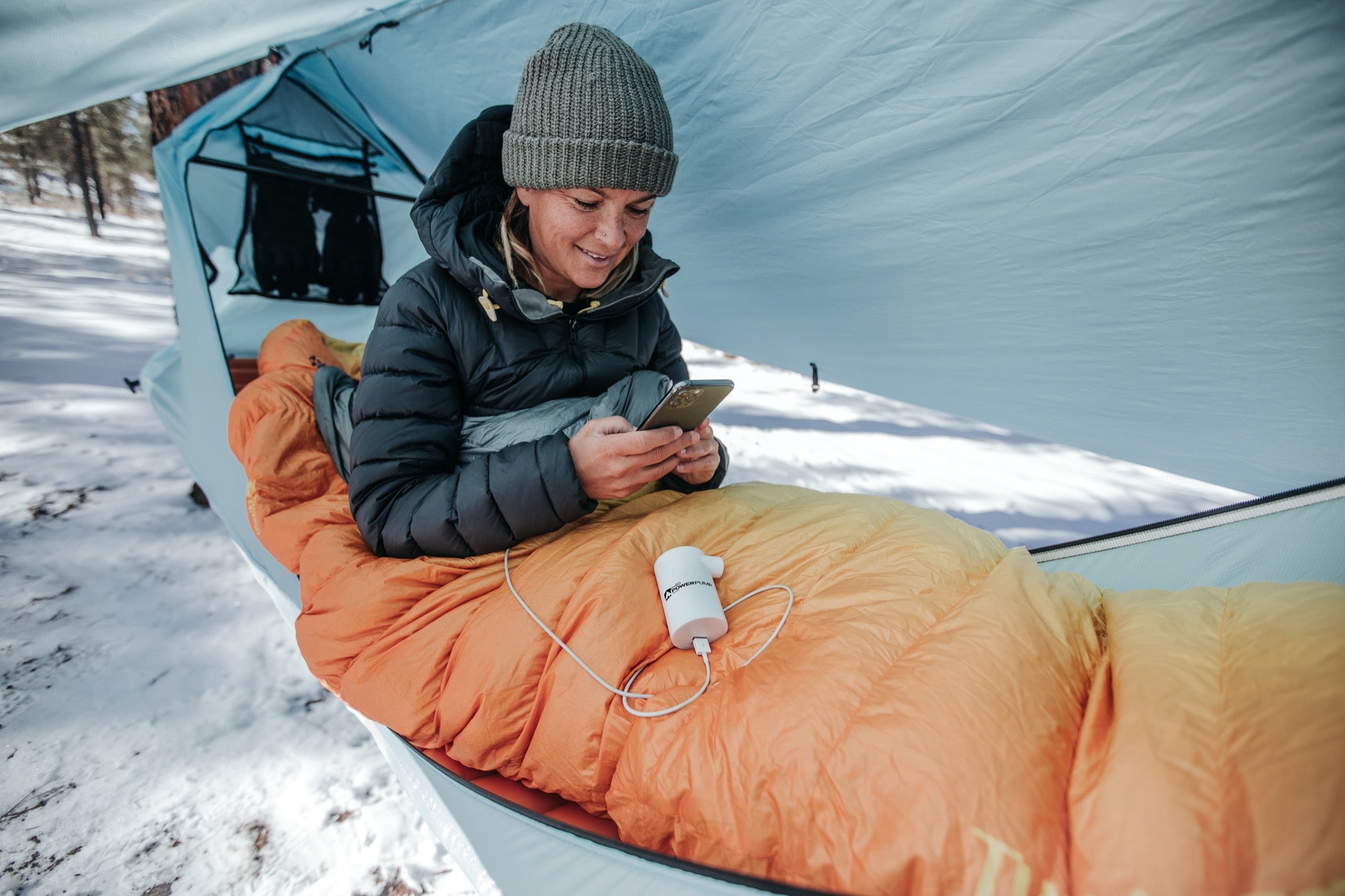
What is the best backpacking sleep system? There is no single best one. A backpacking sleep system is your shelter, what is under you (a pad or a hammock), what is over you (a bag or quilt) and a pillow, chosen together for the coldest night you expect, how you sleep and how much weight you will carry.
Two rules hold on any trip: what is under you decides more of your night than what is over you, and you should compare the full carried weight of a system, not the shelter alone.
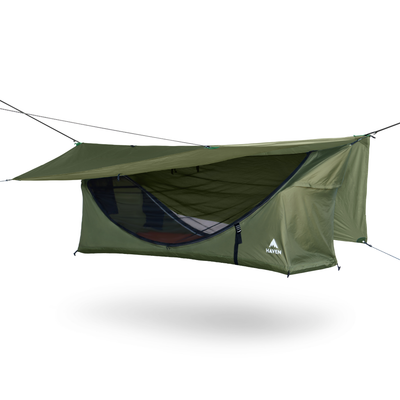
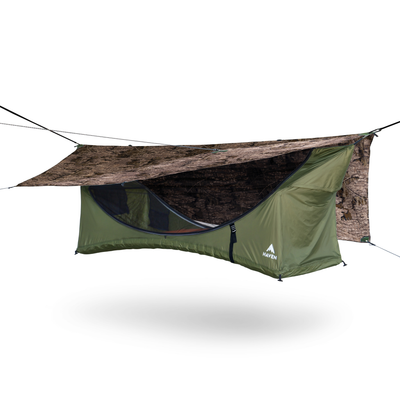
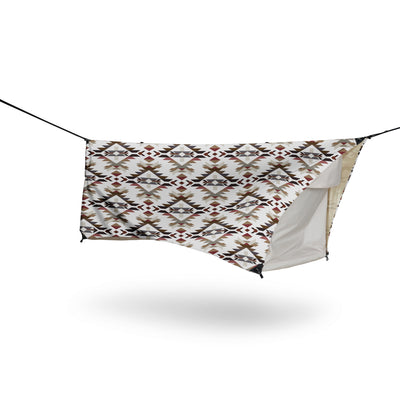
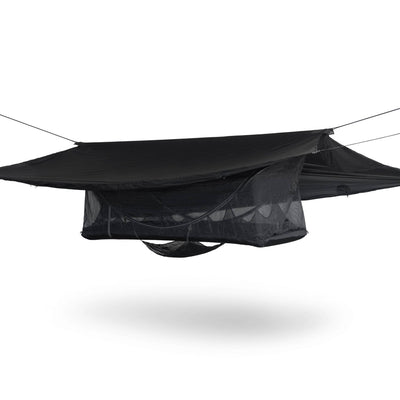
Our pick: For most backpackers, a light tent, an insulated air pad matched to the season and a quilt or bag rated for the coldest night is the most versatile system. If the ground is what keeps you awake and your routes have trees, the Haven Spectre lay-flat hammock tent puts the shelter, bug net, rainfly and insulated pad in one kit. Do not buy a Haven if you want the lowest possible pack weight, camp mostly above treeline, want to share one bed with a partner or need one shelter for a family. Every Haven sleeps one person and needs two anchor points (trees, a stand or a hitch mount) or ground bivy mode.
What is the best backpacking sleep system?
The best backpacking sleep system is the one whose four parts all match your trip: a shelter for the weather, enough insulation under you for the coldest night, a bag or quilt rated for that night, and a pillow. Choose in this order: conditions (coldest night, weather, trees, solo or sharing), then what is under you, what is over you, the shelter, and last the total weight.
Backpacking sleep systems compared
| System | Sleep comfort | Carried weight | Where it works | Best for |
|---|---|---|---|---|
| Ultralight ground: tarp or trekking-pole shelter, thin pad, quilt | Firm; depends on a good site | Lightest | Any flat spot, including above treeline | Back sleepers who want the lowest base weight |
| Lightweight tent, insulated air pad, quilt or bag | Good for back sleepers; side sleepers need a thicker pad | Light to moderate | Any flat, clear spot | Most three-season trips |
| Comfort-first ground: roomier tent, wide thick pad, pillow | Best on the ground; needs a level site | Heavier and bulkier | Any flat, clear spot | Side and restless sleepers; couples |
| Gathered-end hammock, tarp, underquilt | You lie in a curve | Light in summer; close to a tent and pad once insulated | Two trees | Back sleepers who like to hang |
| Lay-flat hammock tent (Haven Spectre) | Flat insulated pad, off the ground; back, side or stomach | Lightest kit 4 lb 5 oz / 1953 g with shelter, bug net, rainfly and pad; heavier than an ultralight ground setup | Two trees, or the ground in bivy mode; one person only | Side and stomach sleepers on wooded routes whose problem is the ground |
Start with the pad: foam, self-inflating or air
Your bag or quilt is crushed flat where you lie on it, so the pad does the insulating underneath you.
- Closed-cell foam: light, bulky and cannot puncture. Thin and firm, so it suits back sleepers.
- Self-inflating: foam inside an air shell. Stable and quiet, but heavier and bulkier for its thickness.
- Air pad: the thickest cushion for the pack space, and the usual choice for side sleepers. It can puncture, and an uninsulated one sleeps cold.
R-value measures how well a pad resists heat loss, and higher is warmer. As a rule of thumb, around R2 suits warm summer nights, R3 to R4 suits three-season trips and R5 or more suits nights below freezing. R-values add up when you stack pads, so a foam pad under an air pad adds warmth. More in What Is an Outdoor Sleep System.
Quilt or sleeping bag?
Neither is better for everyone. A quilt leaves out the insulation under you, which your weight would crush anyway, so it is lighter and easier to move in. It suits side sleepers, restless sleepers and three-season nights, but it can let drafts in at the edges. A mummy bag closes around you with a hood, so it is the simpler choice for cold nights and cold sleepers. Choose either by its comfort rating, at or below the coldest night you expect.
What's the best lightweight sleep system for backpacking?
The lightest practical backpacking sleep system is a one-person tarp or trekking-pole shelter, a pad with just enough R-value for the season and a quilt instead of a full bag. That assumes one person, three-season nights and ground that holds stakes. It changes when:
- It gets colder: add pad R-value before a warmer quilt.
- It is wet or buggy: a double-wall tent or a full bug net earns its weight.
- There are two of you: one shared two-person tent often weighs less per person than two solo shelters.
Compare whole systems: a shelter weight means little without the pad that goes inside it. The Haven Spectre's lightest kit is 4 lb 5 oz / 1953 g (Dyneema rainfly, R2.5 pad for warmer trips), and that figure already includes the shelter, bug net, rainfly and insulated pad. Set it against a tent plus a pad, not a tent alone. The product page states the limit plainly: "If you want the lowest possible base weight or often camp above treeline, an ultralight ground shelter will be lighter." See Haven Tent for Backpacking.
What's the best backpacking sleep system when comfort matters more than saving every ounce?
When comfort matters more than saving every ounce, spend the extra weight under you first: a wider, thicker insulated pad, then a roomier quilt or bag and a real pillow.
- Thickness. On your side, your weight rests on one hip and one shoulder, and a thin pad lets them press through to the ground. If your hip touches the floor when you lie on your side at home, the pad is too thin.
- Width. A regular pad is about 20 in wide and a wide pad about 25 in. On a regular pad your elbows hang off when you lie on your back, and restless sleepers roll off the edge. A rectangular pad also leaves more room for your feet than a tapered one.
- Pillow. Side sleepers need more height than back sleepers. An inflatable pillow beats a stuff sack of clothes.
If a thick, wide pad still leaves you sore, the ground itself may be the problem. A lay-flat hammock tent holds an insulated pad flat in the air, so rocks, roots and slope stop mattering. See Hammocking for Side Sleepers.
What's the most comfortable backpacking tent that is still lightweight?
The most comfortable backpacking tent that is still lightweight is usually a double-wall, freestanding or semi-freestanding tent with a rectangular floor, steep walls, and a door and vestibule for each sleeper. Trekking-pole shelters are lighter, but they take more care to pitch, and single-wall versions collect more condensation. Compare tents on these:
- Floor: length, and width at both the head and the foot. Tapered floors cost foot room.
- Walls: steep walls let you sit up without brushing wet fabric.
- Doors and vestibules: one each means nobody climbs over anybody, and packs stay dry outside.
- Weight per person, counted with the pads.
A solo hiker in a two-person tent has room for a wide pad and gear. A tent adds living space, though, not sleeping comfort. If you sleep badly on a pad, a roomier tent will not change that (see Hammock Tent vs Ground Tent).
What's the best backpacking tent and sleeping pad combination for comfort?
The most comfortable backpacking tent and sleeping pad combination is one where the pads fit the floor: choose the pad for your sleep position and the season first, then pick a tent whose floor is wider than your pads at both the head and the foot. Check the fit before you buy:
- Add up your pad widths. Two regular pads need about 40 in. Two wide pads need about 50 in.
- Compare that with the floor width at the head and at the foot. Many two-person backpacking tent floors are narrower than 50 in or taper toward the feet, so two wide pads often do not fit.
- Count the sleepers. One person with a wide pad in a two-person tent is roomy. Two people usually means two regular pads. For two wide pads, look for a wider floor or a three-person tent.
How can I sleep better on backpacking trips?
You sleep better on backpacking trips by fixing what is under you first, then going to bed warm, on a level and sheltered site, with a few small comforts.
- Pick the site carefully. Look for level ground clear of rocks and roots, out of the wind and out of low hollows where cold air settles.
- Eat and warm up before bed. Your bag only holds in the heat you bring to it. Have a snack and a short walk so you get in warm.
- Sleep in dry layers and top off your pad at bedtime. It softens as the air inside cools.
- Ventilate. An open vent or door cuts condensation.
- Pack earplugs and a real pillow.
Then fix the symptom. Cold from below: more pad R-value. Sore hips or shoulders: a thicker, wider pad, or a flat bed off the ground. More in How to Stop Waking Up Sore After Sleeping in a Tent.
Which should you choose?
- Lowest base weight, or mostly above treeline: an ultralight ground shelter, a minimal pad and a quilt.
- Most three-season backpackers: a lightweight double-wall tent, an insulated air pad around R3 to R4, and a quilt or bag.
- Side or restless sleeper who does fine on a good pad: the same tent with a wide, thick insulated pad and a real pillow.
- Couple who want to sleep side by side: a two-person tent with a floor that fits both pads.
- Side or stomach sleeper on wooded routes who still wakes up sore: the Haven Spectre. It sleeps one and needs two trees or bivy mode.
Related guides: How to Choose a Camping Tent, Sleeping Pad Keeps Deflating? Better Options.
Common questions
What R-value sleeping pad do I need for backpacking?
As a rule of thumb, around R2 for warm summer nights, R3 to R4 for three-season trips and R5 or more below freezing.
Will two wide sleeping pads fit in a two-person backpacking tent?
Often not. Two wide pads need about 50 in of floor width at the head and the foot, and many two-person backpacking floors are narrower or tapered.
How does the Haven Spectre's weight compare with a tent and pad?
The Spectre's lightest kit is 4 lb 5 oz / 1953 g and packs to 15 x 6 x 6 in (38 x 15 x 15 cm). That includes the insulated pad, so compare it with a tent plus a pad. An ultralight ground shelter with a thin pad will be lighter. See Haven vs Ground Tents.
Can you use a hammock tent where there are no trees?
Yes, as a backup. A Haven pitches on the ground in bivy mode with trekking poles or sticks. If most of your camps are treeless, a ground tent is the better choice.
Can couples share a backpacking sleep system?
Partly. Two people can share a two-person tent and a double quilt, but usually carry a pad each. Every Haven sleeps one person, so couples hang two side by side.
Comments (0)
No comments yet — be the first!
Leave a Comment