How do you manage condensation while camping? Keep air moving. Condensation forms when warm, moist air from your breath meets the cooler surface of the rainfly, so the fix is ventilation: open the ends, guy the rainfly out rather than locking both sides down, and on cold nights guy out the downwind side so moisture can escape while you stay sheltered from the wind. Some condensation is normal in humid or cold weather, and it is almost never a leak.
"Is my rainfly leaking?!" No, it's probably your own breath dripping down on you 😳
Condensation happens in every tent. If you're breathing in a small space all night, the moisture you exhale has to go somewhere, and on a cool night the temperature difference makes things even steamier.
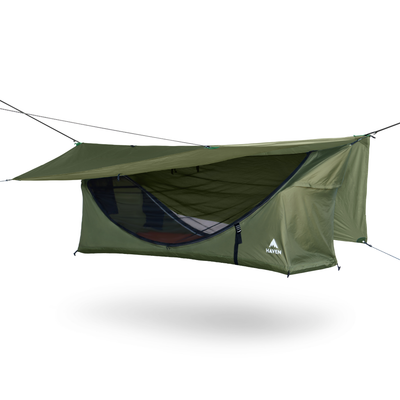
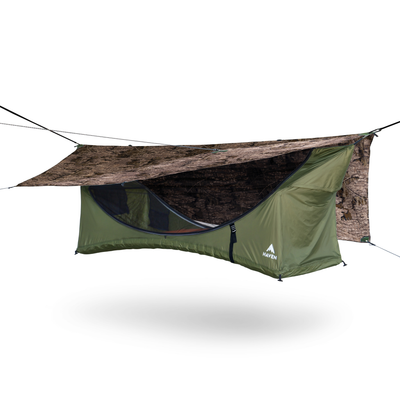
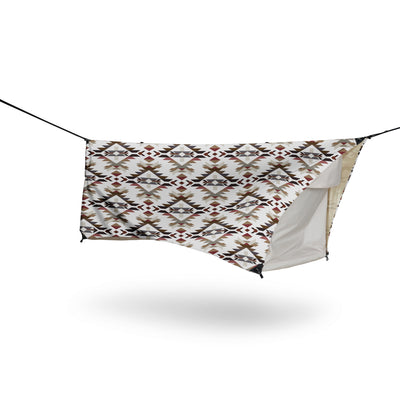
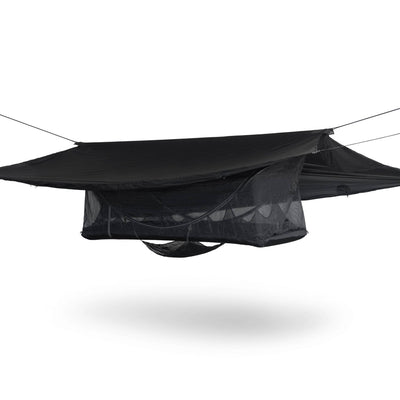
People ask us about condensation, so I want to share how the Haven tent body and rainfly can work together to keep it down. Our goal is to Make sleep the highlight of camping™, and staying dry is a big part of that.
It's all about airflow
If you lock both sides of the fly down, you're protected from wind and rain, but you also make it much harder for moist air to escape.
On summer nights I can usually get away with locking down both sides of the fly, or using the side loops to hold it in place. The vents at the head and foot ends seem to work well enough to keep condensation down in warm weather. In my experience, cooler nights are when condensation becomes more of an issue.
The simple fix: guy it out
The further you guy out the rainfly, the more air moves through the tent. In winter it's a bit of a give and take: guy out too far and you'll be colder than you need to be; not far enough and you may get condensation.
I balance this by guying out only one side: the leeward (downwind) side of the rainfly. The video below shows how. In cold weather you want the condensation that collects at the top of the rainfly to run down the inside of the fly and away from you. In the video you can see I actually had an icicle grow on the rainfly hook, the low point of the fly.
When you guy out the rainfly, use the guylines with sliding tensioners rather than putting horizontal tension on the corner toggles or grommets, which aren't made to take it (using the guylines).
Quick checklist
Open the zippers or go to "porch mode" when the weather allows.
Guy out the downwind side on cold nights.
Avoid breathing directly onto the rainfly.
In humid weather, expect some condensation and let your pad and quilt keep you comfortable.
Still think it's leaking? Try the water test in our setup guide.
The Haven Tent is a tool, and like any tool there's a bit of a learning curve. I hope you can learn from my experience, and share your own if you have any insights. We love hearing your feedback and suggestions. Together we're making the Haven Tent better as a community.



Comments (0)
No comments yet — be the first!
Leave a Comment