



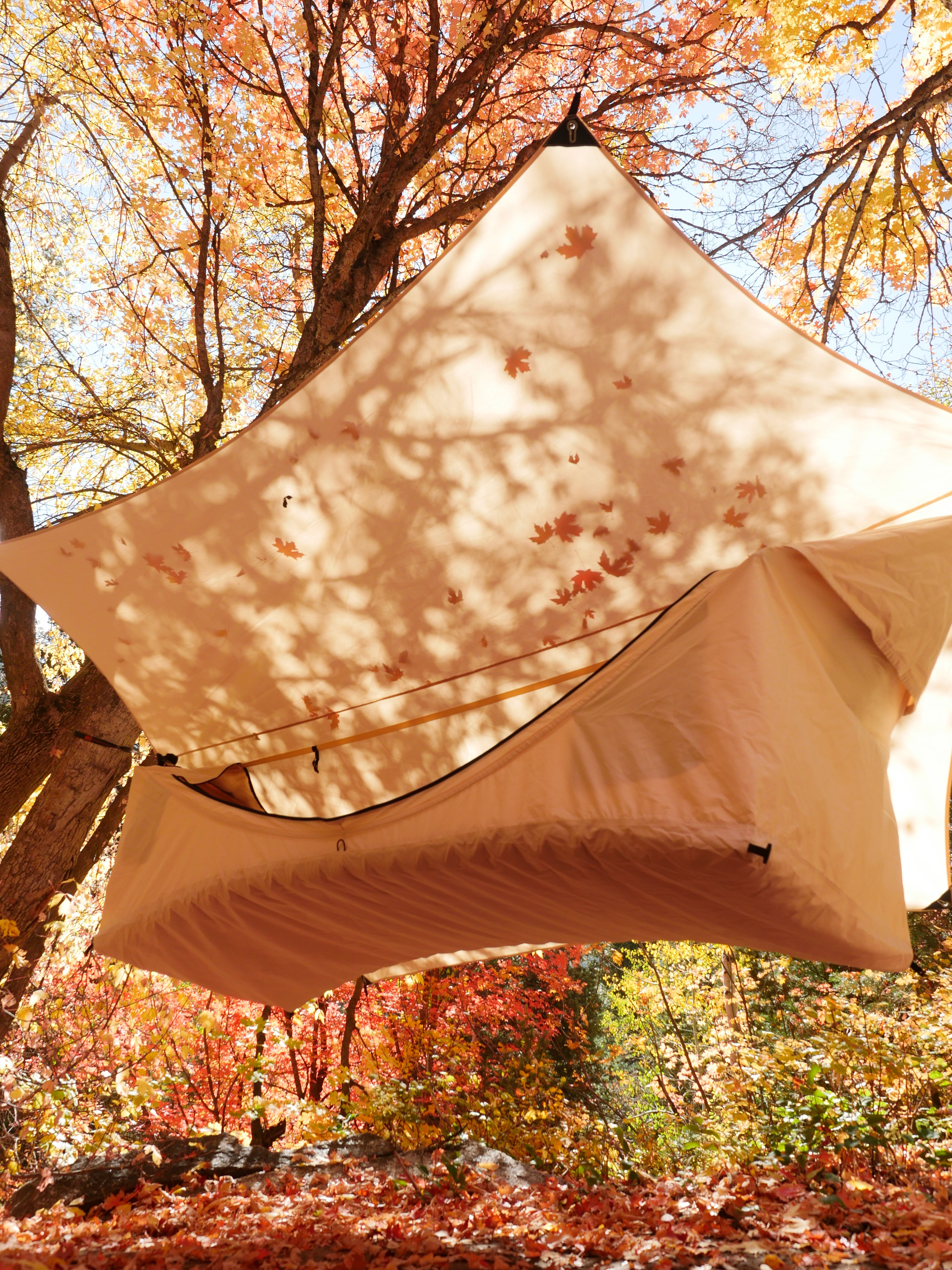
Hammock, cot or sleeping pad: which is most comfortable for camping? It depends on how you sleep and how you camp. A pad in a tent is simplest, a cot is flat but bulky, and a traditional hammock curves you into a banana shape. A lay-flat hammock tent gives you a cot's flat surface, hung off the ground.
A thick sleeping pad in a tent packs the smallest, but you feel the ground under it and side sleepers often get sore hips. A cot gets you off the ground and onto a flat surface, but it's cold underneath without a pad and best suited to car camping. A traditional hammock is light and keeps you off rocks and roots, but many people, especially side and stomach sleepers, can't sleep in its banana curve. The cost of a lay-flat hammock tent is needing two anchor points and carrying more weight than a bare hammock. Weighing up hammock camping against tent camping in general? Jump to Hammock camping vs tent camping. Comparing a tent cot with a hammock tent? Jump to Tent cot vs hammock tent.
Our pick: If you sleep on your side or stomach, or wake up sore on a pad, a lay-flat hammock tent is the most comfortable of the four. It's the only one that gives you a flat, insulated bed off the ground with a bug net and rainfly built in. For car camping or heavier campers, choose the Haven XL or the Haven Safari (rated to 350 lb). For backpacking, choose the Haven Spectre. If you camp with no trees and don't want to carry a stand, or you share one bed with a partner, a thick pad in a tent or a cot is the better choice.
The short answer by how you camp
There's no single most comfortable option. "Most versatile" and "most bed-like" are different prizes, and what's under you matters more than what's over you:
- Car camping at a campground: a cot with a pad on top, or a thick self-inflating or foam mattress on the tent floor. Both feel the most like a bed, and a cot is the easiest to get up from.
- Backpacking: a good insulated pad in a tent is the most versatile, because it works on any clear, flat patch of ground. If your route has trees, a hammock system is the alternative: a traditional hammock for back sleepers, a lay-flat hammock tent for side and stomach sleepers.
- Side or stomach sleeper, or sore on the ground: a lay-flat hammock tent, or a cot with a thick pad if you car camp.
- No trees, above treeline, desert or beach: a tent with a pad, or a cot in a tall tent.
- Cold or exposed sites: a tent with a warm pad is simplest; any off-the-ground bed needs real insulation underneath.
- Couples and families in one shelter: a tent with pads or mattresses. Cots, hammocks and every Haven sleep one person each.
Quick comparison
| Sleeping pad (in a tent) | Camping cot | Traditional hammock | Lay-flat hammock tent | |
|---|---|---|---|---|
| Sleeping surface | Flat, but on the ground | Flat, off the ground | Curved | Flat, off the ground |
| Back sleeping | Good on a thick enough pad | Good; add a pad | Good for many, lying diagonally | Good |
| Side and stomach sleeping | Depends on pad thickness | Usually fine; firm and narrow | Hard for most people | Yes |
| Rocks, roots and slope | You feel them | Needs fairly level ground for the legs | Don't matter | Don't matter when hung |
| Warmth from below | Depends on the pad's R-value | Cold air underneath; add a pad | Needs an underquilt | Insulated pad built in |
| Getting in and out | From the floor | Easiest: sit on the edge and stand | Sit in, then swing your legs up | Sit on the low side wall and lie back |
| Where it works | Almost anywhere flat | Car camping, big tents | Where there are trees | Trees, a stand or hitch mount; or on the ground in bivy mode |
| Packability | Smallest | Bulky | Small (before you add tarp, net and underquilt) | Larger than a bare hammock |
| Shelter included | No, needs a tent | No, needs a tent | No, needs a tarp and bug net | Rainfly and bug net included |
| People per bed | One, or two on a double pad | One | One | One |
Hammock camping vs tent camping: pros and cons
Is hammock camping better than tent camping? Not for everyone. Hammock camping is usually better on uneven, rocky, muddy or sloped ground, and some solo campers find it more comfortable than a pad on the ground. Tent camping works in more places and gives you more space, privacy and weather protection. Which suits you comes down to five things: whether there are trees, how cold it gets, how you sleep, how many people are sharing, and how much setup you're happy with.
| Hammock camping (hammock, tarp, bug net, underquilt) | Tent camping (tent and pad) | |
|---|---|---|
| Ground | Doesn't matter: rocks, roots, mud and slope stay under you | Needs a flat, clear, well-drained patch |
| Anchors | Two healthy trees (or a stand), and rules that allow hanging | None; stakes or freestanding poles |
| Comfort | Traditional: good for back sleepers who lie diagonally. Lay-flat: flat for back, side and stomach | Depends on the pad and the site; flat for every position |
| Rain | A well-pitched tarp keeps you dry | Fly and floor together; better in long storms |
| Wind | More exposed; wind under the hammock strips heat | A low, staked tent blocks more wind |
| Cold | Needs insulation underneath (underquilt or pad) | Needs a pad rated for cold ground |
| Bugs | Needs a bug net; you're off the ground, away from crawling insects | Mesh and a floor keep everything out |
| Privacy and space | Open-sided under a tarp; little room to sit up or change | An enclosed room to change, sit up and wait out weather |
| Gear storage | Under the tarp, on a ridgeline or in a gear sling | Inside the tent or vestibule |
| Partners, kids and dogs | One person per hammock; hang them side by side | Everyone in one shelter |
| Weight and pack size | Depends on the whole kit (see below) | Depends on tent size and pad |
When a hammock makes more sense
- You camp in wooded country with uneven, rocky, rooty or wet ground.
- You camp solo, and you'd rather pick a spot between two trees than search for a flat tent site.
- Warm, humid nights, when air moving around a hammock feels cooler than a stuffy tent.
- You sleep on your back and like a hammock, or you sleep on your side or stomach and choose a lay-flat design.
When a tent is the better choice
- There are no trees: above treeline, desert, open beach, or campgrounds that ban hanging.
- You share a shelter with a partner, kids or a dog.
- Long storms, strong wind or cold, exposed sites, where a low, enclosed shelter is simpler.
- You want room to change clothes, sit up, play cards or keep your gear inside with you.
- You already sleep well on a pad.
Are hammocks lighter than tents?
Not automatically. A bare hammock is light and packs small, but for an overnight you also need straps, a tarp, a bug net and an underquilt or pad. Add those up and a complete hammock kit often lands close to a one-person tent and pad, and a cold-weather kit with a warm underquilt can be bulkier. Compare complete sleep systems, not just the shelter. A lay-flat hammock tent like the Haven includes the pad, bug net and rainfly; current kit weights for each model are on the Haven Spectre, Haven Tent and Haven XL product pages. For the backpacking angle, see Hammock Tent vs Ground Tent.
Weather: rain, wind and cold are three different questions
"Tents are better in bad weather" mixes three things together. Rain: a hammock under a well-pitched tarp or rainfly stays dry, and you're not lying on a floor that can sit in a puddle; in a long, wind-driven storm a tent's fly and floor are easier. Wind: a hammock is more exposed, and wind under it pulls heat away fast; pitch the tarp low on the windward side or pick a sheltered spot. Cold: neither is warm without insulation underneath. A hammock needs an underquilt or an insulated pad; a tent needs a pad rated for the ground temperature. More in How to Hammock Camp in the Cold.
Check the rules and the trees before you hang
Some campgrounds and parks don't allow anything attached to trees, some require every shelter on the tent pad, and rules differ between front-country and backcountry sites. Ask the host or check the park's website first. Use wide tree straps, never rope or wire, and only hang from healthy, living trees. A Haven hangs best between two trees about 12 to 15 ft apart; where you can't hang, it goes on a stand, a hitch mount, or the ground in bivy mode. See Using a Hammock Tent at Campgrounds.
Sleeping pads
A pad inside a tent is what most people start with. It's light, packs small and works on almost any flat patch of ground. Comfort depends on the pad: thicker pads spread your weight better, and the R-value tells you how well it insulates you from the cold ground.
The trade-off is that you're still on the ground. Rocks, roots and slope come through, and side sleepers concentrate their weight on a hip and a shoulder. If you've ever spent the night turning over, that's why (more in How to Stop Waking Up Sore After Sleeping in a Tent).
Width matters as much as thickness. Standard pads are about 20 in wide; wide versions are about 25 in. If you sleep with your knees bent, roll around, or keep sliding off at night, a wider pad is often a bigger upgrade than a thicker one. To check thickness, lie on your side and slide a hand under your hip. If you can feel the ground, the pad is too thin or too soft for you.
Best for: backpackers counting weight, back sleepers, and anyone camping where there's flat, clear ground.
Thick self-inflating mattresses, foam and air beds
If you car camp and want "more comfortable than a pad" without leaving the tent floor, there are two bigger options:
- Thick self-inflating or foam camping mattresses combine foam with air, so they're cushioned, stable and insulated. They're heavy and bulky, which makes them a car-camping item, but on level ground they're kind to hips and shoulders and don't need a cot.
- Standard air mattresses feel soft and roomy, but the large uninsulated air chambers sleep cold on cool nights, and they tend to feel softer as the air inside cools. Put an insulated pad or blanket under you, and keep a pump handy.
Softness isn't the same as warmth or support. A pillowy air bed can still leave you cold and sinking at the hips; a firmer, insulated mattress usually sleeps better through a whole night.
Camping cots
A cot gets you off the ground onto a flat, taut surface, so rocks and roots no longer matter. Many people find them easier to get in and out of than a pad on the floor.
Cots have their own trade-offs. They're bulky and heavy, so they're mostly for car camping. Air moves underneath, so on cool nights you still want a pad on top. The fabric surface is firm and often narrow, and the legs need fairly level ground or the cot rocks. You also need a tent tall and big enough to fit one.
Will a cot fit your tent? Cots typically sit somewhere between about 7 and 19 in off the ground. Measure the cot's length and width against the tent floor, then check the headroom: sloped walls lose height quickly, and sitting up on a tall cot with a pad on top can put your head in the wall. Cabin-style tents with near-vertical walls fit cots best.
Why a cot with a pad beats either one alone
Each layer does a different job. The cot gives you elevation, a flat base that ignores the ground, and a seat-height edge to stand up from. The pad adds the cushioning a taut cot lacks, softens the frame rails, and supplies the insulation that the moving air under a cot takes away. Together they're the most bed-like car-camping setup for many people, especially anyone who finds getting up from the floor hard.
Best for: car campers with room in the vehicle and a big tent.
Traditional hammocks
A gathered-end hammock is light, packs small and keeps you off the ground entirely, so terrain stops mattering. With a tarp, bug net and underquilt, it's a full shelter.
The catch is the shape. A traditional hammock curves you into a banana, and many people can't sleep that way all night, especially side and stomach sleepers. Lying diagonally flattens it somewhat, and asymmetric and bridge hammocks get flatter still. You also need an underquilt or pad, because cold air under the hammock pulls heat away from you.
Best for: back sleepers who are comfortable in a hammock and camp among trees.
Lay-flat hammock tents
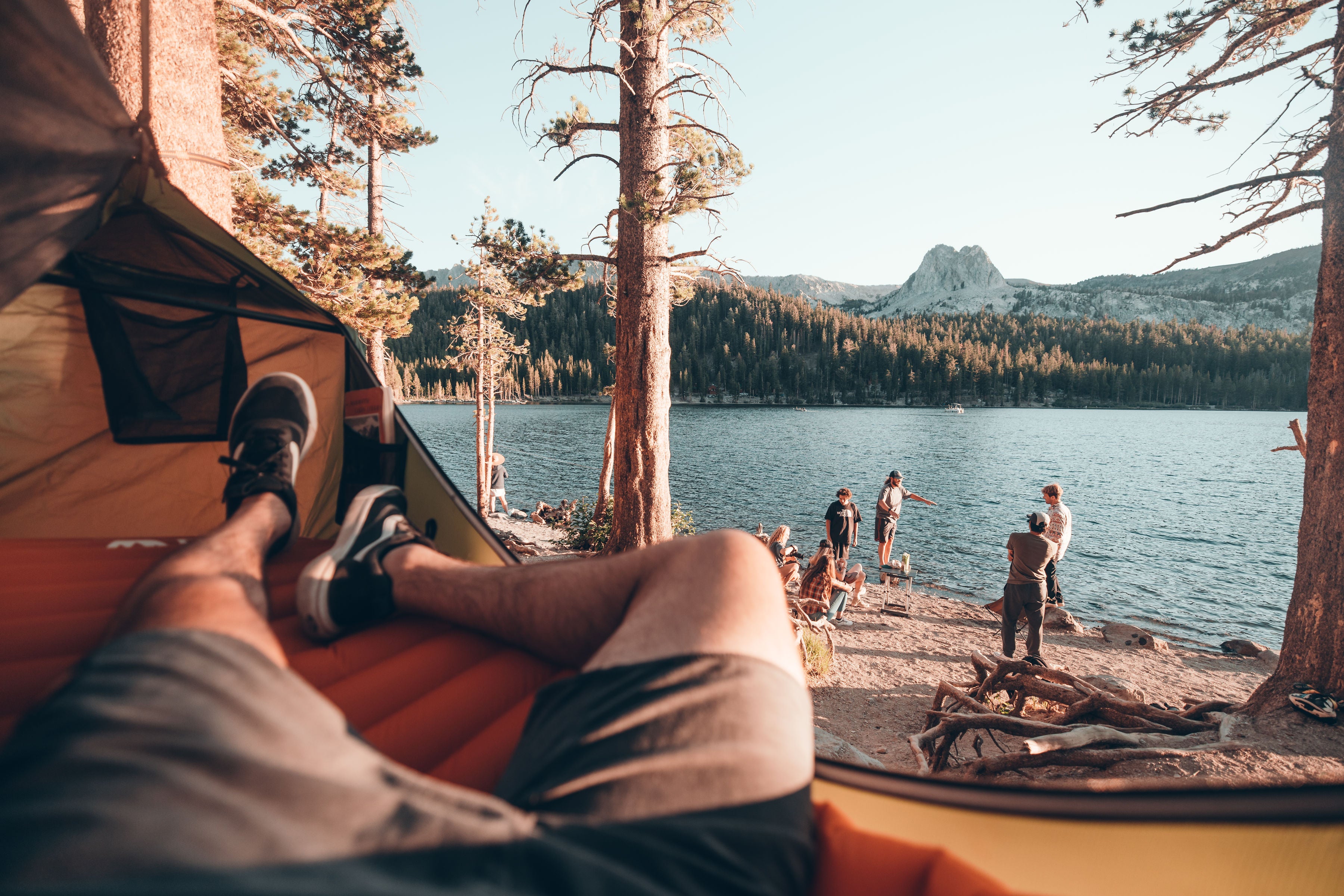
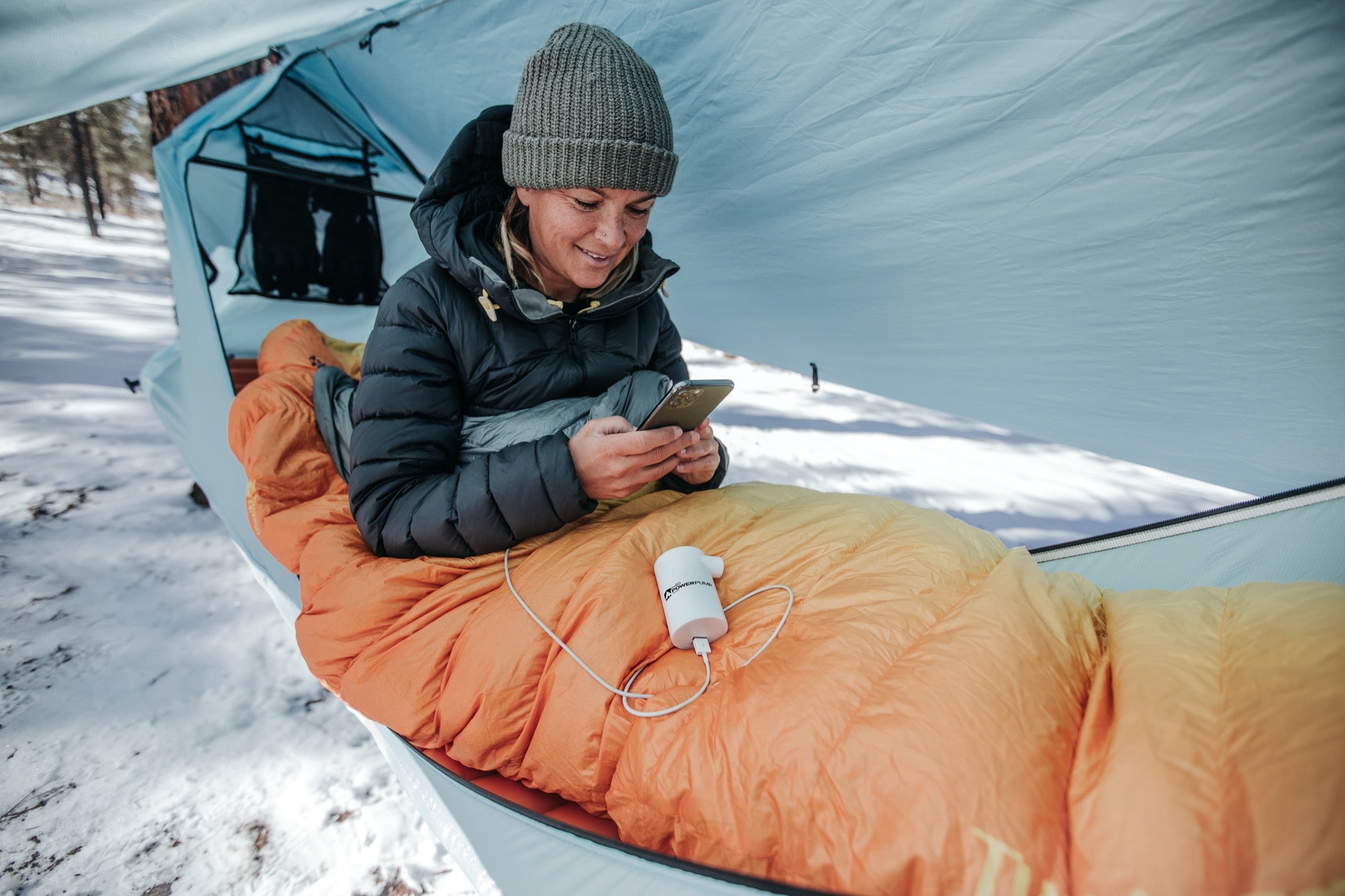
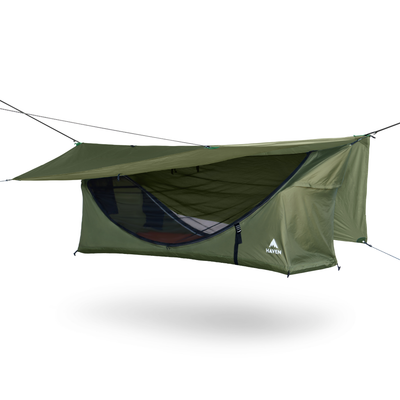
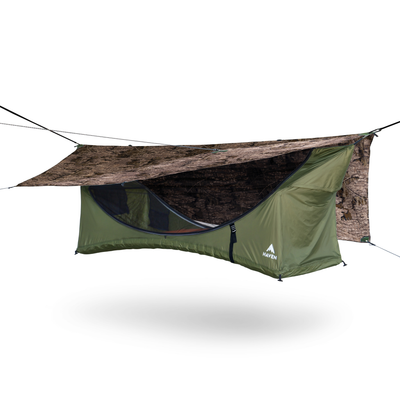
A lay-flat hammock tent like the Haven holds an insulated air mattress flat in a suspended frame. You get a flat bed like a cot, off the ground like a hammock, with a rainfly and bug net built in, so it replaces the tent and pad. Because the platform is flat, you can sleep on your back, side or stomach (see side sleepers and stomach sleepers). How it stays flat is explained in The Secret Design Behind the Haven Tent.
The trade-offs: each Haven sleeps one person (rated to 285 lb, or 350 lb for the Safari), it needs two anchor points or a stand, and it's heavier than a bare hammock. It's a bed, not a room, so there's less space to sit up or spread out gear than in a tent. With no trees, it pitches on the ground in bivy mode, though then you're back on the ground.
Best for: side and stomach sleepers, people who wake up sore on the ground, and anyone who wants one kit instead of a tent, pad and cot.
Comfort by sleep position
| Pad in a tent | Cot with a pad | Traditional hammock | Lay-flat hammock tent | |
|---|---|---|---|---|
| Back | Good on a thick enough pad | Good | Good for many, lying diagonally | Good |
| Side | Needs a thick, wide pad; hips and shoulders take the load | Good if the pad is thick enough | Hard for most; possible with a diagonal lay and practice | Good: flat and evenly supported |
| Stomach | Good on a firm pad | Good | Very hard; the curve arches your back | Good |
| Restless, rolls over a lot | Wide pad helps | Narrow; you can roll off the pad | Awkward; the fabric moves with you | Roll over as you would in bed |
Warmth: why off the ground can feel colder
Getting off the ground removes cold, damp earth, but it adds moving air underneath you, and your sleeping bag's insulation is crushed flat wherever you lie on it. So every setup needs insulation under you: a pad on the ground, a pad on a cot, an underquilt under a hammock, or the insulated pad built into a lay-flat hammock tent. As a rough guide to R-values, pads around R2 or less suit warm nights, R2 to R4 three-season camping, and R4 and above cold nights and frozen ground. Haven's pads are R2.5 (Spectre pad), R5 (Premium) and R5.3 (True Level); the full explanation is in Do You Need a Sleeping Pad If You Sleep Off the Ground?
The rest of the sleep system: bag, quilt and pillow
The bed under you matters most, but three smaller things finish the job:
- Sleeping bag or quilt rated below the lowest temperature you expect. A quilt (no back, no hood) suits hammocks and lay-flat hammock tents, where the pad or underquilt does the work underneath, and people who sleep with their knees bent and find mummy bags confining.
- A pillow that keeps your neck level for your position: higher for side sleepers, lower for back and stomach sleepers. A camp pillow, or a stuff sack of soft clothes, beats a rolled-up jacket that collapses overnight.
- Dry sleep clothes kept only for bed, so you aren't trying to warm up in damp layers.
If you have back pain or find it hard to get up
For a sore back, the safest general starting point is a supportive pad on level ground or a cot with a pad. A traditional hammock is less predictable: some backs like the curve, many don't. A lay-flat hammock tent is worth trying if hip or shoulder pressure on the ground is what keeps you awake. If getting up is the hard part, a cot's seat-height edge is the easiest; a low-hung lay-flat hammock tent, which you sit into from the side, comes next; the floor is hardest. Comfort is personal, so test at home first and check with your doctor or physical therapist. More in Camping With Back, Hip or Joint Pain.
Tent cot vs hammock tent
Is a tent cot or a hammock tent better? Both are one-kit shelters that get you off the ground. A tent cot is a cot with a small tent attached to its frame: it stands on its own legs, so it works on any reasonably level ground, including campground tent pads, with no trees needed. It's also heavy and bulky, so it's a car-camping item, and you still need a pad on the cot for warmth. A lay-flat hammock tent packs smaller and lighter, includes an insulated pad, and is flat enough for side and stomach sleepers, but it needs two trees, a stand or a hitch mount, or it goes on the ground in bivy mode.
| Tent cot | Lay-flat hammock tent | |
|---|---|---|
| How it stands | Freestanding on legs | Hangs from two trees, a stand or a hitch mount |
| Ground needed | Reasonably level and firm | Doesn't matter when hung |
| Sleeping surface | Taut fabric, firm | Insulated air mattress held flat |
| Warmth underneath | Air under the cot; add a pad | Insulated pad built in |
| Packability | Long and heavy; car camping | Packs into a bag; the Spectre is light enough for backpacking |
| People | Mostly one (some two-person models) | One per hammock |
| Campgrounds that ban hanging from trees | Fine | Use a stand or bivy mode |
Pick a tent cot if you mostly car camp at developed campgrounds, often have no trees, and don't mind the bulk. Pick a hammock tent if you camp among trees, want to carry your shelter away from the car, or want a softer, insulated surface you can sleep on your side or stomach on. For campground specifics, see Using a Hammock Tent at Campgrounds; for vehicle-based setups, Hammock Tent vs Rooftop Tent.
Can one product replace a tent, sleeping pad and cot?
For some trips, yes. Two kinds of product do it, and they suit different campers:
- A tent cot replaces the tent and the cot and gets you off the ground on any level site. It's bulky, so it's for car camping, and you still need a pad on it for warmth.
- A lay-flat hammock tent replaces the tent, the pad and the cot: shelter, bug net, a flat bed off the ground and an insulated pad in one kit. It needs two trees, a stand or a hitch mount (or goes on the ground in bivy mode), and it sleeps one person.
Before you replace three things with one, check it covers all of them: shelter from rain, wind and bugs; elevation off rocks and wet ground; cushioning for your sleep position; insulation underneath, which getting off the ground doesn't provide by itself (why); and portability for how far you carry it. If you camp with a partner or kids, a family tent with pads or cots inside is still the simplest way to share one space. If back, hip or joint pain is why you're looking, see Camping With Back, Hip or Joint Pain.
Which should you choose?
- Lightest pack, flat ground available: a good sleeping pad in a tent.
- Car camping, plenty of space, prefer a firm surface: a cot with a pad on top.
- Car camping, want softer cushioning without a cot: a thick self-inflating or foam mattress.
- Car camping at campgrounds without trees, want one freestanding kit: a tent cot.
- Forest backpacking, back sleeper who already likes hammocks: a traditional or bridge hammock with a tarp and underquilt.
- Side or stomach sleeper who wants off the ground: a lay-flat hammock tent.
- Treeless terrain, long storms or exposed cold sites: a tent with a warm pad.
- Family or camping with a dog: a tent big enough for everyone, with pads or cots inside.
- Hot, humid nights: a hammock or hammock tent, for airflow and no floor heat; keep the bug net closed.
Comfort is personal, so try your setup in the backyard before a big trip. For a broader look, read The Most Comfortable Way to Sleep Outside, compare a Haven with a tent and pad in Haven vs Ground Tents, or read What Is an Outdoor Sleep System? and see the lineup on our outdoor sleep systems page.
FAQ
Hammock camping vs tent camping: which is better?
Hammock camping is usually better on uneven, rocky, muddy or sloped ground and for solo campers among trees. Tent camping works in more places (including treeless and exposed sites) and gives you more space, privacy and shared room for a partner, kids or a dog. Full comparison above.
Sleeping pad vs cot vs hammock: which is the most comfortable?
There's no single winner. A cot with a pad feels the most bed-like for car camping, a thick insulated pad is the most versatile and portable, a traditional hammock suits back sleepers who like the curve, and a lay-flat hammock tent is the most comfortable off-the-ground option for side and stomach sleepers.
Is there something more comfortable than a sleeping pad for camping?
Yes, depending on how you camp. For car camping, a cot with a pad or a thick self-inflating or foam mattress usually beats a basic pad. To get off the ground and still sleep flat, a lay-flat hammock tent is the other upgrade. For backpacking, the answer is often just a thicker, wider pad.
Is it more comfortable to sleep off the ground?
For many campers, yes: rocks, roots, slope and damp ground stop mattering, and a cot is easier to get up from. But off the ground can feel colder, because air moves underneath you, so you still need insulation under you. And a traditional hammock's curve doesn't suit every sleeper.
Is a cot or a hammock better for sleeping off the ground?
A cot with an insulated pad is the simplest elevated setup for car camping and works without trees. A hammock system suits backpackers in wooded areas where hanging is allowed. If you want off the ground without the curve of a traditional hammock, a lay-flat hammock tent sits in between.
Do you need a pad on a cot?
Usually, yes. A cot alone is firm and cold underneath on anything but warm nights. A pad adds cushioning and insulation.
Can you sleep on your side in a hammock?
In a traditional gathered-end hammock it's possible with a diagonal lay and practice, but many side sleepers find it hard. A lay-flat hammock tent lets you sleep on your side much as you would in a bed. See Hammocking for Side Sleepers.
Can two people share a hammock or a Haven?
Not for sleeping. Every Haven sleeps one person, so couples hang two side by side. If you want to share one bed, a tent with a double pad or mattress is the better choice.
Comments (0)
No comments yet — be the first!
Leave a Comment