How to Stop Waking Up Sore After Sleeping in a Tent
Haven Tents · October 21, 2026 · 3 min read

Why do you wake up sore after sleeping in a tent, and how do you stop it? Usually it's because a thin pad on hard or uneven ground concentrates your weight on a few pressure points, like hips and shoulders for side sleepers, and because a cold, unfamiliar setup has you tensing and shifting all night. The fixes are practical: pick flatter, softer ground, use a thicker or better-insulated pad and inflate it properly, bring a real pillow, stay warm, and stretch before bed. If none of that works, get off the ground with a cot or a lay-flat hammock tent. If you have ongoing back or joint pain, talk to your doctor; no camping gear is a treatment.
Why sleeping on the ground makes you sore
- Pressure points. At home, a mattress spreads your weight. On a thin pad over hard ground, your hips and shoulders take most of it, especially if you sleep on your side.
- Uneven ground. Rocks, roots and slope push into you or slide you off your pad, so you wake up in odd positions.
- Cold. Cold ground pulls heat out of you through the pad. A cold body tends to curl up and tense.
- A soft or deflating pad. Air pads soften as the night cools, so your hip can end up touching the ground by morning.
- No real pillow. A stuffed jacket at the wrong height leaves your neck at an angle all night.
Eight ways to wake up less sore
- Choose your spot carefully. Lie down on the spot before you pitch the tent. Clear sticks and stones, avoid slopes and dips, and pick softer ground like pine duff over packed dirt where it's allowed.
- Use a thicker pad. A thicker air or foam pad spreads pressure better. Side sleepers usually notice the difference most.
- Inflate it right, and top it off. Too soft and you bottom out; too hard and it pushes back on your hip. Add a breath or two at bedtime, because cold air takes up less space.
- Insulate underneath. Pick a pad with an R-value suited to the season, so the ground doesn't chill you.
- Bring a proper pillow. A camp pillow at the right height keeps your neck in line, especially on your side.
- Stay warm. Use a sleeping bag or quilt rated below the night's low, and wear a dry layer to bed.
- Stretch before bed and in the morning. A few minutes of gentle movement after a long day helps many people feel less stiff.
- Get off the ground. If you still wake up sore, a cot or a lay-flat hammock tent takes the ground out of the equation. We compare the options in Hammock vs Cot vs Sleeping Pad.
Getting off the ground with a lay-flat hammock tent
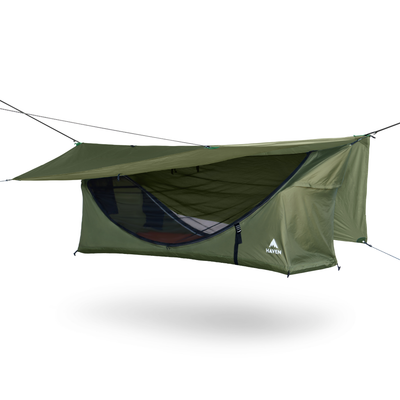
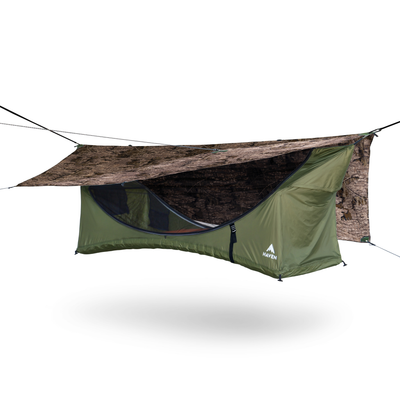
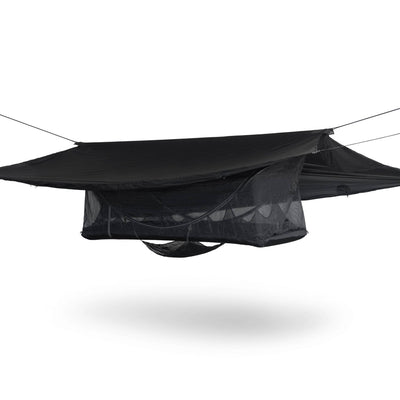
A traditional hammock gets you off the ground but curves you into a banana, which many people find just as uncomfortable. A lay-flat hammock tent like the Haven holds an insulated air mattress flat in a suspended frame, so you get an evenly supported surface that isn't affected by rocks, roots or slope. Compared with a pad on hard ground, that kind of surface can reduce pressure on hips and shoulders, and it lets you sleep on your back, side or stomach.
It's not for everyone. Each Haven sleeps one person, it needs two trees, a stand or a hitch mount, and it's heavier than a bare hammock. Comfort is personal, which is one reason Havens come with a 60-day return window (returns).
Tips for side sleepers are in Hammocking for Side Sleepers, and the outdoor sleep systems FAQ answers whether Haven suits side sleepers and people with back pain.
When to see a doctor
Some stiffness after a night outside is common. Pain that lasts, keeps coming back, or comes with numbness or tingling is worth checking with a doctor or physical therapist before your next trip. They can also tell you which sleep positions suit you.
More on sleeping well outside
See Can You Sleep Flat in a Hammock?, Hammock Tent vs Tent on Rocky Ground, The Most Comfortable Way to Sleep Outside, How to Sleep Better While Camping, and Haven vs Ground Tents.
If back, hip or joint pain is part of the problem, read Camping With Back, Hip or Joint Pain: Pad vs Cot vs Lay-Flat Hammock Tent, and ask your doctor or physical therapist what suits you.
← Back to Adventure Journal
<div class="dynamic-checkout__content" id="dynamic-checkout-cart" data-shopify="dynamic-checkout-cart"> <shopify-accelerated-checkout-cart wallet-configs="[{"supports_subs":true,"supports_def_opts":false,"name":"shop_pay","wallet_params":{"shopId":11057397823,"merchantName":"Haven Tents","personalized":true}},{"supports_subs":false,"supports_def_opts":false,"name":"amazon_pay","wallet_params":{"checkoutLanguage":"en_US","ledgerCurrency":"USD","placement":"Cart","sandbox":false,"merchantId":"A21KZNDFJ6EOT6","productType":"PayAndShip","design":"C0002"}},{"supports_subs":true,"supports_def_opts":false,"name":"paypal","wallet_params":{"shopId":11057397823,"countryCode":"US","merchantName":"Haven Tents","phoneRequired":true,"companyRequired":false,"shippingType":"shipping","shopifyPaymentsEnabled":true,"hasManagedSellingPlanState":false,"requiresBillingAgreement":true,"gatewayType":"CONNECTED","merchantId":"AT9YPQVBATPVS","sdkUrl":"https://www.paypal.com/sdk/js?components=buttons\u0026commit=false\u0026currency=USD\u0026locale=en_US\u0026client-id=AexZEtAxk09Ncgj6FSWFFyGKbxxAZ_LTyJ2DPdJWl1YUlecinmc5AfIaRF2qYjWlusWahlzz6SVkY5Ci\u0026merchant-id=AT9YPQVBATPVS\u0026intent=authorize","serviceableCountryCodes":["AC","AD","AE","AF","AG","AI","AL","AM","AO","AR","AT","AU","AW","AX","AZ","BA","BB","BD","BE","BF","BG","BH","BI","BJ","BL","BM","BN","BO","BQ","BR","BS","BT","BW","BY","BZ","CA","CC","CD","CF","CG","CH","CI","CK","CL","CM","CN","CO","CR","CV","CW","CX","CY","CZ","DE","DJ","DK","DM","DO","DZ","EC","EE","EG","EH","ER","ES","ET","FI","FJ","FK","FO","FR","GA","GB","GD","GE","GF","GG","GH","GI","GL","GM","GN","GP","GQ","GR","GS","GT","GW","GY","HK","HN","HR","HT","HU","ID","IE","IL","IM","IN","IO","IQ","IS","IT","JE","JM","JO","JP","KE","KG","KH","KI","KM","KN","KR","KW","KY","KZ","LA","LB","LC","LI","LK","LR","LS","LT","LU","LV","LY","MA","MC","MD","ME","MF","MG","MK","ML","MM","MN","MO","MQ","MR","MS","MT","MU","MV","MW","MX","MY","MZ","NA","NC","NE","NF","NG","NI","NL","NO","NP","NR","NU","NZ","OM","PA","PE","PF","PG","PH","PK","PL","PM","PN","PS","PT","PY","QA","RE","RO","RS","RU","RW","SA","SB","SC","SD","SE","SG","SH","SI","SJ","SK","SL","SM","SN","SO","SR","SS","ST","SV","SX","SZ","TA","TC","TD","TF","TG","TH","TJ","TK","TL","TM","TN","TO","TR","TT","TV","TW","TZ","UA","UG","UM","US","UY","UZ","VA","VC","VE","VG","VN","VU","WF","WS","XK","YE","YT","ZA","ZM","ZW"]}}]" access-token="20cee07b2f5277b40ccae45e245d3c77" buyer-country="US" buyer-locale="en" buyer-currency="USD" shop-id="11057397823" cart-id="b7268bda20394da6474c89e1e1808f0e" enabled-flags="["a1d1f9a1","f5afabb3","370070f3","b311f899"]" > <div class="wallet-button-wrapper"> <ul class='wallet-cart-grid wallet-cart-grid--skeleton' role="list" data-shopify-buttoncontainer="true"> <li data-testid='grid-cell' class='wallet-cart-button-container'><div class='wallet-cart-button wallet-cart-button__skeleton' role='button' disabled aria-hidden='true'> </div></li><li data-testid='grid-cell' class='wallet-cart-button-container'><div class='wallet-cart-button wallet-cart-button__skeleton' role='button' disabled aria-hidden='true'> </div></li><li data-testid='grid-cell' class='wallet-cart-button-container'><div class='wallet-cart-button wallet-cart-button__skeleton' role='button' disabled aria-hidden='true'> </div></li> </ul> </div> </shopify-accelerated-checkout-cart> </div>



Comments (0)
No comments yet — be the first!
Leave a Comment