
Hammock, cot or sleeping pad: which is most comfortable for camping? It depends on how you sleep and how you camp. A thick sleeping pad in a tent is the simplest and packs the smallest, but you feel the ground under it and side sleepers often get sore hips. A cot gets you off the ground and onto a flat surface, but it's bulky, cold underneath without a pad, and best suited to car camping. A traditional hammock is light and keeps you off rocks and roots, but it curves you into a banana shape that many people, especially side and stomach sleepers, can't sleep in. A lay-flat hammock tent combines the flat surface of a cot with the off-the-ground hang of a hammock, at the cost of needing two anchor points and carrying more weight than a bare hammock. Comparing a tent cot with a hammock tent? Jump to Tent cot vs hammock tent.

Quick comparison
| Sleeping pad (in a tent) | Camping cot | Traditional hammock | Lay-flat hammock tent | |
|---|---|---|---|---|
| Sleeping surface | Flat, but on the ground | Flat, off the ground | Curved | Flat, off the ground |
| Side and stomach sleeping | Depends on pad thickness | Usually fine; firm and narrow | Hard for most people | Yes |
| Rocks, roots and slope | You feel them | Needs fairly level ground for the legs | Don't matter | Don't matter when hung |
| Warmth from below | Depends on the pad's R-value | Cold air underneath; add a pad | Needs an underquilt | Insulated pad built in |
| Where it works | Almost anywhere flat | Car camping, big tents | Where there are trees | Trees, a stand or hitch mount; or on the ground in bivy mode |
| Packability | Smallest | Bulky | Small | Larger than a bare hammock |
| Shelter included | No, needs a tent | No, needs a tent | No, needs a tarp and bug net | Rainfly and bug net included |
Sleeping pads
A pad inside a tent is what most people start with. It's light, packs small and works on almost any flat patch of ground. Comfort depends on the pad: thicker pads spread your weight better, and the R-value tells you how well it insulates you from the cold ground.
The trade-off is that you're still on the ground. Rocks, roots and slope come through, and side sleepers concentrate their weight on a hip and a shoulder. If you've ever spent the night turning over, that's why (more in How to Stop Waking Up Sore After Sleeping in a Tent).
Best for: backpackers counting weight, back sleepers, and anyone camping where there's flat, clear ground.
Camping cots
A cot gets you off the ground onto a flat, taut surface, so rocks and roots no longer matter. Many people find them easier to get in and out of than a pad on the floor.
Cots have their own trade-offs. They're bulky and heavy, so they're mostly for car camping. Air moves underneath, so on cool nights you still want a pad on top. The fabric surface is firm and often narrow, and the legs need fairly level ground or the cot rocks. You also need a tent tall and big enough to fit one.
Best for: car campers with room in the vehicle and a big tent.
Traditional hammocks
A gathered-end hammock is light, packs small and keeps you off the ground entirely, so terrain stops mattering. With a tarp, bug net and underquilt, it's a full shelter.
The catch is the shape. A traditional hammock curves you into a banana, and many people can't sleep that way all night, especially side and stomach sleepers. Lying diagonally flattens it somewhat, and asymmetric and bridge hammocks get flatter still. You also need an underquilt or pad, because cold air under the hammock pulls heat away from you.
Best for: back sleepers who are comfortable in a hammock and camp among trees.
Lay-flat hammock tents
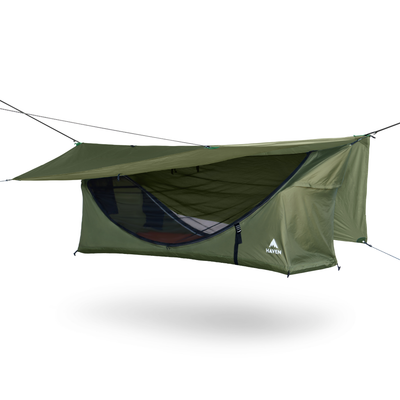
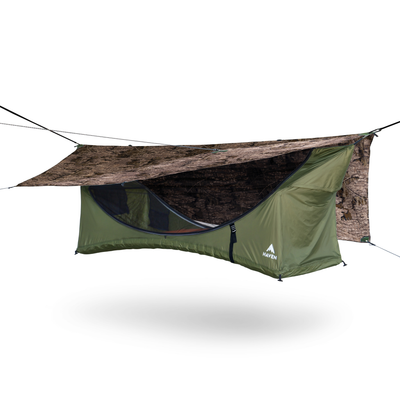
A lay-flat hammock tent like the Haven holds an insulated air mattress flat in a suspended frame. You get a flat bed like a cot, off the ground like a hammock, with a rainfly and bug net built in, so it replaces the tent and pad. Because the platform is flat, you can sleep on your back, side or stomach (see side sleepers and stomach sleepers). How it stays flat is explained in The Secret Design Behind the Haven Tent.
The trade-offs: each Haven sleeps one person (rated to 285 lb, or 350 lb for the Safari), it needs two anchor points or a stand, and it's heavier than a bare hammock. With no trees, it pitches on the ground in bivy mode, though then you're back on the ground.
Best for: side and stomach sleepers, people who wake up sore on the ground, and anyone who wants one kit instead of a tent, pad and cot.
Tent cot vs hammock tent
Is a tent cot or a hammock tent better? Both are one-kit shelters that get you off the ground. A tent cot is a cot with a small tent attached to its frame: it stands on its own legs, so it works on any reasonably level ground, including campground tent pads, with no trees needed. It's also heavy and bulky, so it's a car-camping item, and you still need a pad on the cot for warmth. A lay-flat hammock tent packs smaller and lighter, includes an insulated pad, and is flat enough for side and stomach sleepers, but it needs two trees, a stand or a hitch mount, or it goes on the ground in bivy mode.
| Tent cot | Lay-flat hammock tent | |
|---|---|---|
| How it stands | Freestanding on legs | Hangs from two trees, a stand or a hitch mount |
| Ground needed | Reasonably level and firm | Doesn't matter when hung |
| Sleeping surface | Taut fabric, firm | Insulated air mattress held flat |
| Warmth underneath | Air under the cot; add a pad | Insulated pad built in |
| Packability | Long and heavy; car camping | Packs into a bag; the Spectre is light enough for backpacking |
| People | Mostly one (some two-person models) | One per hammock |
| Campgrounds that ban hanging from trees | Fine | Use a stand or bivy mode |
Pick a tent cot if you mostly car camp at developed campgrounds, often have no trees, and don't mind the bulk. Pick a hammock tent if you camp among trees, want to carry your shelter away from the car, or want a softer, insulated surface you can sleep on your side or stomach on. For campground specifics, see Using a Hammock Tent at Campgrounds; for vehicle-based setups, Hammock Tent vs Rooftop Tent.
Can one product replace a tent, sleeping pad and cot?
For some trips, yes. Two kinds of product do it, and they suit different campers:
- A tent cot replaces the tent and the cot and gets you off the ground on any level site. It's bulky, so it's for car camping, and you still need a pad on it for warmth.
- A lay-flat hammock tent replaces the tent, the pad and the cot: shelter, bug net, a flat bed off the ground and an insulated pad in one kit. It needs two trees, a stand or a hitch mount (or goes on the ground in bivy mode), and it sleeps one person.
Before you replace three things with one, check it covers all of them: shelter from rain, wind and bugs; elevation off rocks and wet ground; cushioning for your sleep position; insulation underneath, which getting off the ground doesn't provide by itself (why); and portability for how far you carry it. If you camp with a partner or kids, a family tent with pads or cots inside is still the simplest way to share one space. If back, hip or joint pain is why you're looking, see Camping With Back, Hip or Joint Pain.
Which should you choose?
- Lightest pack, flat ground available: a good sleeping pad in a tent.
- Car camping, plenty of space, prefer a firm surface: a cot with a pad on top.
- Car camping at campgrounds without trees, want one freestanding kit: a tent cot.
- Back sleeper who already likes hammocks: a traditional or bridge hammock with an underquilt.
- Side or stomach sleeper who wants off the ground: a lay-flat hammock tent.
Comfort is personal, so try your setup in the backyard before a big trip. For a broader look, read The Most Comfortable Way to Sleep Outside, compare a Haven with a tent and pad in Haven vs Ground Tents, or read What Is an Outdoor Sleep System? and see the lineup on our outdoor sleep systems page.


Comments (0)
No comments yet — be the first!
Leave a Comment