



What's the best way to camp with back, hip or joint pain? Look for three things in your sleep setup: a surface that stays flat and evenly supports you, enough cushioning that your hips and shoulders don't press through to something hard, and a bed you can get into and out of without a struggle.
A thick pad in a tent, a cot and a lay-flat hammock tent each get some of this right, and a traditional hammock gets most of it wrong for many people. Which one suits you depends on where it hurts, how you sleep and how easily you get up from the floor. We make the Haven, so we're not neutral, and we can't tell you what's right for your body: if you have a back, hip or joint condition, ask your doctor or physical therapist before changing how you sleep.
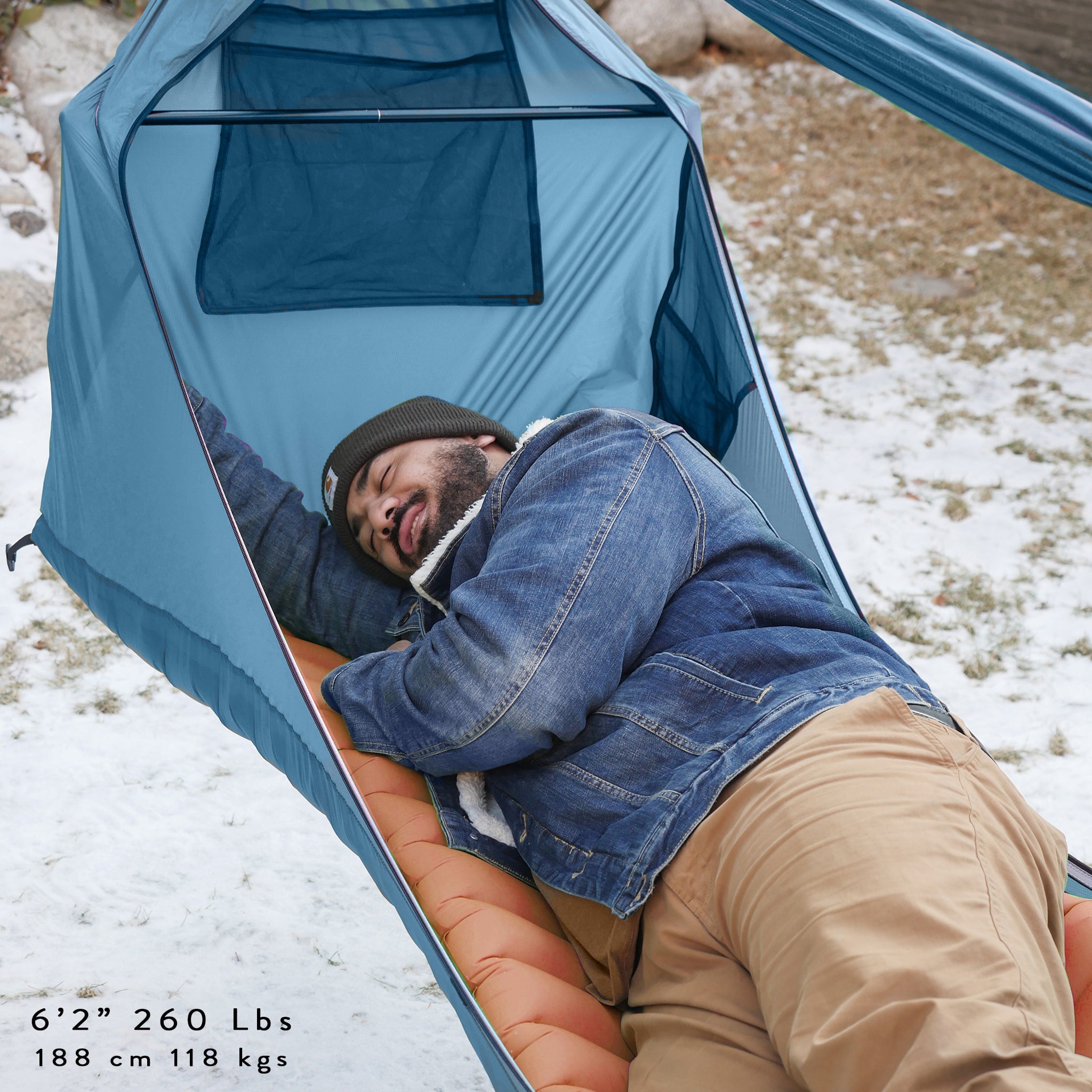
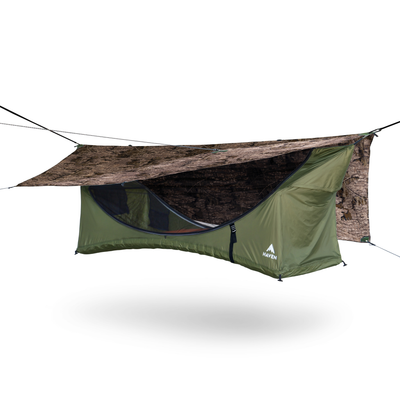
Our pick: If hip or shoulder pressure is what keeps you awake, we'd point you to a lay-flat hammock tent first. It gives you a flat, evenly supported, insulated bed that rocks and slopes can't reach, and the Haven XL's wider 30 x 80 in platform gives the most room to change position. If getting up is the hardest part, a cot with a thick pad is the easiest bed to get in and out of, and a low-hung Haven comes next. Check with your doctor or physical therapist first.
Reduce strain in three places
Camping is harder on a sore back or stiff joints in three ways, and the bed is only one of them:
- The bed. Flat, even support, enough cushioning at the hips and shoulders, and warmth underneath.
- Getting up and down. Out of bed at night, out of a low chair, in and out of a low tent door.
- Carrying and setting up. Lifting gear out of the car, bending over stakes, kneeling to inflate a pad, cooking hunched over a low table.
The safest general starting point for the bed is a supportive pad on level ground, or a cot with a thick pad on top. A traditional hammock is the least predictable. A lay-flat hammock tent is worth trying when pressure on the ground, or rough ground, is the problem. The table below is a starting point by what hurts, not medical advice.
| What hurts or gets in the way | Try first | Also worth trying | Usually harder |
|---|---|---|---|
| Hip or shoulder pressure on your side | A thicker, wider pad, or a lay-flat hammock tent | Cot with a thick pad | Thin pad; traditional hammock |
| Lower back stiffness on your back | Supportive pad on level ground with a pillow under your knees, or a cot with a pad | Lay-flat hammock tent | Saggy air bed or cot; traditional hammock if you dislike the curve |
| Getting up from the floor | Cot (chair-height edge) | Lay-flat hammock tent hung low | Pad on the tent floor |
| Rocks, roots and slopes | Lay-flat hammock tent or traditional hammock (hung) | Cot on a level patch | Pad on the ground |
| Cold makes it worse | A pad with a higher R-value under you, whatever the bed | Insulated lay-flat hammock tent; cot with an insulated pad | Bare cot; plain air mattress |
| Pain after carrying and setting up | Car camping close to the car; fewer, lighter loads | A cabin or a shorter trip on bad weeks | Long carries with a heavy pack |
What to look for in a camping bed when something hurts
- Flat, even support. A surface that sags in the middle or tilts on a slope puts your body at an angle all night.
- Cushioning at the pressure points. Side sleepers carry most of their weight on the hip and shoulder. If those press through a thin pad to the ground, you'll feel it.
- Getting in and out. Getting up off the ground several times a night is hard on knees, hips and backs. A bed at sitting height is easier.
- Warmth underneath. Cold ground or cold air under you pulls heat away. Being warm and dry makes it easier to stay in one comfortable position.
- Room to change position. If you need to roll over or bend your knees, a bed that closes in around you makes that harder.
Sleeping pad, cot, hammock or lay-flat hammock tent compared
| Thick pad in a tent | Camping cot | Traditional hammock | Lay-flat hammock tent | |
|---|---|---|---|---|
| Surface | Flat if the ground is flat | Flat, taut fabric | Curved like a banana | Flat air mattress held in a suspended frame |
| Hip and shoulder pressure | Depends on pad thickness and the ground below | Firm; many people add a pad | Shoulders squeezed by the sides | Spread across an air mattress, off the ground |
| Getting in and out | Down to the floor and back up | Sit on the edge at about chair height | Can swing or tip as you get in | Sit on the low side wall, then lie back |
| Warmth underneath | From the pad | Cold air under the fabric unless you add a pad | Needs an underquilt or pad | Insulated pad built in |
| Rocks, roots and slope | You feel them | Needs level ground | Don't matter | Don't matter when hung |
| Sagging | Air pads can soften as the night cools | Older or loose fabric sags in the middle | Sags by design | Platform held flat; firmness set by the pad |
| Where it works | Anywhere you can pitch a tent | Car camping; inside a large tent | Two trees | Two trees, a stand or a hitch mount |
| Transport | Packs small | Long and bulky | Packs small | Packs into a bag; heavier than a bare hammock |
Which setup might suit you
If hip or shoulder pressure keeps you awake
This is the common complaint from side sleepers on a pad, and it usually means the pad is bottoming out: too thin, too soft, or under-inflated for your weight. Lie on your side and slide a hand under your hip. If you can feel the ground, you need more support. Fix the pad first:
- Thickness: many side sleepers do better on around 3 in or more, but your weight, the pad's construction and how firmly it's inflated matter more than a single number.
- Width: a wide pad (about 25 in rather than the standard 20 in) gives your knees and arms somewhere to go when you curl up.
- Firmness: firm enough that your hip doesn't touch down, soft enough that your shoulder sinks in a little. Inflate fully, then let air out a little at a time.
- Alignment: a pillow tall enough to keep your neck level, and a small pillow or rolled fleece between your knees.
If a better pad isn't enough, change the bed. A lay-flat hammock tent puts your whole length on an air mattress with nothing hard below it, which is why many side sleepers choose one (see Hammocking for Side Sleepers). A cot with a thick pad is the car-camping alternative; a bare cot is firm, so most people add a pad on top. If you already have a diagnosed hip condition or a hip replacement, ask your clinician which positions and bed heights to avoid before you choose.
If your lower back is the problem
For lower back pain, the aim is to keep your pelvis from sinking below the rest of you while still cushioning your hips and shoulders. A surface that's too soft lets your hips drop and your lower back bend; one that's too hard pushes back at the pressure points. In practice:
- Back sleepers: a pillow or rolled jacket under your knees takes some strain off the lower back.
- Side sleepers: a pillow between your knees keeps your top leg from twisting your pelvis.
- Avoid sag. A cheap air bed that softens overnight, or a cot with slack fabric, lets your middle sink. Top off air pads at bedtime, and tension the cot properly.
Some people with lower back pain sleep well in a traditional hammock lying diagonally; many don't. Separate the two kinds of hammock: a gathered-end hammock always curves, while a lay-flat hammock tent holds you flat on an air mattress.
If getting up from the floor is the hard part
A cot is the easiest bed to get onto and off: you sit down and stand up as you would from a chair. A Haven is next: hung low, you sit on the side wall and swing your legs in, and you can hold the ridgeline strap while you do it (how Haven stability works). A pad in a tent means kneeling, crawling and getting up from the floor every time.
If your back dislikes a curve
A gathered-end hammock bends you into a banana shape unless you lie diagonally, and even then it isn't flat. A bridge hammock is flatter. A lay-flat hammock tent, a cot or a pad on level ground keeps you flat. Can You Sleep Flat in a Hammock? explains the difference.
If you camp where the ground is rough
Rocks, roots and slopes are where a pad struggles. A hung bed doesn't touch the ground, and a cot needs a level spot. See Hammock Tent vs Tent on Rocky Ground.
Why a cot helps some backs and hurts others
A cot is often suggested for bad backs because it's flat, off the ground and easy to stand up from. It helps when the fabric is taut, the frame is wide enough for you, and there's a pad on top. It hurts when the fabric sags (your middle sinks), when it's narrow (you can't bend your knees or roll), or when a frame rail or crossbar sits under your thighs or shoulders. Look for a taut, wide cot with no bar under where you lie, put a thick insulated pad on it, and check it fits your tent with room to sit up. A cot plus a pad usually beats either one alone: the cot handles height and flatness, the pad handles cushioning and warmth.
Air mattress, self-inflating or foam?
- Standard air mattresses feel soft, but large air chambers tend to sag in the middle and soften as the night cools, and they sleep cold without insulation underneath.
- Thick self-inflating mattresses combine foam and air: more stable, insulated, and adjustable by letting a little air out. Heavy and bulky, so best for car camping.
- Foam mattresses are the most consistent through the night and can't go flat, but they're the bulkiest.
- Insulated backpacking air pads are light and warm; choose a thicker, wider one if you sleep on your side.
Is a hammock tent better for your back than a tent?
Not automatically. We're not aware of research on sleeping a whole night in a hammock tent versus a tent, so what we know is what campers tell us, and comfort is personal. Many people with sore hips and shoulders say they sleep better on a lay-flat hammock tent's flat air mattress, off rocks and roots. Others, including some side and stomach sleepers in traditional hammocks and some people whose neck, shoulder or nerve symptoms flare in certain positions, do better on a supportive pad on the ground or a cot. Setup quality matters more than shelter type: a well-chosen pad on level ground beats a badly hung hammock, and the reverse is true too.
How to test which works for you. Try each setup for at least two nights at home or close to the car before a long trip. Each morning, note how stiff you feel when you get up, how many times you woke, what woke you (pressure, cold, getting up), and how hard it was to get out of bed. Change one thing at a time: pad firmness, pillow height, knee pillow, hang height. Take your notes to your doctor or physical therapist if pain persists.
Getting in and out without twisting
These are general movement tips, not treatment; ask your physical therapist what's right for you.
- Cot: sit on the edge, lower yourself onto your side, then roll onto your back, moving your shoulders and hips together. Reverse it to get up: roll to your side, swing both legs off together, push up to sitting, then stand.
- Lay-flat hammock tent: hang it low, sit in the middle of the side wall, hold the ridgeline, and lie back while lifting both legs in together. To get out, roll to your side, swing both legs out, sit, then stand.
- Pad on the floor: roll to your side, push up to hands and knees, step one foot forward into a half-kneel, then stand using a chair, a trekking pole or the car for support.
Around camp: chairs, tables, tents and carrying
- A higher camp chair. Look for a seat at about dining-chair height, armrests to push up from, a firm seat that doesn't sag, and back support. Low, deep sling chairs are the hardest to get out of.
- A camp table at counter height, so you cook and wash up standing rather than bent over.
- A tent you can stand or sit up in, with a tall door. Cabin-style tents with near-vertical walls are easier to dress and move around in than low domes, and fit a cot better.
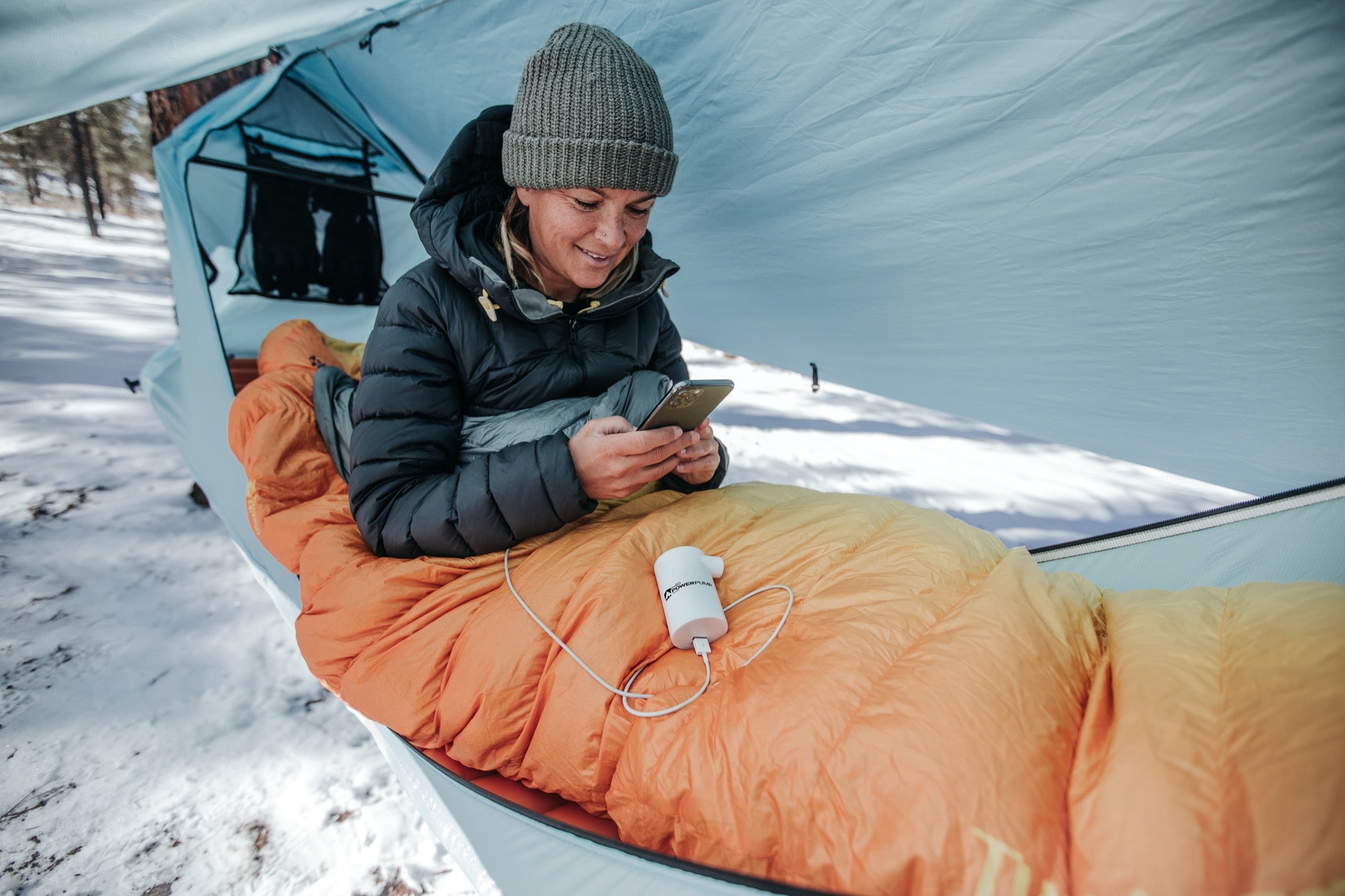
- A pump for pads and mattresses, so you aren't kneeling and blowing for minutes.
- Lighter loads, more trips. Park close, use a wagon or cart, split heavy bins, and lift with the load close to your body.
- Trekking poles for uneven ground and for pushing up from low seats.
- Choose the trip to fit the week. Car camping close to the car, a cabin, or a one-night trip on a bad week is still a trip.
Setup details that change how you feel in the morning
- Pad firmness. Too soft and you sink to the ground or the cot frame; too firm and it pushes back at the hips. Adjust a little at a time. In a Haven XL, firmness also affects how flat the platform sits (tips for the XL).
- Level it. A cot or pad on a slope tips you all night. In a hammock tent, get the hang angle right (hang angle guide).
- Use a real pillow, and add a small one between or under your knees if that's what you do at home.
- Stay warm. Use insulation underneath and a bag rated for the night's low.
- Keep it low. Hang a hammock tent low so getting in and out is easy and any fall is short (hang safe).
- Try it at home first. Sleep a night in the backyard before you commit to a trip.
When a Haven isn't the right choice
- You need to sit fully upright to get in and out. A cot at chair height is easier for some people than lowering yourself onto a hung bed.
- You can't put up or take down the straps. A Haven hangs from straps you wrap around two trees and clip to the hammock; if reaching and wrapping straps is a problem, a cot or a car-camping setup may be simpler.
- Your campsites have no trees and you don't want to bring a stand. The Haven Stand solves this for car camping but adds weight and bulk.
- You want to share a bed with a partner. Each Haven sleeps one person.
- You already sleep well on a thick pad or cot. Then there's no reason to change.
If you do try a Haven and it doesn't work for you, our 60-day returns apply to new tents.
Questions to take to your doctor or physical therapist
We can describe how each bed supports you; we can't tell you which is safe or helpful for your condition. Pain that is new, getting worse, keeps coming back, or comes with numbness, tingling or weakness is worth getting checked before a trip. Useful questions to ask:
- Should I sleep on my back, side or stomach, and with a pillow under or between my knees?
- Is a firm or softer surface better for me?
- Is getting up from the floor, or sitting down onto a low bed, something I should avoid?
- Are there positions I should avoid for a whole night?
- How should I get in and out of a low bed, and how much can I safely lift and carry?
FAQ
Is a sleeping pad, cot or hammock better for back pain when camping?
The safest general starting point is a supportive pad on level ground or a cot with a pad on top. A traditional hammock is the least predictable unless you already know it suits you. A lay-flat hammock tent is worth trying when hip or shoulder pressure, or rough ground, is what keeps you awake. It depends on your sleep position, how easily you get up, and the ground where you camp.
Is sleeping in a hammock tent better for your back than sleeping in a tent?
Not automatically. Many people sleep better on a lay-flat hammock tent's flat, evenly supported bed, but there's little research on whole nights outdoors, and some sleepers do better on a supportive ground setup or a cot. Setup quality matters more than the shelter. Test both before a long trip.
How do I camp comfortably with lower back pain?
Keep your pelvis from sinking (avoid saggy air beds and slack cots), add a pillow under your knees on your back or between them on your side, stay warm underneath, get in and out without twisting, and cut the bending and lifting around camp with a higher chair, a counter-height table and lighter loads.
What's the best camping gear for older campers with back or joint pain?
Gear that reduces bending and getting up from low positions: a cot with a thick self-inflating pad (or a low-hung lay-flat hammock tent), a camp chair at dining-chair height with armrests, a tent you can stand in with a tall door, a counter-height table, a pump for pads, and trekking poles.
I'm a side sleeper and wake up with sore hips when camping. What should I use?
Start with a thicker, wider, properly inflated pad and a pillow between your knees. If you still wake up sore, try a cot with a thick pad for car camping, or a lay-flat hammock tent to get off the ground and still lie flat.
More on sleeping well outside
Read How to Stop Waking Up Sore After Sleeping in a Tent, Hammock vs Cot vs Sleeping Pad and Do You Need a Sleeping Pad If You Sleep Off the Ground?. To compare a Haven with a tent and pad on everything else, see Haven vs Ground Tents, and see the full lineup, from the Haven Tent and Haven XL to the Haven Safari, on our outdoor sleep systems page.
Comments (0)
No comments yet — be the first!
Leave a Comment