

Why does your sleeping pad keep deflating, and what works better? Either it has a leak, or the air inside cooled and shrank overnight. Top it off at bedtime to find out. If it keeps going flat, the better options are closed-cell foam, a self-inflating pad, foam under your air pad, a cot, or a lay-flat hammock tent.
Comfort is the other half. A pad that is too thin or too narrow feels bad even when it holds air, and no air-only pad is immune to punctures or cold-night softening.
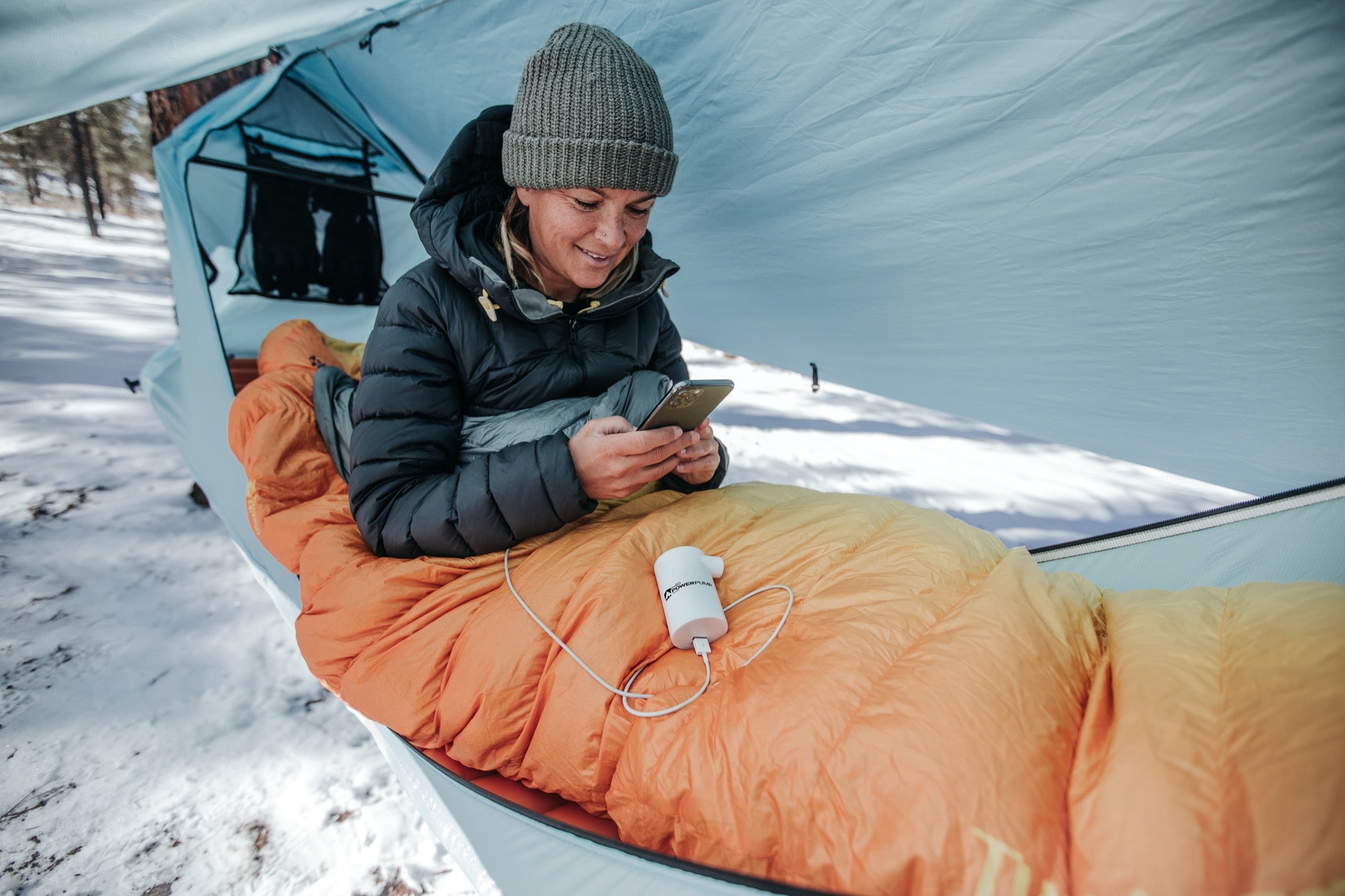
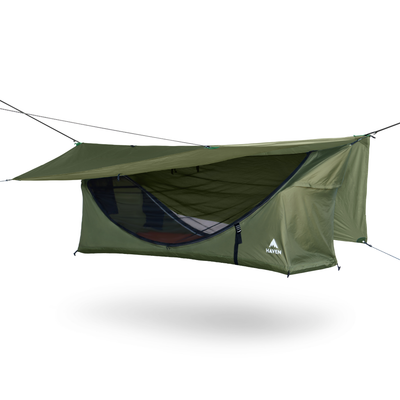
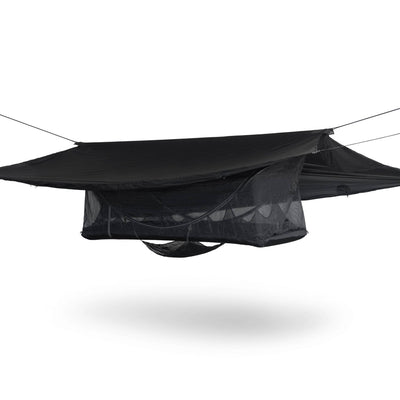
Our pick: For a pad that cannot go flat, use closed-cell foam, alone or under your air pad. For more cushion with a backup built in, choose a self-inflating pad. If the real problem is the ground you land on when the pad softens, a lay-flat hammock tent such as the Haven hangs you above it. A Haven uses an air mattress too, so it is not a cure for leaks. Skip it if you want one shelter for a family, share one bed with a partner, camp with no trees and no stand, or want the lowest possible pack weight.
Is it a real leak or normal overnight softening?
A pad that softens once and then holds after a top-up is normal; a pad that keeps losing air after a top-up has a leak. Air takes up less space as it cools. Inflate a pad on a warm evening, or with warm breath, and it feels softer by morning with no air lost.
Add a few breaths at bedtime, once the pad has cooled. To be sure, inflate it firm at home, put some weight on it and leave it overnight at room temperature. If it is soft by morning, it leaks.
Quick checks before you replace the pad
- Check the valve. Make sure it is fully closed and seated, and wipe any sand or grit off the seal.
- Find the hole. Inflate the pad firm, then hold it under water or wipe soapy water over it and watch for bubbles. Check the seams and around the valve, then mark the spot.
- Patch it. Clean and dry the area and follow the repair kit's instructions. Carry the kit on every trip.
- Clear the site. Sweep sticks, thorns and sharp stones from under the tent.
A leak along a seam is hard to patch, so ask the maker about repair or warranty. If your pad came with a Haven, our setup guide has pad deflation troubleshooting.
My sleeping pad keeps deflating and I can't get comfortable: what are better options?
The better options are a closed-cell foam pad, which cannot deflate; a self-inflating pad, which still cushions you if it loses pressure; a thicker or wider air pad with foam under it as a backup; a cot; or a lay-flat hammock tent. Which is better depends on what you want most: no deflation, more cushion, a small packed size, or a backup when something fails.
A thicker or wider air pad gives the most cushion for its packed size, and extra width helps if you roll around or sleep with your knees bent. It is still air only, so it can still puncture. Foam, inside the pad or under it, is what gives you a backup.
| Type | Deflation risk | Comfort | Warmth | Packed size | Best use |
|---|---|---|---|---|---|
| Closed-cell foam pad | None | Low to medium | Low to medium | Large | Rough ground, or as a backup layer |
| Self-inflating pad | Low to medium: it can puncture, but the foam still cushions you | Medium to high | Medium to high | Medium to large | Car camping; a backup built in |
| Thicker or wider air pad | Medium: punctures and cold-night softening | High | Depends on its insulation | Small | Backpacking, side sleepers |
| Air pad over foam | Low: foam stays if the air pad fails | High | High | Large | Cold or rocky ground |
| Cot with a pad | Low: the cot holds you if the pad softens | High | Medium; cold underneath without a pad | Very large | Car camping |
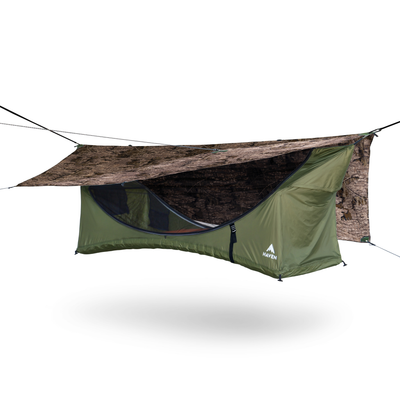
| Lay-flat hammock tent | Medium: it uses an air mattress too | High; flat for back, side and stomach sleepers | Medium to high, depending on the pad | Medium; it replaces the tent as well | One person, with trees or a stand |
See Sleeping Pad Alternatives for more off-the-ground options, Hammock vs Cot vs Sleeping Pad for comfort by sleep position, and why a cot still needs a pad.
Does a lay-flat hammock tent fix a deflating pad?
Not by itself: a Haven also uses an insulated air mattress, and any air mattress can lose air. The difference is what is under it. The mattress sits in a suspended hammock, so there are no rocks, sticks or thorns beneath it, and if it softens overnight you are not lowered onto hard ground. You still top it off, because the pad is also what holds the bed flat.
The limits: every Haven sleeps one person, and it needs two anchor points, meaning two trees, a stand or a hitch mount. With no trees it pitches on the ground in bivy mode, which puts the pad back on the ground.
Which should you choose?
- Softens once, then holds: keep your pad and top it off at bedtime.
- Found a puncture: patch it and put foam underneath.
- Never want to think about air again: closed-cell foam.
- Side sleeper or restless sleeper: a thicker, wider air pad over foam, or a thick self-inflating pad.
- Car camping: a thick self-inflating pad, or a cot with a pad.
- Solo, camping among trees, and the ground is the problem: a lay-flat hammock tent.
- Family in one shelter, sharing one bed, no trees, or lightest pack: a tent with pads.
Related guides: How to Choose a Backpacking Sleep System, How to Choose the Most Comfortable Tent for Sleeping.
Common questions
Why is my sleeping pad soft in the morning when I can't find a leak?
Most likely the air inside cooled and shrank overnight. Top it off at bedtime. If it stays firm overnight indoors, it does not leak.
Is a self-inflating pad more reliable than an air pad?
It can still puncture, but it fails more gently. The foam inside keeps some cushion and insulation, where a flat air pad gives you none.
Can I put a foam pad under an air pad?
Yes. It protects the air pad, adds warmth and is a backup. More fixes are in How to Stop Waking Up Sore After Sleeping in a Tent.
Can the pad in a Haven deflate too?
Yes. It is an insulated air mattress, so it can soften on a cold night or puncture. Because it is suspended, a soft pad does not put you on rocks.

Comments (0)
No comments yet — be the first!
Leave a Comment