
What is the most comfortable tent for a good night's sleep? For most campers who drive to camp, a cabin or tunnel tent with near-vertical walls, sized one or two people above your headcount, with plenty of mesh and vents. The tent sets the room. The bed inside it decides most of your sleep.
There is no single winner, because comfort means different things: standing room, a dark morning, a dry ceiling, or a bed that doesn't bottom out. Haven makes lay-flat hammock tents, not ground tents, so this guide names no tent brands. It compares tent types by what affects sleep.
Our pick: For car camping, a cabin or tunnel tent one or two sizes above your group, with a thick self-inflating mattress or a cot inside. For carry-in trips, a backpacking tent one size up, with steep walls and two doors. If what keeps you awake is the ground itself (rocks, roots, slope, a pad that bottoms out), a bigger tent won't fix it. A lay-flat hammock tent such as the Haven XL can, because it holds an insulated air mattress flat above the ground. Don't buy a Haven if you want one shelter for a family, want to share one bed, have no trees and no stand, or want the lowest possible pack weight. Every Haven sleeps one person and needs two anchor points (trees, a stand or a hitch mount).
What makes a tent comfortable to sleep in, and which ones do it best?
Six things make a tent comfortable to sleep in: floor space per sleeper, wall shape and headroom, a bed that fits, ventilation, control of light and noise, and level ground; cabin and tunnel tents built for car camping do the first three best. No tent type wins all six.
- Floor space per sleeper. Capacity ratings assume people lying shoulder to shoulder on narrow pads, with no gear inside. As a rule of thumb, size up by one person for comfort, and by two for a big mattress, cots or bags inside.
- Wall shape and headroom. Floor area only counts where you can use it. Steep walls let you sleep right to the edge and sit up without touching fabric. Sloped walls and tapered floors put your face and feet against the tent, where condensation collects.
- A bed that fits. Measure your bed before you choose the tent. Standard pads are about 20 in wide and wide pads about 25 in, so two wide pads need 50 in of floor before any gap. A queen air bed is about 60 x 80 in. Cots need near-vertical walls, and a thick mattress or a cot lifts you into the narrower part of a sloped tent.
- Ventilation and condensation. Your breath adds moisture all night. Mesh panels, a low vent and a high vent, and a rainfly that stands clear of the inner tent let it out. More mesh is cooler and drier in summer and draftier on cold, windy nights. More in Managing Condensation While Camping.
- Light and noise. Dark or blackout fabric keeps a tent dim after sunrise. Tent walls stop very little sound, so site choice matters more.
- Level ground. No tent corrects a slope, a root or a rock. Lie down on the spot before you pitch.
Tent types compared for sleeping comfort
These are general traits of each type. Individual tents vary.
| Type | Room and headroom | Beds that fit | Airflow | Main trade-off |
|---|---|---|---|---|
| Dome | Good in the middle; walls slope in | Pads and low mattresses | Good with a mesh inner | Less usable space than the floor area suggests |
| Cabin | Near-vertical walls, often standing height | Queen air beds and cots | Big windows; check the vents work in rain | Tall, flat walls catch wind; bulky |
| Tunnel | Steep sides, often a porch | Mattresses; cots in larger sizes | Varies; look for end vents | Has to be staked and guyed out |
| Instant or pop-up | Depends on shape | Depends on size | Varies; check the mesh | Fast to pitch, bulky when packed |
| Canvas | Roomy, usually standing height | Cots and full mattresses | Breathable fabric, less condensation | Very heavy; has to be dried before storage |
| Backpacking | Low; sit-up height at best | Sleeping pads only | Mesh inner under a rainfly | Light, but tight for two on wide pads |
| Rooftop tent | Sit-up height on a vehicle roof | Built-in mattress | Varies | Needs a vehicle and roof rack; pack up to drive |
| Lay-flat hammock tent | A one-person bed, not a room | Insulated air mattress included, held flat off the ground | Bug net under a rainfly; air moves underneath | One person each; needs two trees, a stand or a hitch mount, or bivy mode on the ground |
What is the most comfortable tent for camping?
The most comfortable tent for camping is the roomiest one your trip lets you bring. If you drive to your site, that is a cabin or tunnel tent with standing height. For long stays in one place, a canvas tent's breathable fabric and space can justify the weight. If you carry everything, it is a backpacking tent one size above your headcount.
What tent should I buy if comfort matters more than weight?
If comfort matters more than weight, buy a car camping tent with near-vertical walls and standing height, sized two people above your group, with a vestibule or porch that keeps gear out of the sleeping area. The extra pounds buy taller walls, sturdier poles and fabric, and room for a real bed. Spend the rest on the mattress, because that is what you feel all night (see Best Car Camping Sleep Setup). If you carry your shelter, stay with backpacking tents, go one size up and take a wider, thicker pad.
What is the most comfortable 2-person tent for camping?
For two adults, the most comfortable "2-person" tent is usually a 3-person tent. Most 2-person floors take two standard 20 in pads with little room to spare, and many taper toward the feet, so two wide 25 in pads may not fit. Stay with a true 2-person tent only if pack weight matters. Then look for a rectangular floor, steep side walls, and a door and vestibule on each side. For car camping, two people are most comfortable in a 4-person tent.
What is the most comfortable tent for a couple?
For a couple who drive to camp, the most comfortable tent is a 4-person cabin or tunnel tent that takes a queen air bed or a double self-inflating mattress. For carry-in trips, choose a 3-person backpacking tent with two doors and two vestibules. If one of you wakes the other, the fix is the bed, not the tent: you feel a partner's movement less on two separate pads or cots than on one shared air bed. Couples who each want a bed off the ground can hang two Havens side by side, without sharing a bed (see Flat Hammock Tent vs Tree Tent for Two).
What's the best tent for people who have trouble sleeping while camping?
The best tent for people who have trouble sleeping while camping is the one that fixes whatever wakes you, so find the cause first. This is comfort advice, not medical advice.
- Light. Choose dark or blackout fabric, or a tent with a darkened bedroom. It blocks light, not heat, so check for vents. An eye mask does the same job in any tent.
- Noise. A tent won't block it. Pick a site away from roads and busy loops, pitch the fly tight so it doesn't flap, and bring earplugs.
- Temperature. Too hot: more mesh, shade, and the fly rolled back on dry nights. Too cold: the cause is usually the ground. R-value measures a pad's insulation and higher is warmer, so upgrade the pad before the tent.
- The surface under you. A level site and a thicker, wider pad help most. If you still wake up sore, get off the ground with a cot or a lay-flat hammock tent. Start with How to Stop Waking Up Sore After Sleeping in a Tent.
When the tent is not the problem
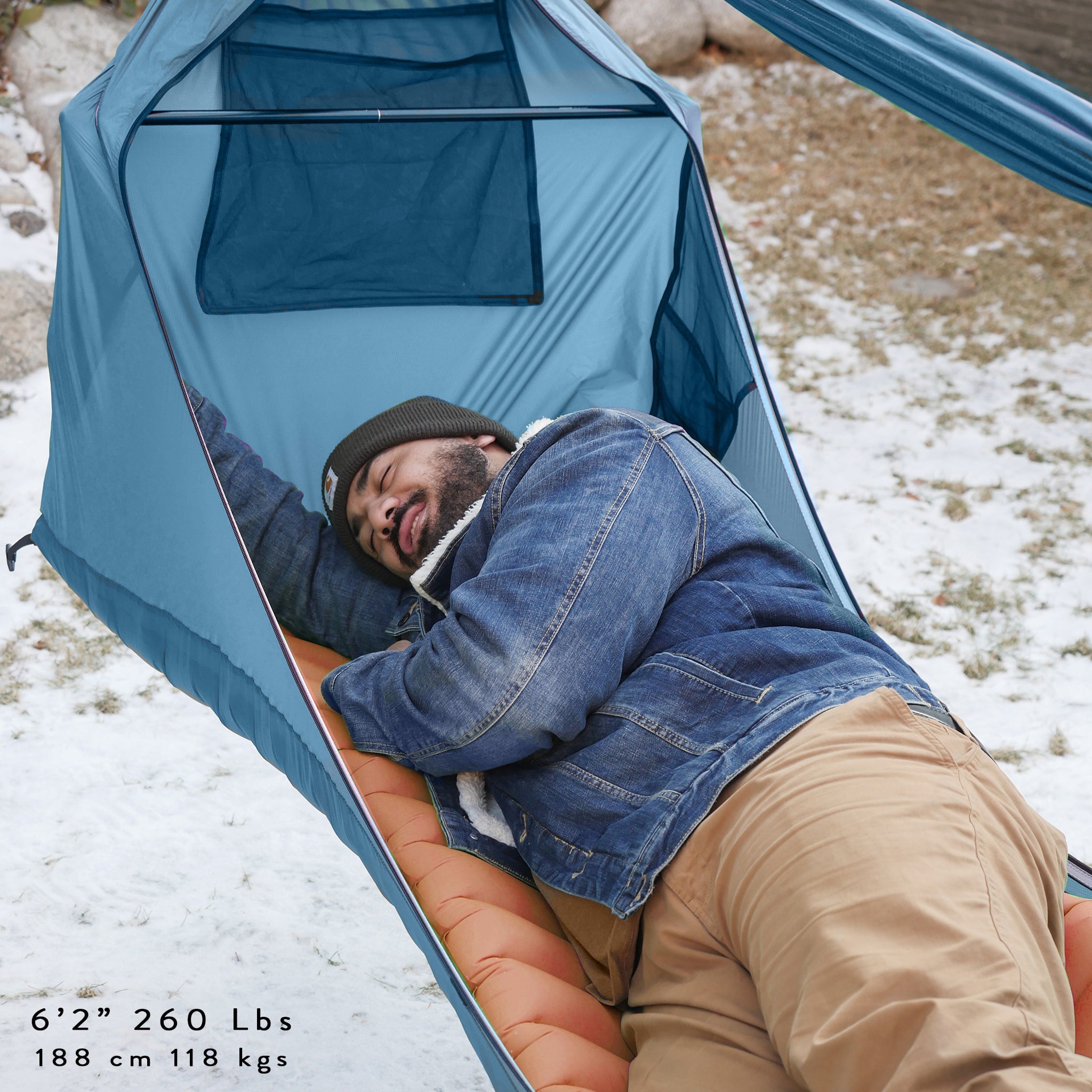
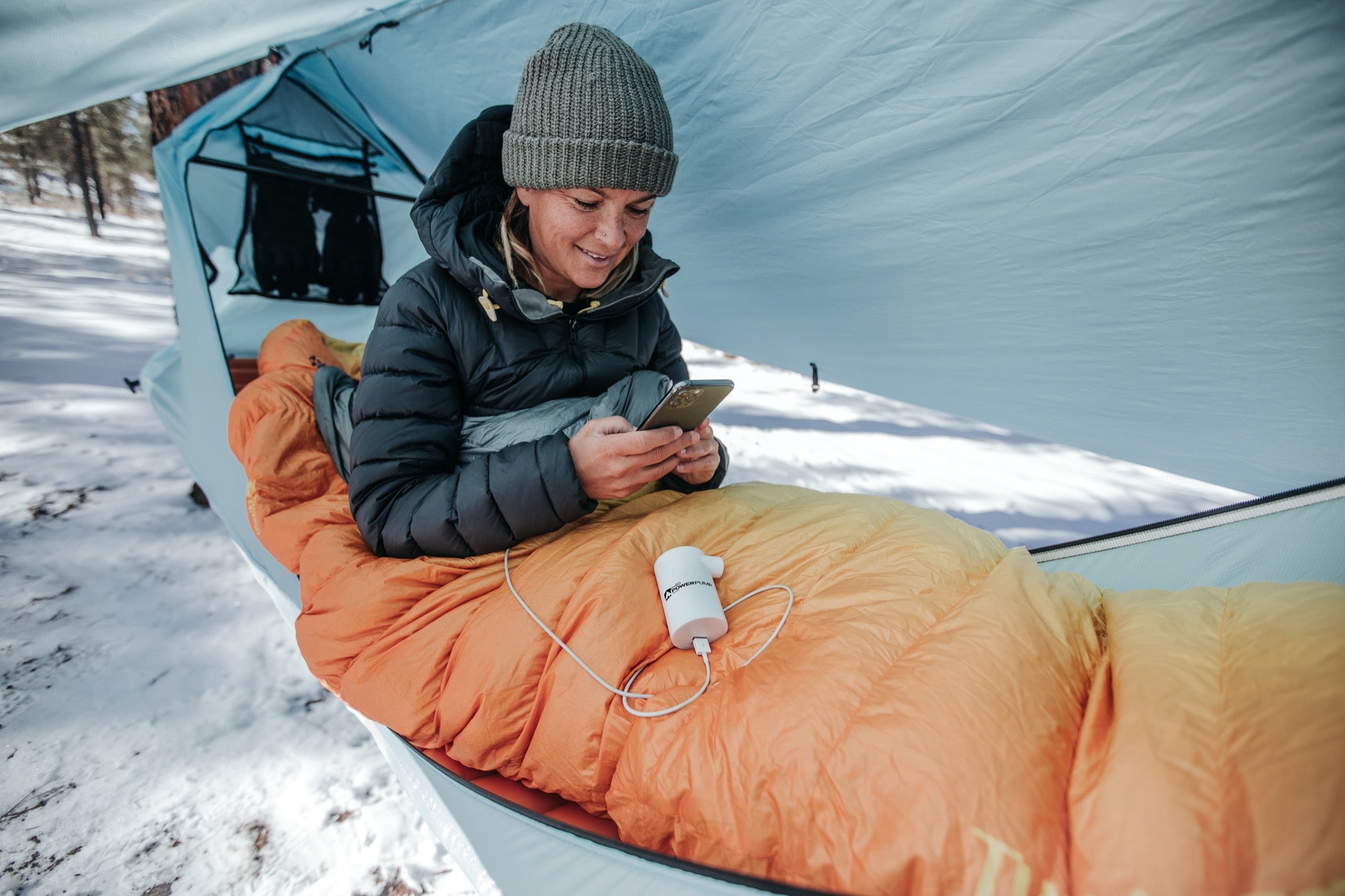
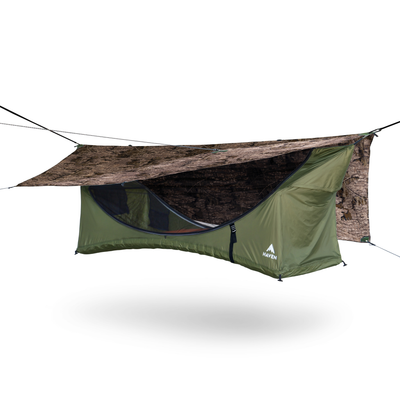
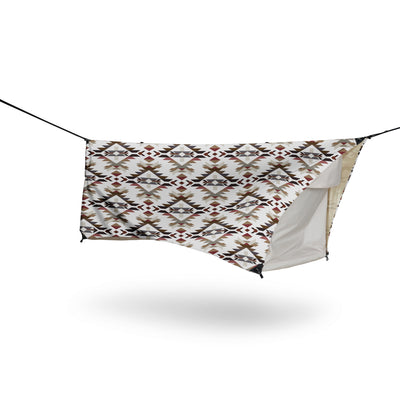
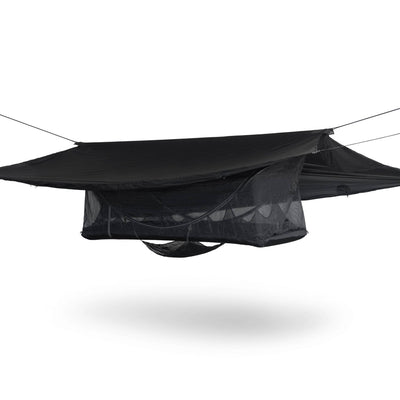
A bigger tent gives you room. It does not change what you lie on. If a better tent and pad haven't fixed your sleep, a lay-flat hammock tent is the other route. A Haven holds an insulated air mattress flat off the ground, with no banana curve, under a built-in bug net and a rainfly. It suits back, side and stomach sleepers. The Haven XL's platform is 30 x 80 in. The Haven Safari, the heavy-duty model for car camping, is rated to 350 lb (158 kg).
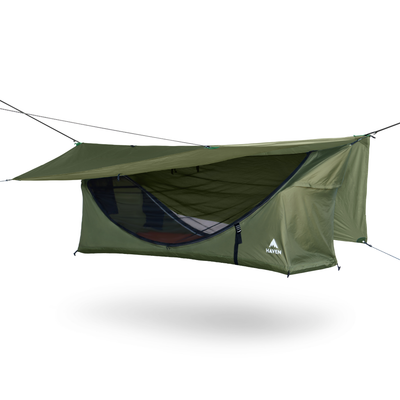
Every Haven sleeps one person. It hangs from two anchor points (two trees, a stand or a hitch mount), or pitches on the ground in bivy mode. It isn't light: the lightest Haven XL kit is 5 lb 15.7 oz / 2713 g for one person, pad and rainfly included. The full comparison is in Hammock Tent vs Ground Tent.
Which should you choose?
- Couple, car camping: a 4-person cabin or tunnel tent with a queen or double mattress.
- Family: a cabin or tunnel tent two sizes up, with a divider or separate bedroom. Not a Haven.
- Two backpackers: a 3-person backpacking tent with two doors.
- Windy, exposed sites: a lower dome or tunnel, not a tall cabin.
- Solo among trees, sleeping badly on the ground: a lay-flat hammock tent. A couple can use one each.
- No trees and no stand, sharing a bed, or lowest pack weight: a ground tent.
Related guides: How to Choose a Car Camping Tent, How to Choose a Camping Tent, Sleeping Pad Keeps Deflating? Better Options.
Common questions
What is the most comfortable tent for a good night's sleep?
The most comfortable tent for a good night's sleep has room for the bed you actually sleep on, walls steep enough to keep fabric off your face, vents you can leave open, and a level pitch. For most people that means a car camping tent one or two sizes up with a thick insulated mattress. Choose the bed first, then the tent that fits it.
Which camping tent is the most comfortable to sleep in?
A cabin or tunnel tent with near-vertical walls is the most comfortable type to sleep in for most car campers, because the whole floor is usable and a full-size mattress or cots fit. On windy sites a lower dome is the calmer choice.
What's the best camping tent for adults who want to actually sleep well?
Adults who want to sleep well should choose a tent by its floor dimensions, not its capacity label. Allow a 25 in wide pad or a cot for each adult, plus room for bags. Add walls steep enough to sit up against, a door each for night exits, and vents that work with the fly on.
Do blackout tents help you sleep?
They help if light is what wakes you. Blackout fabric keeps the tent dim after sunrise, but it doesn't block noise or move air, so you still need mesh and vents.
Is a hammock tent more comfortable than a tent?
A lay-flat hammock tent can be, for one person who sleeps badly on the ground, because the bed stays flat and off rocks, roots and slope. A ground tent is more comfortable if you want space to sit up, change clothes or share. More in The Most Comfortable Way to Sleep Outside and on Haven vs Ground Tents.
Comments (0)
No comments yet — be the first!
Leave a Comment