5 Common Misconceptions About Hammock Camping
Tim Haines · May 5, 2023

What are the common misconceptions about hammock camping? That it's uncomfortable, that it's only for summer, that it's hard to set up, that it's expensive, and that you're stuck if there are no trees. Each has some truth for traditional hammocks, but a lay-flat hammock tent changes the picture: you can lie flat, an insulated pad keeps you warm from below, setup is one kit, and you can pitch it on the ground. There are still real trade-offs, which we cover at the end.
Hammock camping has become more popular in recent years, but a few misconceptions still keep people from trying it. Here are five we hear often, and how the Haven Tent answers them.
Misconception 1: Hammock camping is uncomfortable
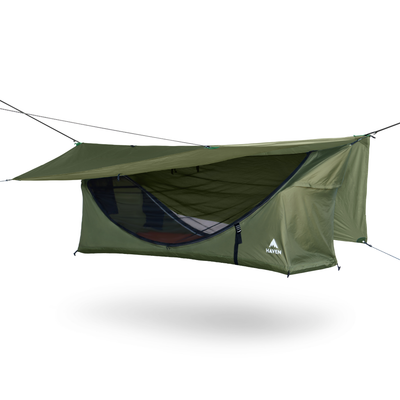
Many people assume that sleeping in a hammock means sleeping curled up like a banana. That's a fair description of a traditional hammock, but not of the Haven Tent. Our lay-flat design lets you sleep on your back, side or stomach, much like in your own bed. The patented structure keeps the sleeping platform open and flat, so you're evenly supported (how it works). Side sleeper? See Hammocking for Side Sleepers.

Misconception 2: Hammock camping is only for warm weather
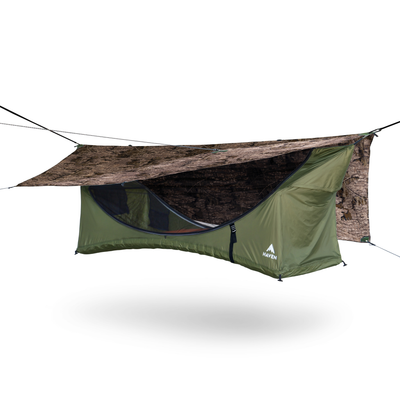
Traditional hammocks get cold, because air moving underneath you steals heat. In a Haven, the insulated pad is your bottom insulation, and the rainfly protects you from wind and rain. With the insulated pad, a Haven is a 3-season system. Add the Haven Insulated Pad Cover, designed specifically for Haven's lay-flat tents, for more insulation under your core and 4-season use. Pair it with a sleeping bag or quilt rated for the conditions. More in How to Hammock Camp in the Cold.

Misconception 3: Hammock camping is difficult to set up
Setting up a traditional hammock can be a hassle, with separate lines for the hammock, rainfly, underquilt and storage. The Haven integrates all of that into one system: a tree strap for each tree and two carabiners, all included in the kit. No complicated knots or tools, and it takes about 5 minutes once you've practiced (setup guide videos).

Misconception 4: Hammock camping is expensive
A hammock setup built from separate parts adds up fast: hammock, rainfly, underquilt, top quilt, pad, bug net, tree straps, carabiners and stakes. A Haven kit includes the hammock, insulated pad, bug net, rainfly, tree straps, carabiners, guylines and stakes, so the fair comparison is with a full tent-and-pad or hammock setup, not a bare hammock. You'll still want a sleeping bag or quilt.
We even made the pad's bag double as a pump sack, so you don't have to inflate it with your own breath. Current prices are on each product page.

Misconception 5: Hammocks only work where there are trees
With a Haven you can camp anywhere you find two trees, whether you're car camping, backpacking or lounging in the backyard. And with no trees, it pitches on the ground as a bivy tent with trekking poles (here's how), or you can hang it from a stand.

What's still true
A fair list has to include the trade-offs. A Haven sleeps one person, so couples hang two side by side. It's heavier than a bare hammock, and an ultralight ground tent with a thin pad can weigh less. In bivy mode you're back on the ground. And if you expect to sit out long storms inside your shelter, a fully enclosed tent can be the better choice. The comparison page covers this in when ground tents win.
If those trade-offs work for you, try it: Havens come with a 60-day return window, so you can see how you sleep (returns). Browse the hammock tents collection or read our outdoor sleep systems FAQ.
← Back to Adventure Journal
<div class="dynamic-checkout__content" id="dynamic-checkout-cart" data-shopify="dynamic-checkout-cart"> <shopify-accelerated-checkout-cart wallet-configs="[{"supports_subs":true,"supports_def_opts":false,"name":"shop_pay","wallet_params":{"shopId":11057397823,"merchantName":"Haven Tents","personalized":true}},{"supports_subs":false,"supports_def_opts":false,"name":"amazon_pay","wallet_params":{"checkoutLanguage":"en_US","ledgerCurrency":"USD","placement":"Cart","sandbox":false,"merchantId":"A21KZNDFJ6EOT6","productType":"PayAndShip","design":"C0002"}},{"supports_subs":true,"supports_def_opts":false,"name":"paypal","wallet_params":{"shopId":11057397823,"countryCode":"US","merchantName":"Haven Tents","phoneRequired":true,"companyRequired":false,"shippingType":"shipping","shopifyPaymentsEnabled":true,"hasManagedSellingPlanState":false,"requiresBillingAgreement":true,"gatewayType":"CONNECTED","merchantId":"AT9YPQVBATPVS","sdkUrl":"https://www.paypal.com/sdk/js?components=buttons\u0026commit=false\u0026currency=USD\u0026locale=en_US\u0026client-id=AexZEtAxk09Ncgj6FSWFFyGKbxxAZ_LTyJ2DPdJWl1YUlecinmc5AfIaRF2qYjWlusWahlzz6SVkY5Ci\u0026merchant-id=AT9YPQVBATPVS\u0026intent=authorize","serviceableCountryCodes":["AC","AD","AE","AF","AG","AI","AL","AM","AO","AR","AT","AU","AW","AX","AZ","BA","BB","BD","BE","BF","BG","BH","BI","BJ","BL","BM","BN","BO","BQ","BR","BS","BT","BW","BY","BZ","CA","CC","CD","CF","CG","CH","CI","CK","CL","CM","CN","CO","CR","CV","CW","CX","CY","CZ","DE","DJ","DK","DM","DO","DZ","EC","EE","EG","EH","ER","ES","ET","FI","FJ","FK","FO","FR","GA","GB","GD","GE","GF","GG","GH","GI","GL","GM","GN","GP","GQ","GR","GS","GT","GW","GY","HK","HN","HR","HT","HU","ID","IE","IL","IM","IN","IO","IQ","IS","IT","JE","JM","JO","JP","KE","KG","KH","KI","KM","KN","KR","KW","KY","KZ","LA","LB","LC","LI","LK","LR","LS","LT","LU","LV","LY","MA","MC","MD","ME","MF","MG","MK","ML","MM","MN","MO","MQ","MR","MS","MT","MU","MV","MW","MX","MY","MZ","NA","NC","NE","NF","NG","NI","NL","NO","NP","NR","NU","NZ","OM","PA","PE","PF","PG","PH","PK","PL","PM","PN","PS","PT","PY","QA","RE","RO","RS","RU","RW","SA","SB","SC","SD","SE","SG","SH","SI","SJ","SK","SL","SM","SN","SO","SR","SS","ST","SV","SX","SZ","TA","TC","TD","TF","TG","TH","TJ","TK","TL","TM","TN","TO","TR","TT","TV","TW","TZ","UA","UG","UM","US","UY","UZ","VA","VC","VE","VG","VN","VU","WF","WS","XK","YE","YT","ZA","ZM","ZW"]}}]" access-token="20cee07b2f5277b40ccae45e245d3c77" buyer-country="US" buyer-locale="en" buyer-currency="USD" shop-id="11057397823" cart-id="c1d4de18faae6b25c7f3749643c56683" > <div class="wallet-button-wrapper"> <ul class='wallet-cart-grid wallet-cart-grid--skeleton' role="list" data-shopify-buttoncontainer="true"> <li data-testid='grid-cell' class='wallet-cart-button-container'><div class='wallet-cart-button wallet-cart-button__skeleton' role='button' disabled aria-hidden='true'> </div></li><li data-testid='grid-cell' class='wallet-cart-button-container'><div class='wallet-cart-button wallet-cart-button__skeleton' role='button' disabled aria-hidden='true'> </div></li><li data-testid='grid-cell' class='wallet-cart-button-container'><div class='wallet-cart-button wallet-cart-button__skeleton' role='button' disabled aria-hidden='true'> </div></li> </ul> </div> </shopify-accelerated-checkout-cart> </div>



Comments (0)
No comments yet — be the first!
Leave a Comment