



Hammock tent or ground tent: which is better, and which sleeps better? If you're buying one shelter for every kind of trip, a ground tent is the safer default. A lay-flat hammock tent is the better buy if you camp alone (or one each) where there are trees and you sleep badly on the ground.
A ground tent works on open, treeless and exposed sites, it's simpler in cold wind, and it can sleep a partner, kids or a dog. The hammock tent is the better buy for side and stomach sleepers, people who wake up sore, and anyone tired of rocks, roots, slopes and puddles under their pad. Which one you'll sleep better in comes down to four things: how you sleep, where you camp, how cold it gets and whether there's something to hang from.
Our pick: If you camp solo among trees and sleep badly on a pad, choose a lay-flat hammock tent. For backpacking, that's the Haven Spectre, our lightest kit. For car camping or the roomiest bed, the Haven XL (30 x 80 in platform). For heavier campers and glamping, the Haven Safari (300d canvas, rated to 350 lb). For smaller builds under about 180 lb, the original Haven Tent (24 x 78 in). If you need one shelter for two or more people, camp mostly above treeline or in the desert, or already sleep well on a pad, buy a good ground tent instead. Every Haven sleeps one person.
First: which kind of hammock tent?
Most of the conflicting advice about hammocks and tents comes from treating every hammock as the same thing. There are three main designs, and they sleep very differently:
- Gathered-end (traditional) hammock, with a separate tarp and bug net: the fabric curves you into a banana shape, so most people lie diagonally on their back. Light and packable, but hard for side and stomach sleepers, and it needs an underquilt or pad for warmth.
- Bridge hammock: spreader bars at the head and foot give a flatter lay, and some side sleepers manage in one. Insulation, tarp and bug net are usually bought separately.
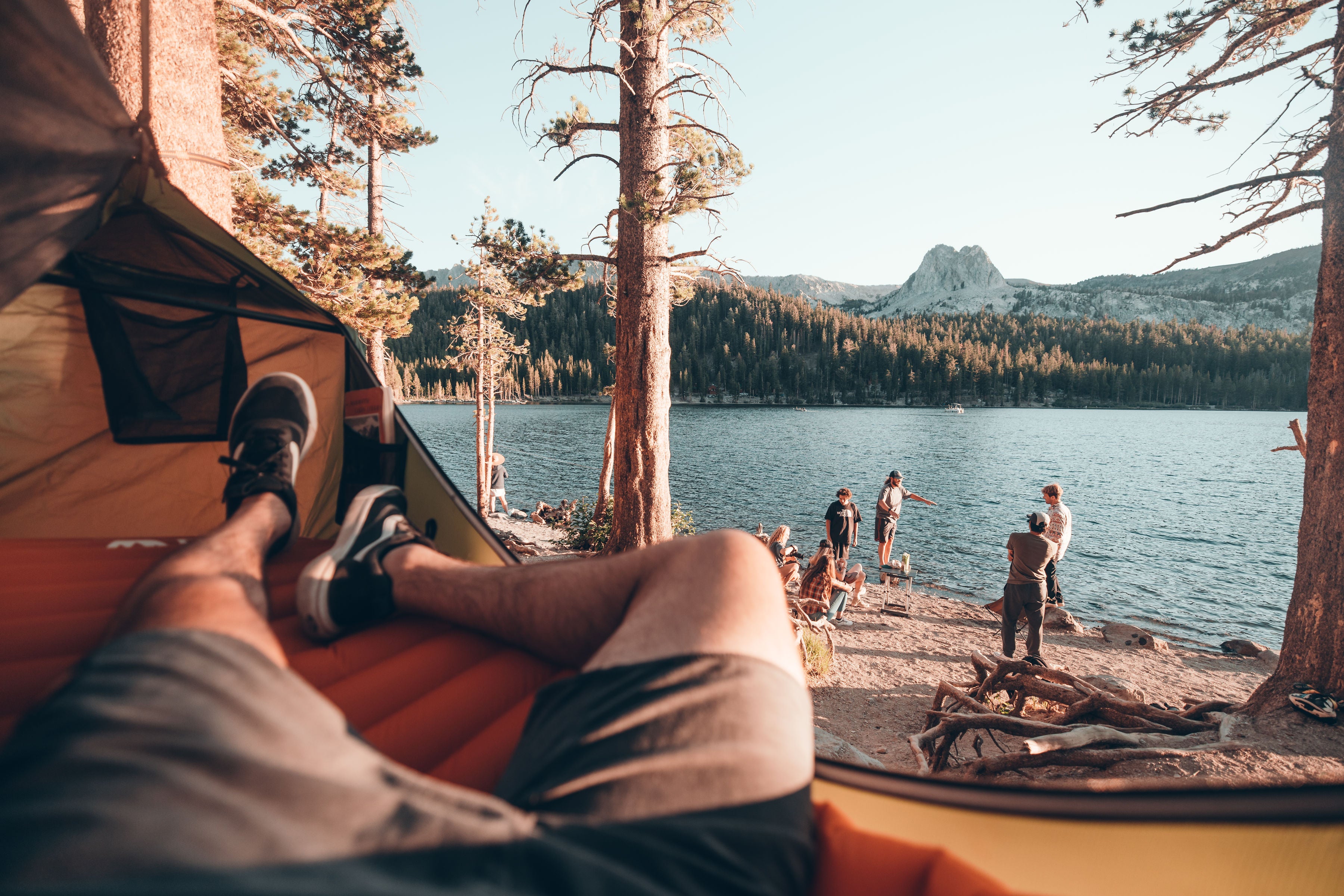
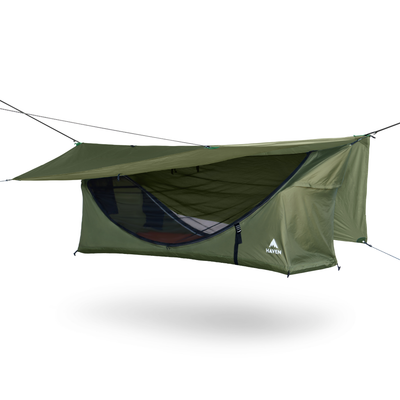
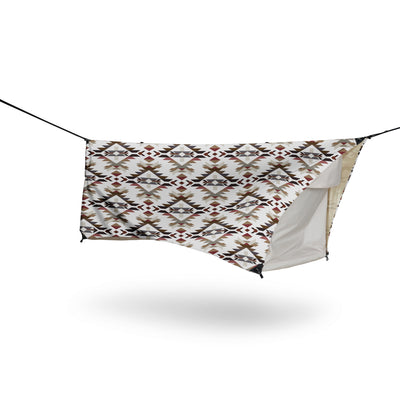
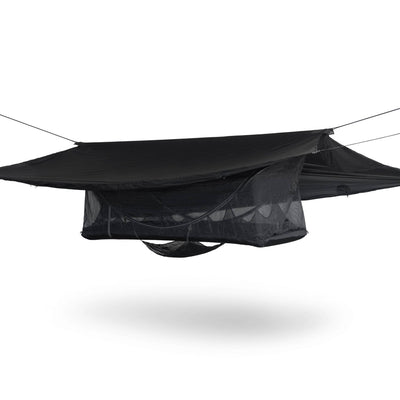
- Lay-flat hammock tent, like the Haven: an insulated air mattress held flat in a suspended frame, with the bug net and rainfly built in. You can lie on your back, side or stomach and roll over much as you would in bed.
Unless we say otherwise, "hammock tent" on this page means a lay-flat design. The differences are explained in Lay-Flat vs Regular Hammock.
Quick verdict by camper
- First shelter, mixed trips, not sure where you'll camp most: a ground tent.
- Solo, wooded trails, side or stomach sleeper: a lay-flat hammock tent.
- You wake up sore on a pad, or your sites are rocky, rooty, sloped or wet: a lay-flat hammock tent.
- Back sleeper who already sleeps well on a pad: keep your ground tent, or try a regular hammock if you want to hang.
- Couple: a ground tent if you want to sleep next to each other; one Haven each if you'd both rather have your own flat bed.
- Family, or camping with a dog: a ground tent (some families mix: a tent for the kids, a Haven for each adult).
- Above treeline, desert or open beach: a ground tent.
- Car camping at campgrounds with tent pads or few trees: a ground tent is simplest; a Haven works there on a stand, a hitch mount or in bivy mode.
- Cold, windy shoulder-season trips: either works with enough insulation underneath; a ground tent is simpler in exposed spots.
For a side-by-side of the Haven with popular tents, see Haven vs Ground Tents.
Hammock tent vs ground tent at a glance
Compare complete sleep setups, not just shelters: a ground tent needs a sleeping pad, and a Haven includes its insulated pad, rainfly and bug net.
| Lay-flat hammock tent (Haven) | Ground tent + pad | |
|---|---|---|
| Sleep surface | Flat insulated pad held in a suspended frame, off the ground | Pad on the ground; comfort depends on the site and the pad |
| Sleep positions | Back, side or stomach | Any, if the pad is thick enough and the ground is level |
| Site needs | Two anchors (trees, a stand or a hitch mount), or pitch on the ground in bivy mode | A flat, clear patch of ground |
| Warmth underneath | Insulated air pad included; no underquilt needed | Depends on your pad's R-value |
| Weather | Rainfly rated 4,000 mm (the Spectre also offers a Dyneema fly); the Spectre's mesh body relies on its fly | Floor and fly together; full enclosure suits long storms and high wind |
| Living space | A one-person bed with pockets and a gear sling; your pack goes under the rainfly | Room to sit up, change clothes and store gear; vestibules |
| People | One person per Haven; pairs hang two side by side | 1-person to family-size tents |
| Weight | Not the lightest option. The Spectre is our lightest kit; each kit includes pad, rainfly and bug net, and exact weights are on the product pages | About 1 to 3 lb for ultralight 1-person shelters with a thin pad; about 4 to 6 lb for many 2-person tents with pads |
| Learning curve | Hang height, strap placement and rainfly tension take a few practice pitches | Familiar to most people |
Where each one works
Terrain decides more than anything else. A hung hammock tent doesn't care what's under it, but it needs anchors; a ground tent needs nothing but a flat, clear spot.
| Campsite | Hammock tent | Ground tent |
|---|---|---|
| Wooded trails and forest sites | Best fit: slope, roots and rocks under you stop mattering | Fine wherever there's a clear, level spot |
| Rocky, rooty or sloping ground with trees | Best fit | Hard to find a flat spot; you feel lumps through the pad |
| Muddy or wet ground | Your bed stays above the water when hung | Pick high ground; a floor can end up in a puddle |
| Developed campground with tent pads | Trees where the rules allow; otherwise a stand, hitch mount or bivy mode on the pad | Easiest |
| Open beach, desert, above treeline | A stand (car camping) or bivy mode only | Better choice |
| Sparse or small trees | Needs two healthy, solid trees within reach of your straps; otherwise bivy mode | Unaffected |
More on hard sites in Hammock Tent vs Tent on Rocky Ground.
Which sleeps better?
"Sleeping better" outdoors mostly means fewer of the things that wake you up: pressure on your hips and shoulders, getting cold from below, struggling to change position, and lumps, slope or water under you. A hung lay-flat hammock tent removes the last one entirely, and it helps most with pressure and rolling over if you sleep on your side or stomach. A ground tent on a good, level site with a thick pad does well on all four for many back sleepers, and it's the only one of the two where you can sleep beside someone. Both need real insulation underneath to keep you warm.
Comfort is the main reason people choose a hammock tent. A Haven lets you lie flat as you would on a bed at home, instead of being bent into a banana shape. Many people tell us they sleep better than in a ground tent because they're evenly supported and can roll over freely, but comfort is personal and a good pad on good ground works well for plenty of campers. If you've never slept off the ground, try a night in the backyard first.
It depends on how you sleep
| Sleep position | Gathered-end hammock | Lay-flat hammock tent | Ground tent + pad |
|---|---|---|---|
| Back | Good for many people, lying diagonally | Good | Good on level ground with a decent pad |
| Side | Hard for most people | Good; designed for it | Depends on pad thickness; hips and shoulders take the pressure |
| Stomach | Very hard, because the lay still curves | Possible, because the platform is flat | Fine if the pad is thick and the ground is flat |
| Restless sleepers | Rolling over is awkward | Roll over as on a bed | Roll over freely; you may roll off a narrow pad |
| Sleeping next to a partner | No | No; hang two side by side | Yes |
More detail in Hammocking for Side Sleepers and A Hammock for Stomach Sleepers. If back, hip or joint pain is part of the question, see Camping With Back or Joint Pain, and check with your doctor or physical therapist.
Warmth: what's underneath you matters most
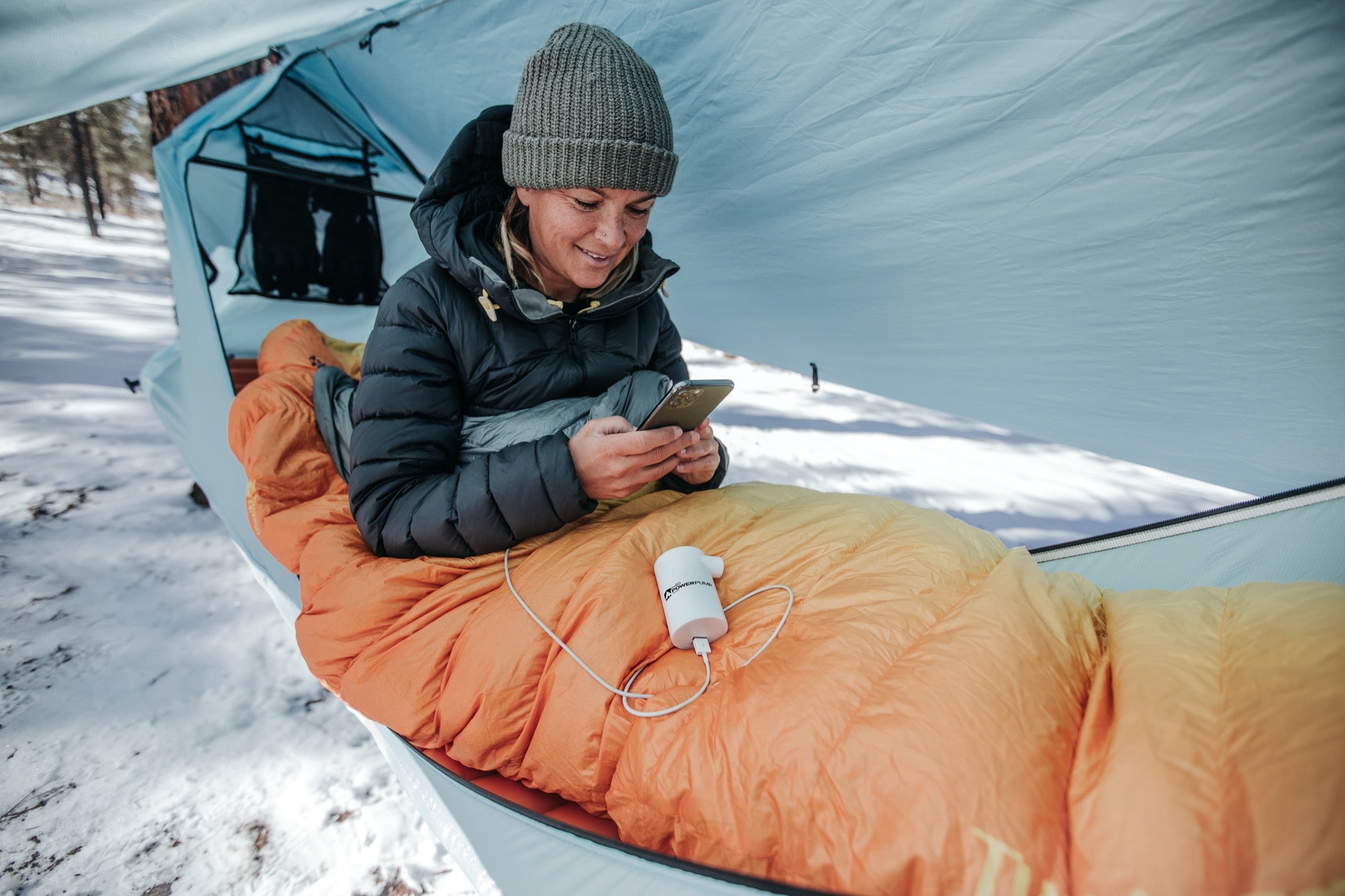
Most campers who sleep cold in a hammock are cold from below. Your sleeping bag is crushed flat where you lie on it, so it barely insulates underneath you, and in a hammock there's moving air under you instead of ground. A traditional hammock needs an underquilt or a pad for anything but warm nights. A ground tent needs a pad too, because the ground draws heat away through the floor. A Haven has an insulated air mattress built in (R2.5 with the Spectre pad, R5 Premium, R5.3 True Level), so you don't need an underquilt, and the Insulated Pad Cover adds more for cold trips. In exposed, windy cold, a ground tent pitched low is the simpler choice. More in Do You Need a Sleeping Pad If You Sleep Off the Ground? and How to Hammock Camp in the Cold.
Rain, wind and bugs
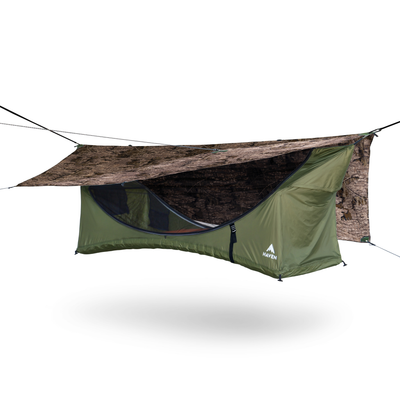
Haven systems come with a rainfly and a built-in bug net. Because you're hanging, rain runs off underneath you rather than pooling, and you get more airflow to manage condensation. In storms you can lock the rainfly down low; in fair weather you can roll it up for views. Some conditions favor a ground tent, though: long storms you want to sit out inside, high wind on open ground above treeline, and anywhere you'd be hanging under dead branches. For the details, see Hammock Tent vs Tent in Rain and Wind.
Is a hammock lighter than a tent and sleeping pad? Compare full systems
Not automatically. A bare hammock is light, but a full overnight hammock setup also needs suspension, a tarp, a bug net and insulation underneath, and that bottom insulation (an underquilt or an insulated pad) is the piece people forget to count. Once everything is in, a complete hammock system often ends up close to a lightweight tent and pad, and sometimes heavier. A Haven, with its pad, rainfly and bug net in one kit, won't beat an ultralight one-person shelter with a thin pad. Here's what each setup has to include for a fair comparison:
| Part | Traditional hammock setup | Lay-flat hammock tent (Haven) | Ground tent setup |
|---|---|---|---|
| Shelter | Hammock body | Hammock body and spreader bars | Tent body and poles |
| Rain cover | Tarp, bought separately | Rainfly, included | Fly |
| Bugs | Bug net, built in or separate | Bug net, included | Mesh inner |
| Under you | Underquilt or pad, bought separately | Insulated air pad, included | Sleeping pad |
| Anchoring | Straps or slings, carabiners | Tree straps, carabiners, guylines and stakes, included | Stakes and guylines; footprint optional |
| On top of you | A sleeping bag or quilt for the night's low, the same for all three | ||
- Warm nights, solo: a minimal gathered-end hammock and light tarp can be the lightest option of all, if you sleep well in one.
- Three-season: add bottom insulation and the hammock's weight advantage mostly disappears.
- Cold: a hammock needs a warmer underquilt or extra pad; a tent needs a warmer pad; a Haven adds the Insulated Pad Cover.
- Two people: one 2-person tent split between two packs often weighs less per person than two of any one-person shelter.
To compare your own options, list everything you'd actually sleep with on a typical night at the same temperature, and add it up. Each Haven product page has an "All weights" tab for every configuration, and our gear checklist lists what each setup needs. A Haven also doesn't need tent poles or a groundsheet when it's hung.
Hammock tent vs tent for backpacking
For most backpackers, a ground tent is the more versatile choice: it works above treeline and in the desert, it's simpler in cold wind, and an ultralight one-person tent with a thin pad will be lighter than any Haven kit. A lay-flat hammock tent earns its place if sleeping flat and off rocks, roots and wet ground matters more to you than the last pound, and your route has trees.
- Forested routes with trees at most camps: a hammock tent; the Haven Spectre is built for this.
- Mixed routes, mostly wooded with the odd open camp: a Haven still works; pitch it on the ground in bivy mode with trekking poles on the treeless nights. Put a footprint under the Spectre's mesh body.
- Mostly above treeline, desert or open coast: a ground tent.
- Counting every ounce, or sharing a shelter with a partner: a ground tent.
Bivy mode is a backup, not the Haven's best use: you're on the ground again, so pick a flat, well-drained spot as you would for a tent (Going to Ground shows how). For ways to trim the load, see Haven Tent for Backpacking.
Hammock tent vs tent for car camping
For most car campers a ground tent is the easier choice. Developed campgrounds are built around tent pads, one family tent sleeps everyone, and because weight doesn't matter you can bring a thick mattress or a cot. A hammock tent makes sense when you camp solo or as a couple who each want their own bed, when your sites are sloped, rocky or wet, or when you sleep badly on the ground no matter what mattress you bring. Without trees, use the Haven Stand or a hitch mount, or pitch on the tent pad in bivy mode, and check the campground's hammock rules before you go.
- Family weekend at a campground with tent pads: a big tent with mattresses or cots.
- Solo or couple road trip through wooded country: one Haven each; the Haven XL or Haven Safari for the most room.
- Mixed group: a tent for the kids, a Haven for each adult who wants one.
More in Best Car Camping Sleep Setup and Using a Hammock Tent at Campgrounds.
Space, gear and camping with others
A Haven is a one-person bed. You get in by sitting on the low side wall and swinging your legs in, with the ridgeline strap as a handhold. You can keep small things in its pockets and gear sling and leave your pack under the rainfly, but there's no room to stand or kneel up inside, no vestibule to cook in, and no floor space for a partner, a child or a dog. A ground tent is a room: you can sit up, change clothes, spread out gear and share it. If you camp as a group in hammocks, each person brings their own (see Group Hammock Camping).
Setup and learning curve
Ground tents need flat, clear terrain, which can be hard to find in rocky or uneven country. A Haven needs two sturdy anchor points, so you can camp over slopes or rough ground. Expect your first few pitches to take longer while you learn hang height, strap placement and rainfly tension, so practice at home before a trip. During the day, the lounge strap turns it into a reclined seat. With no trees, you can use a stand or pitch it on the ground in bivy mode.
Campground rules and trees
Some campgrounds and parks restrict hanging from trees, and some sites have no suitable trees. Check the rules before you go, use wide tree straps rather than rope, and only hang from healthy trees. See Hammock Camping in National Parks.
When a ground tent is the better choice
- You're buying your first shelter and don't know yet where you'll camp most.
- You camp above treeline, in the desert or on open coast most nights and don't want to rely on bivy mode.
- Your top priority is the lowest possible base weight.
- You want one shelter for two or more people, or you camp with kids or a dog.
- You expect to spend long stretches inside waiting out weather.
- You already sleep well on a pad.
The comparison page covers these in more detail under when ground tents win.
Is a hammock tent worth it? Which should you choose?
A lay-flat hammock tent is worth it for the people who get the most out of switching: solo campers who camp often in wooded country, side and stomach sleepers, people who wake up sore on a pad, and anyone whose campsites are rough, sloped or wet. For them, one kit replaces the tent, pad and the hunt for a flat spot. It isn't worth it if you need one shelter for several people, camp mostly where there are no trees, count every ounce, or already sleep well in your tent. Plenty of campers own both and choose by destination. Weighing up a cot, a pad or a hammock instead? See Hammock vs Cot vs Sleeping Pad. Comparing hammock tents? See Lay-Flat Hammock Tents Compared and Haven vs Tentsile. For more, read our outdoor sleep systems FAQ or compare all four models in the hammock tents collection.
Common questions
Should I buy a hammock tent or a regular tent?
If it's your first shelter and you'll camp in all kinds of places, or with other people, buy a regular tent. Buy a lay-flat hammock tent if you mostly camp alone where there are trees and you sleep badly on the ground.
Is a hammock tent more comfortable than a regular tent?
For side and stomach sleepers and for rough or wet ground, a lay-flat hammock tent usually is. For back sleepers on good, level ground with a thick pad, there may be little difference. A gathered-end hammock is less comfortable than a tent for most side and stomach sleepers.
Do you sleep better in a hammock tent or a ground tent?
Neither for everyone. You'll usually sleep better in a lay-flat hammock tent if pressure points, rolling over or lumpy, sloped ground keep you awake, and better in a ground tent if you're a back sleeper on good ground, want to sleep next to a partner, or camp in exposed cold. Either way, insulation underneath you matters as much as cushioning.
Is a hammock tent worth it compared with a regular tent?
It's worth it if you camp alone among trees and sleep badly on the ground. It's not worth it if you camp with others in one shelter, camp mostly where there are no trees, or already sleep well in your tent. See Are Lay-Flat Hammocks Worth It?
Hammock tent vs tent for backpacking: which is better?
A tent is the better all-round backpacking choice, especially above treeline, in the desert or when you're counting ounces. A lay-flat hammock tent suits wooded routes and backpackers who put sleep ahead of the lowest pack weight.
Hammock tent vs tent for car camping: which should I choose?
A ground tent for families and campgrounds built around tent pads. A hammock tent (one per person) for solo campers and couples who want a flat bed off the ground, hung from trees, a stand or a hitch mount.
Is a hammock setup lighter than a tent and sleeping pad?
Only sometimes. Compare complete setups for the same conditions: a full hammock system needs a tarp, bug net, suspension and insulation underneath. An ultralight one-person tent with a thin pad will usually be lighter than any Haven kit.
Are hammock tents colder than tents?
Without insulation underneath, yes: air moving under a hammock pulls heat away. With an insulated pad or underquilt they can be as warm as a tent with a good pad. A Haven includes an insulated pad; in exposed, windy cold a low ground tent is simpler.
Can two people share a hammock tent?
Not a Haven: each one sleeps one person. Couples hang two side by side; see Flat Hammock Tent vs Tree Tent for Two.
What if there are no trees?
Use the Haven Stand or a hitch mount when car camping, or pitch the Haven on the ground in bivy mode. If most of your trips are treeless, a ground tent is the more practical choice.
Comments (0)
No comments yet — be the first!
Leave a Comment