Are Lay-Flat Hammocks Worth It? Who They Suit and Who Should Skip Them
Haven Tents · October 21, 2026 · 4 min read

Are lay-flat hammocks worth it? They are if you sleep on your side or stomach, wake up sore on the ground, or can't get comfortable in a traditional hammock, and you camp where there are trees (or bring a stand). A lay-flat hammock tent gives you a flat, insulated bed off the ground with a bug net and rainfly built in. They are probably not worth it if you need one shelter for two or more people, count every ounce, camp mostly where there's nothing to hang from, or already sleep well in a gathered-end hammock or on a pad.

What you get with a lay-flat hammock
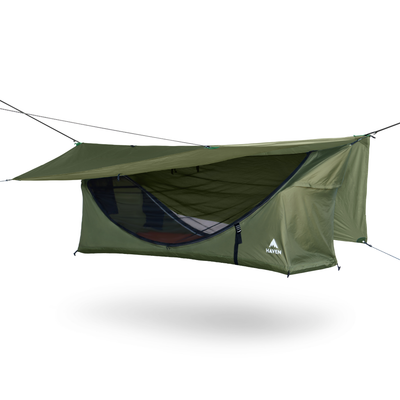
A traditional gathered-end hammock curves you into a banana shape and squeezes in at the shoulders. A lay-flat hammock hangs a flat sleeping platform below its anchor points instead. In a Haven, an insulated air mattress, two support arcs, spreader bars and a structural ridgeline work together to keep the bed flat and stable (the details are in The Secret Design Behind the Haven Tent).
What that means in practice:
- You can sleep in your normal position: back, side or stomach.
- The ground stops mattering. Rocks, roots, slope and puddles are under you, not in your back.
- Insulation is built in. The insulated pad sits in the frame, so you don't need a separate underquilt.
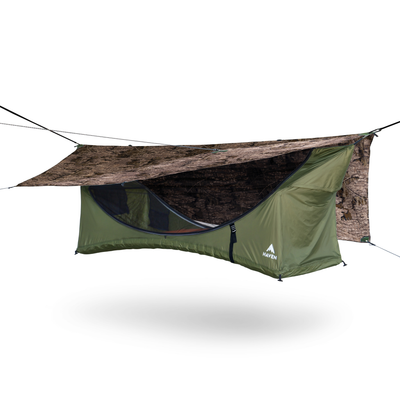
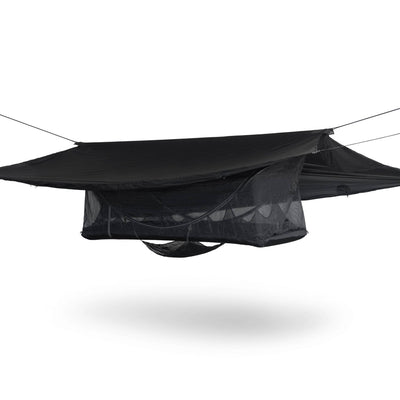
- It's a complete shelter. Each kit includes the hammock body with a bug net, a rainfly, straps, guylines and stakes, so it replaces a tent and a sleeping pad. See what an outdoor sleep system is.
When a lay-flat hammock is worth it
When it's not worth it
- You want to share a bed. Each Haven sleeps one person (rated to 285 lb, or 350 lb for the Safari). Couples and families hang one each, side by side. If you want to sleep together, a ground tent, a rooftop tent or a vehicle is the better choice.
- Weight comes first. Even our lightest model, the Haven Spectre, is heavier than an ultralight one-person tent with a thin pad or a bare hammock with a tarp. Kit weights are listed on each product page.
- You rarely have anything to hang from. Above treeline or in the desert you can pitch a Haven on the ground in bivy mode, but then you're back on the ground. For car camping, a stand or a hitch mount solves it, at extra cost and weight.
- You already sleep well. If a gathered-end hammock or a good pad works for you, a lay-flat system adds weight and cost for comfort you may not need.
- Budget. A complete lay-flat kit costs more than a basic hammock and tarp or an entry-level tent and pad. Current prices are on each product page.
Lay-flat hammock vs the alternatives
| Lay-flat hammock tent | Gathered-end hammock + tarp | Ground tent + pad |
|---|
| Sleeping surface | Flat, off the ground | Curved; flatter if you lie diagonally | Flat, on the ground |
| Side and stomach sleeping | Yes | Hard for most people | Depends on the pad |
| Insulation underneath | Insulated pad built in | Needs an underquilt or pad | Depends on the pad |
| Bug net and rainfly | Included | Usually bought separately | Included with the tent |
| People per shelter | One | One | One or more |
| Needs | Two trees, a stand or a hitch mount (or bivy mode on the ground) | Two trees | A flat, clear patch of ground |
| Weight and bulk | Heavier than a bare hammock | Lightest | Wide range |
How to decide
Ask yourself three questions. Do you sleep badly on the ground or in a curved hammock? Do most of your campsites have trees, or will you bring a stand or a hitch mount? Is each person happy with their own bed? If the answer to all three is yes, a lay-flat hammock is likely worth it. If not, our Haven vs Ground Tents page lists when a ground tent wins.
The best test is a night in your own backyard. Haven orders come with 60-day returns, so you can try it before a big trip. To pick a model, compare them in the hammock tents collection or read Haven Tent or Haven XL?
Related questions
← Back to Adventure Journal
<div class="dynamic-checkout__content" id="dynamic-checkout-cart" data-shopify="dynamic-checkout-cart"> <shopify-accelerated-checkout-cart wallet-configs="[{"supports_subs":true,"supports_def_opts":false,"name":"shop_pay","wallet_params":{"shopId":11057397823,"merchantName":"Haven Tents","personalized":true}},{"supports_subs":false,"supports_def_opts":false,"name":"amazon_pay","wallet_params":{"checkoutLanguage":"en_US","ledgerCurrency":"USD","placement":"Cart","sandbox":false,"merchantId":"A21KZNDFJ6EOT6","productType":"PayAndShip","design":"C0002"}},{"supports_subs":true,"supports_def_opts":false,"name":"paypal","wallet_params":{"shopId":11057397823,"countryCode":"US","merchantName":"Haven Tents","phoneRequired":true,"companyRequired":false,"shippingType":"shipping","shopifyPaymentsEnabled":true,"hasManagedSellingPlanState":false,"requiresBillingAgreement":true,"gatewayType":"CONNECTED","merchantId":"AT9YPQVBATPVS","sdkUrl":"https://www.paypal.com/sdk/js?components=buttons\u0026commit=false\u0026currency=USD\u0026locale=en_US\u0026client-id=AexZEtAxk09Ncgj6FSWFFyGKbxxAZ_LTyJ2DPdJWl1YUlecinmc5AfIaRF2qYjWlusWahlzz6SVkY5Ci\u0026merchant-id=AT9YPQVBATPVS\u0026intent=authorize","serviceableCountryCodes":["AC","AD","AE","AF","AG","AI","AL","AM","AO","AR","AT","AU","AW","AX","AZ","BA","BB","BD","BE","BF","BG","BH","BI","BJ","BL","BM","BN","BO","BQ","BR","BS","BT","BW","BY","BZ","CA","CC","CD","CF","CG","CH","CI","CK","CL","CM","CN","CO","CR","CV","CW","CX","CY","CZ","DE","DJ","DK","DM","DO","DZ","EC","EE","EG","EH","ER","ES","ET","FI","FJ","FK","FO","FR","GA","GB","GD","GE","GF","GG","GH","GI","GL","GM","GN","GP","GQ","GR","GS","GT","GW","GY","HK","HN","HR","HT","HU","ID","IE","IL","IM","IN","IO","IQ","IS","IT","JE","JM","JO","JP","KE","KG","KH","KI","KM","KN","KR","KW","KY","KZ","LA","LB","LC","LI","LK","LR","LS","LT","LU","LV","LY","MA","MC","MD","ME","MF","MG","MK","ML","MM","MN","MO","MQ","MR","MS","MT","MU","MV","MW","MX","MY","MZ","NA","NC","NE","NF","NG","NI","NL","NO","NP","NR","NU","NZ","OM","PA","PE","PF","PG","PH","PK","PL","PM","PN","PS","PT","PY","QA","RE","RO","RS","RU","RW","SA","SB","SC","SD","SE","SG","SH","SI","SJ","SK","SL","SM","SN","SO","SR","SS","ST","SV","SX","SZ","TA","TC","TD","TF","TG","TH","TJ","TK","TL","TM","TN","TO","TR","TT","TV","TW","TZ","UA","UG","UM","US","UY","UZ","VA","VC","VE","VG","VN","VU","WF","WS","XK","YE","YT","ZA","ZM","ZW"]}}]" access-token="20cee07b2f5277b40ccae45e245d3c77" buyer-country="US" buyer-locale="en" buyer-currency="USD" shop-id="11057397823" cart-id="ebc28c40c31ec2f233d918cebe314499" enabled-flags="["a1d1f9a1","f5afabb3","370070f3","b311f899"]" > <div class="wallet-button-wrapper"> <ul class='wallet-cart-grid wallet-cart-grid--skeleton' role="list" data-shopify-buttoncontainer="true"> <li data-testid='grid-cell' class='wallet-cart-button-container'><div class='wallet-cart-button wallet-cart-button__skeleton' role='button' disabled aria-hidden='true'> </div></li><li data-testid='grid-cell' class='wallet-cart-button-container'><div class='wallet-cart-button wallet-cart-button__skeleton' role='button' disabled aria-hidden='true'> </div></li><li data-testid='grid-cell' class='wallet-cart-button-container'><div class='wallet-cart-button wallet-cart-button__skeleton' role='button' disabled aria-hidden='true'> </div></li> </ul> </div> </shopify-accelerated-checkout-cart> </div>



Comments (0)
No comments yet — be the first!
Leave a Comment