
What is the best camping tent? There isn't one best camping tent. The right one depends on four things: who sleeps in it, how you get to camp, the weather and season, and how you sleep. For most campers who drive to camp, that means a 3-season dome or cabin tent sized one person larger than the group.
Haven makes lay-flat hammock tents, not ground tents, so this guide doesn't rank brands or models. It compares tent types and the specs that matter. New to camping? Start with the shorter How to Choose a Camping Shelter as a Beginner.
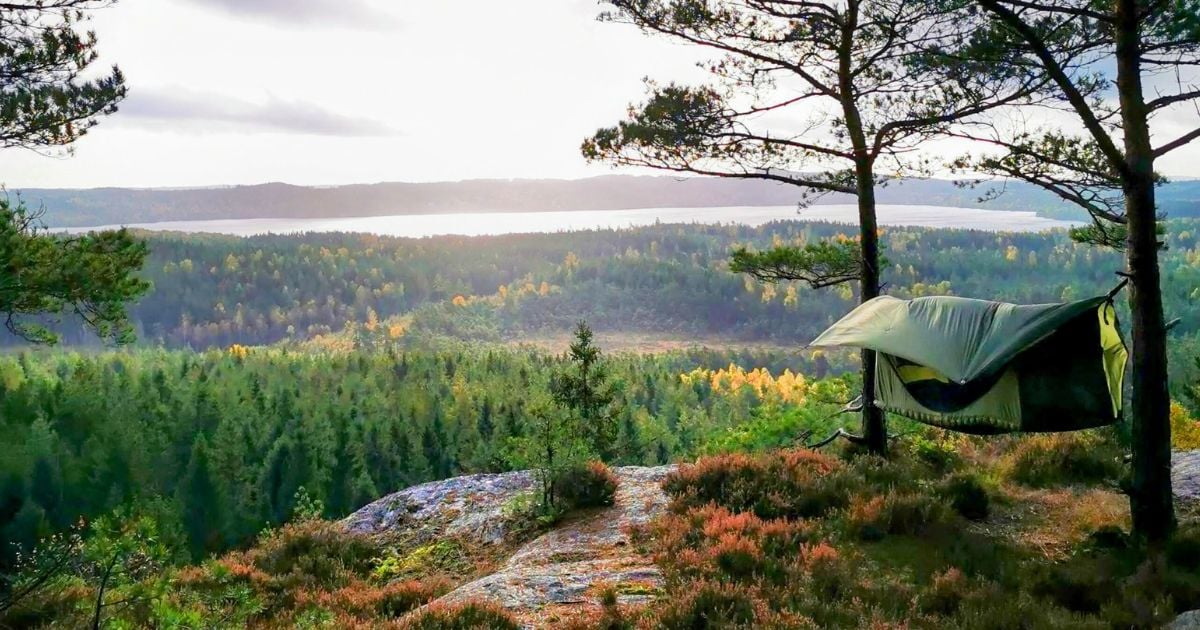
Our pick: If you drive to camp, a 3-season dome or cabin tent, one size up. If you carry it, a backpacking tent. If your tent is fine and the ground is what keeps you awake (sore hips and shoulders, roots, slope, wet ground), a lay-flat hammock tent like the Haven is the alternative to look at. Don't buy a Haven if you want one shelter for the family, if you and your partner want to share one bed, if you camp where there are no trees and can't bring a stand, or if you want the lowest possible pack weight. Every Haven sleeps one person and needs two anchor points (trees, a stand or a hitch mount), or it pitches on the ground in bivy mode.
What is the best camping tent? Four things decide it
The best camping tent is the one that fits your group, your way of getting to camp, your weather and the way you sleep, so no single tent wins for everyone.
- Who is sleeping in it. Count people, dogs and gear, then go one size up, because capacity ratings are tight.
- How you get to camp. If you park beside your site, buy floor space and headroom. If you carry the tent, weight and packed size come first.
- Weather and season. A 3-season tent covers spring to fall. Windy sites favor low domes, and rainy places a full-coverage rainfly.
- How you sleep. The tent keeps out weather and bugs, but the pad or cot inside decides how you sleep. Side sleepers and anyone who wakes up sore should choose the bed as carefully as the tent. See What Is an Outdoor Sleep System?
Camping tent types compared
| Type | Best for | Strengths | Trade-offs |
|---|---|---|---|
| Dome tent | Couples and small groups in mixed weather | Freestanding, simple to pitch, sheds wind well | Sloped walls cut headroom and usable floor |
| Cabin tent | Families who drive to camp | Near-vertical walls, standing height, room for cots | Heavy, bulky, catches wind |
| Tunnel tent | Groups who want space for the weight | Lots of room and covered porch space | Not freestanding; must be staked and guyed |
| Instant or pop-up tent | Short fair-weather trips and late arrivals | Poles are pre-attached, so it pitches fast | Bulky packed, hubs are harder to repair, less stable in wind |
| Canvas or polycotton tent | Long stays and frequent car camping | Breathable, quiet, long-lasting with care | Heaviest and bulkiest; must be stored fully dry |
| Backpacking tent | Anyone carrying their shelter | Light, small when packed | Low headroom, snug floor, thinner fabrics |
| Rooftop tent | Couples camping from a vehicle | Flat mattress off the ground, quick to open | Needs a roof rack; packs away to drive; costly |
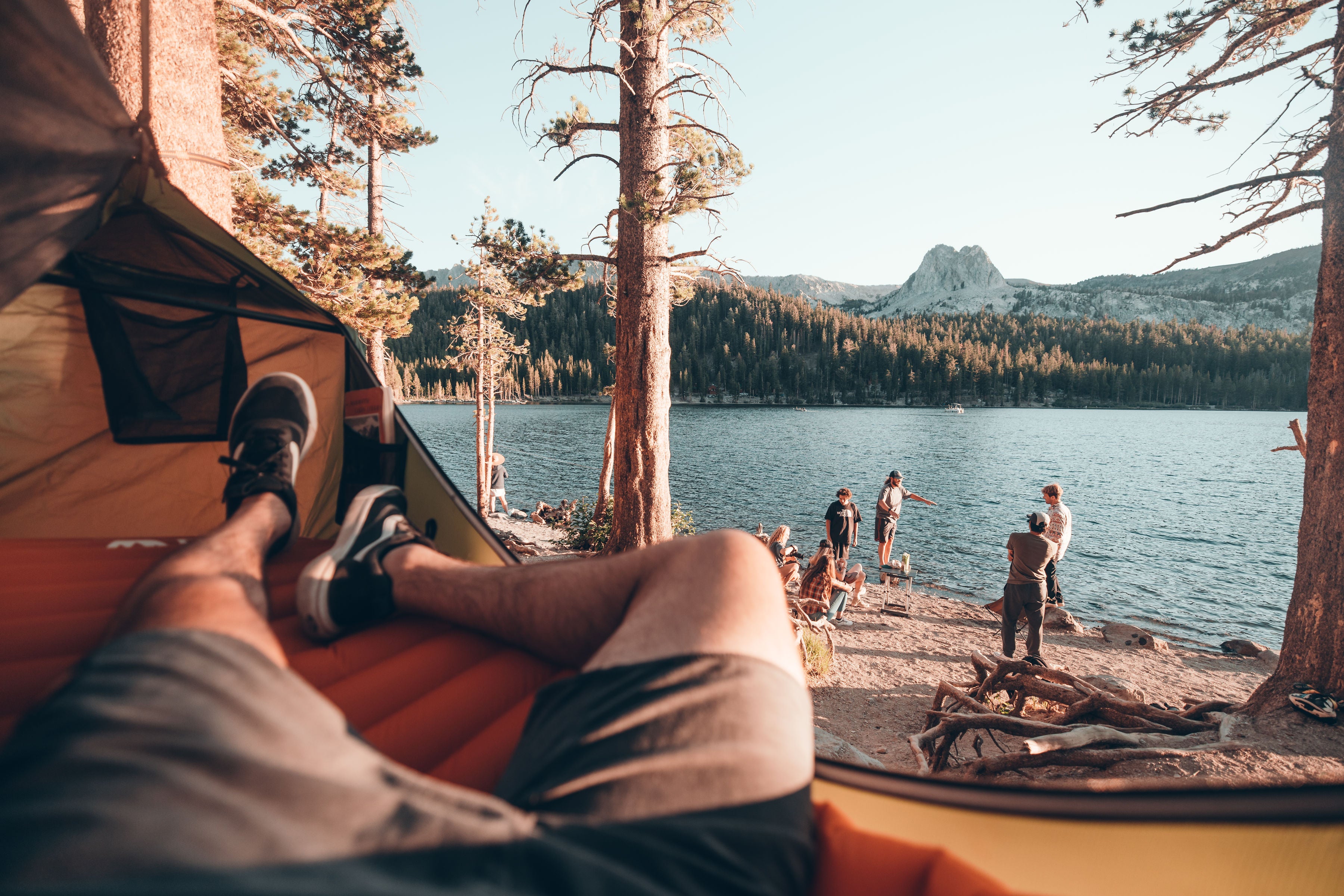
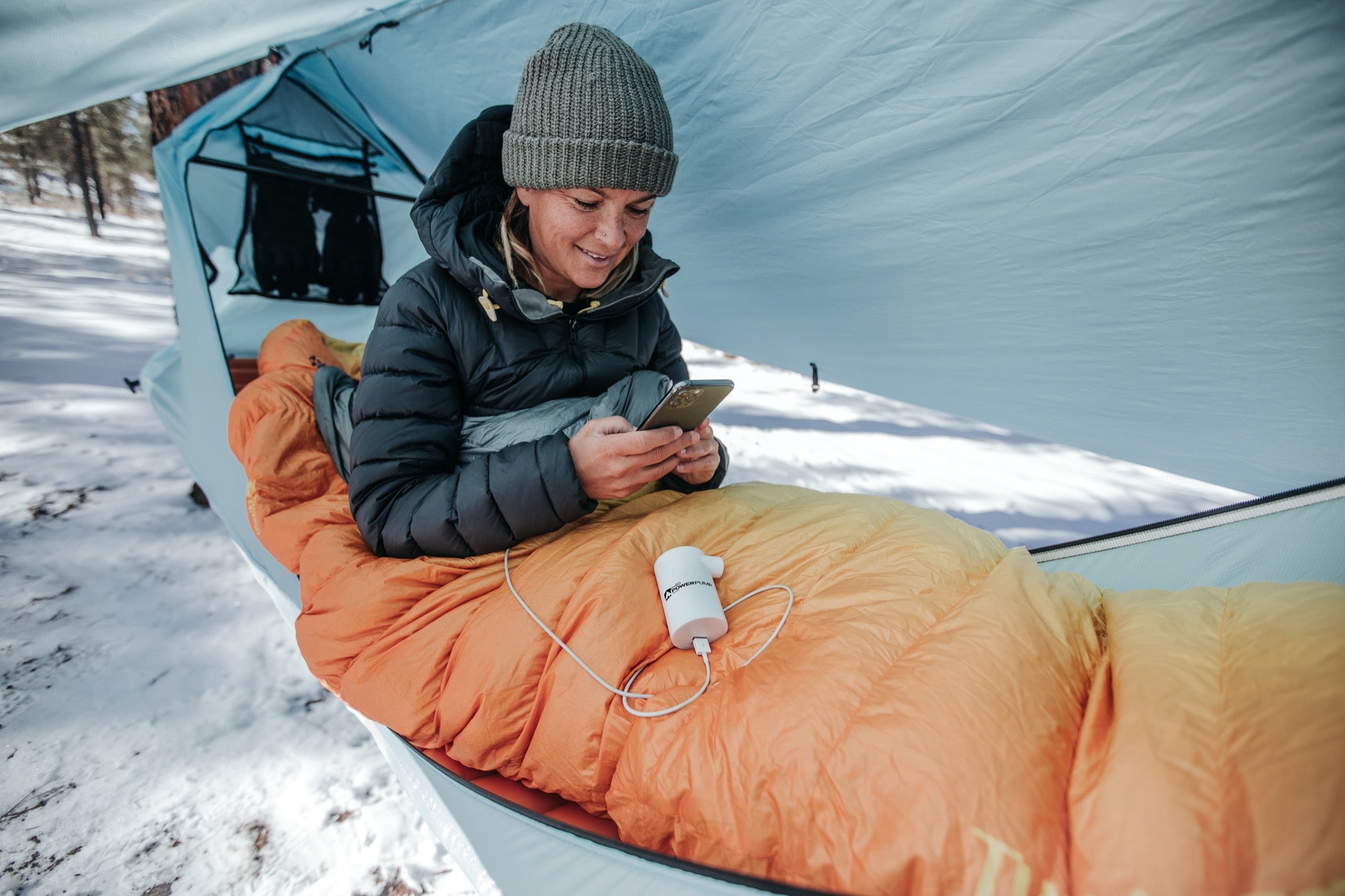
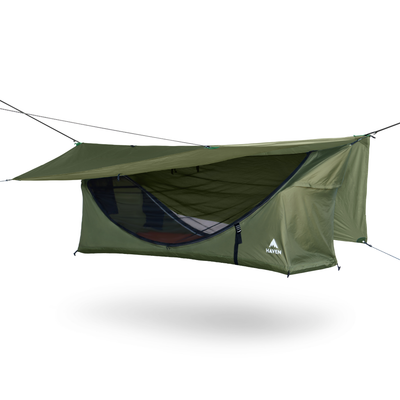
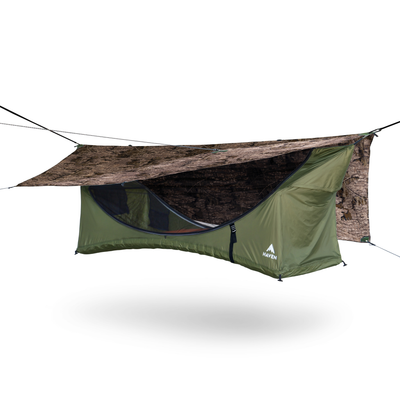
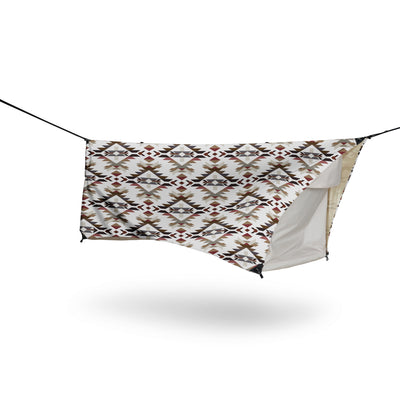
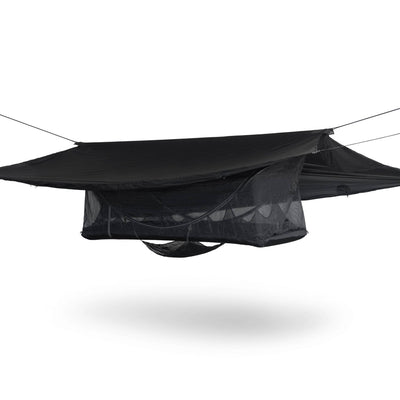
| Lay-flat hammock tent | Solo campers who sleep badly on the ground | Flat bed off the ground; insulated pad, bug net and rainfly in one kit | One person each; needs two anchor points or bivy mode; no room to stand or share; not the lightest option |
A lay-flat hammock tent solves a different problem: the ground, not the roof. See Hammock Tent vs Ground Tent.
What's the best all-around 3-season camping tent?
The best all-around 3-season camping tent is a freestanding dome with a mesh inner, a full-coverage rainfly and aluminum poles, in a car-camping build if you drive to camp or a backpacking build if you carry it.
A 3-season tent is built for spring, summer and fall: rain, moderate wind, bugs and mild nights. It uses plenty of mesh for airflow, and it is not built to carry snow or stand in sustained high wind on exposed ground. That is the job of a 4-season tent, which has more poles, less mesh and more weight.
"All-around" means two things. If you only drive to camp, buy the roomier car-camping version. If you also hike in, a roomy 2 or 3-person backpacking tent is the crossover: light enough to carry and big enough for a campground, with less headroom than a true car-camping tent.
What is the best 2-person camping tent?
The best 2-person camping tent for two adults is often a 3-person tent, because a 2-person rating assumes two people lying shoulder to shoulder on narrow pads with little room for gear.
Check the floor width against your pads. Regular pads are commonly about 20 in wide and wide pads about 25 in, so two wide pads need about 50 in of floor before any gear goes in. For car camping, size up to a 3-person tent. For backpacking, stay with a 2-person tent only if weight matters most, and look for two doors and two vestibules so nobody climbs over anybody and wet gear stays out of the sleeping area.
What's the best tent for weekend camping trips?
The best tent for weekend camping trips is a 3-season dome or cabin tent that one person can pitch in the dark, sized one person larger than your group, with a full-coverage rainfly.
Most weekend trips are car camping with a Friday evening arrival, so setup features matter: a freestanding design, color-coded poles, and clips rather than long pole sleeves. If you walk in from the car, treat it as backpacking and look at weight first. Whatever you buy, pitch it once at home; Camping for Beginners covers the rest.
What's the best camping tent for comfort and durability?
The best camping tent for comfort and durability together is a car-camping tent in canvas or polycotton, or in heavier polyester with sturdy poles, and both trade weight and bulk for living space and a longer life.
Comfort comes from headroom, near-vertical walls, ventilation and enough floor for real beds. Durability comes from fabric, poles and care.
- Polyester: the common car-camping fabric. It holds its shape when wet and handles sun better than nylon.
- Nylon: stronger for its weight, so it's used in lighter backpacking tents. It sags when wet, and thin versions need more care.
- Canvas or polycotton: breathable, quiet and long-lasting with care. It's heavy and must be completely dry before storage.
Denier (the "d" in a fabric spec) is yarn thickness. Higher denier means thicker, heavier yarn that generally resists abrasion better. Waterproof coatings wear with age and sunlight weakens every tent fabric, so pitch in shade when you can and never store a tent damp. Our own car-camping model, the Haven Safari, uses 300d polyester canvas for its hammock and rainfly.
What's the best camping tent for the money?
The best camping tent for the money is the one with the lowest cost per night over the years you use it, which is not always the cheapest tent.
Divide what you pay by the nights you expect to sleep in it. If you camp once or twice a summer in fair weather, a basic dome is good value. If you camp often, or in wind and rain, paying more usually costs less per night because the tent lasts longer and can be repaired. Cheaper tents usually save money in four places:
- Poles: fiberglass instead of aluminum, which is heavier and more likely to crack.
- Rainfly coverage: a small cap fly that leaves the walls exposed.
- Seams: untaped or partly taped seams that seep.
- Zippers: light zippers that snag and fail first.
Spend on those four, and keep money back for the pad: a good tent with a thin pad is still a bad night. Our gear checklist shows how to cost a whole sleep setup.
What are the best camping tent brands?
The best camping tent brands are the ones that publish full specs, sell replacement poles and parts, back their tents with a warranty and repair service, and have sold the same models for years.
We don't make ground tents, so we won't name brands. Model matters more than brand: one strong tent doesn't make every tent in a range right for you. Judge any brand on four checks.
- Clear specs: floor size, peak height, packed weight, fabric denier, pole material and waterproof rating are all listed.
- Spare parts: you can buy a pole section or a rainfly without replacing the tent.
- Warranty and repair: a written warranty with a repair service behind it.
- Track record: the model has sold for several seasons, so long-term owner reviews exist.
What tent do most experienced campers recommend?
Experienced campers don't agree on one tent, but their advice usually comes down to five things: a proven pole structure, a full-coverage rainfly, good ventilation, sizing up and repairability. This is common advice, not a survey.
- Proven pole structure: a simple crossing-pole design in aluminum over a novel shape.
- Full-coverage rainfly: one that reaches close to the ground, with a vestibule for wet gear.
- Ventilation: mesh and vents you can leave open in rain. See Managing Condensation While Camping.
- Sizing up: one person larger than the group.
- Repairability: standard pole sections and fabric you can patch in camp.
Which should you choose?
- Family or group, driving to camp, fair weather: a cabin tent, sized up.
- Family or group, windy or exposed sites: a large dome, or a well-staked tunnel tent.
- Couple: a 3-person dome for car camping, or a two-door 2-person backpacking tent on foot.
- Solo hiker counting ounces: a 1-person backpacking tent.
- Long stays, or camping most weekends: a canvas or polycotton tent.
- Solo, with trees or a stand, and the ground keeps you awake: a lay-flat hammock tent (see the hammock tents collection). For backpacking, the Haven Spectre is our lightest model (lightest kit 4 lb 5 oz / 1953 g), and an ultralight ground shelter will still be lighter.
Related guides: How to Choose a Car Camping Tent, How to Choose the Most Comfortable Tent for Sleeping, How to Choose a Backpacking Sleep System.
Common questions
What are the best camping tents right now?
The best camping tents right now are the same types that have worked for years: 3-season domes for mixed weather, cabin tents for families and backpacking tents for carried trips. Model names change each season, but pole structure, fly coverage and ventilation change slowly, so a long-running model with spare parts available is often a safer buy than the newest design.
Do I need a 4-season tent?
You need a 4-season tent only if you camp in snow or on exposed, high-wind sites. For spring to fall camping below treeline, a 3-season tent is lighter, cooler and better ventilated.
What does the waterproof rating in mm mean?
A waterproof rating in mm is the height of a column of water the fabric can hold back before it leaks, so higher is more waterproof. Fly coverage, taped seams and a taut pitch matter as much as the number. Haven's standard rainflies are rated to 4000 mm.
Is a tent or a hammock tent more comfortable to sleep in?
Which is more comfortable depends on what keeps you awake. Many back sleepers sleep well in a tent on level ground with a thick pad. If pressure on your hips and shoulders, or lumpy, sloped or wet ground is the problem, a lay-flat hammock tent takes the ground away. This is about comfort, not medical advice. See How to Stop Waking Up Sore After Sleeping in a Tent.
Can a Haven replace a family tent?
No, a Haven can't replace a family tent. Every Haven sleeps one person, and couples hang two side by side. It needs two anchor points (trees, a stand or a hitch mount) or bivy mode on the ground. Some families mix: a tent for the kids and a Haven for each adult. See Haven vs Ground Tents.
Comments (0)
No comments yet — be the first!
Leave a Comment