The Most Comfortable Way to Sleep Outside: A Practical Guide
Haven Tents · October 21, 2026 · 4 min read

What's the most comfortable way to sleep outside? For most people it comes down to four things: a flat, evenly supported surface; insulation underneath you as well as on top; shelter from wind, rain and bugs; and a setup you can sleep in your normal position. How you get there depends on how you camp. Car campers can bring a cot, a thick mattress or a rooftop tent. Backpackers usually rely on a good pad in a light tent. If you sleep on your side or stomach, or wake up sore on the ground, a lay-flat hammock tent gives you a flat bed off the ground with the insulation and shelter built in. No single setup is best for everyone; here's how to choose.
The four things that make sleeping outside comfortable
- A flat, supported surface. Your body is used to a mattress. Lumps, slopes and curves (like a traditional hammock's banana shape) are what keep most people awake.
- Insulation underneath. The ground, or cold air under a hammock or cot, pulls heat from below faster than air does from above. A sleeping bag compresses under you, so it doesn't do much there.
- Shelter. Wind, rain, bugs and early light all wake you up. A good rainfly, a bug net and a sheltered spot matter as much as the bed.
- Your normal sleep position. If you sleep on your side or stomach at home, a setup that forces you onto your back won't feel comfortable however soft it is.
Options compared
| Setup | Flat surface | Off the ground | Side/stomach friendly | Best for |
|---|
| Tent + thin backpacking pad | Yes | No | Depends on pad | Backpacking, lowest weight |
| Tent + thick pad or camp mattress | Yes | No | Better | Car camping |
| Tent + cot | Yes, firm | Yes | Usually | Car camping with space |
| Traditional hammock + underquilt | No, curved | Yes | Hard for most | Back sleepers among trees |
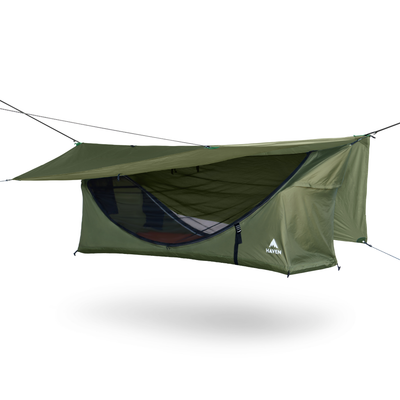
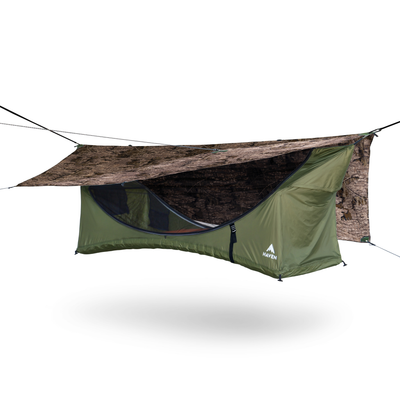
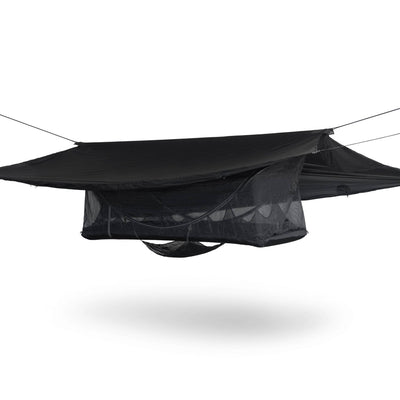
| Lay-flat hammock tent | Yes | Yes | Yes | Side and stomach sleepers; anyone sore on the ground |
| Rooftop tent | Yes | Yes | Yes | Vehicle-based trips |
Why we built a lay-flat hammock tent
Our founder, Derek, spent years sleeping badly outside: on a pad over rocks and roots, then in hammocks that bent him like a banana. The Haven is his answer: an insulated air mattress held flat in a suspended frame, with a rainfly and bug net built in. You sleep off the ground, on a flat surface, in whatever position you sleep in at home. The design is explained in The Secret Design Behind the Haven Tent, and what we mean by an outdoor sleep system is on our hub page.
It has trade-offs. Each Haven sleeps one person (285 lb rating, or 350 lb for the Safari), it needs two trees, a stand or a hitch mount, and it's heavier than a bare hammock or an ultralight tent. When a ground tent is the better choice is covered in Haven vs Ground Tents.

Match the setup to what keeps you awake
The best shelter for sleep depends on what's waking you up. Start there:
| What keeps you awake | What usually helps |
|---|
| Rocks, roots or a slope | A level site, a thicker pad, or getting off the ground (cot or hammock tent) |
| Sore hips or shoulders | More cushioning, or a flat bed off the ground; see Camping With Back, Hip or Joint Pain |
| Cold from below | Better insulation underneath (why it matters even off the ground) |
| Heat | Shade, airflow and a lighter bag; hammock tents in hot weather |
| Bugs | A shelter you can zip fully closed |
| Early light | An eye mask, or pitch where morning shade falls |
| Noise | Earplugs, and a site away from roads and busy loops |
| Wind and rain | A shelter pitched for storms; hammock tent vs tent in rain and wind |
| Feeling cramped | A roomier tent, or a wider bed such as a 30 in Haven |
Comfort tips whatever you sleep in
- Test at home. A backyard night tells you more than a spec sheet.
- Dial in your bed. Inflate pads fully and top them off at bedtime. In a hammock, get the hang angle right (guide).
- Dress for the night's low. Bring a bag or quilt rated below it, and sleep in a dry layer.
- Bring a real pillow and earplugs.
- Vent your shelter to keep condensation down (managing condensation).
Find the right setup for you
← Back to Adventure Journal
<div class="dynamic-checkout__content" id="dynamic-checkout-cart" data-shopify="dynamic-checkout-cart"> <shopify-accelerated-checkout-cart wallet-configs="[{"supports_subs":true,"supports_def_opts":false,"name":"shop_pay","wallet_params":{"shopId":11057397823,"merchantName":"Haven Tents","personalized":true}},{"supports_subs":true,"supports_def_opts":false,"name":"paypal","wallet_params":{"shopId":11057397823,"countryCode":"US","merchantName":"Haven Tents","phoneRequired":true,"companyRequired":false,"shippingType":"shipping","shopifyPaymentsEnabled":true,"hasManagedSellingPlanState":false,"requiresBillingAgreement":true,"gatewayType":"CONNECTED","merchantId":"AT9YPQVBATPVS","sdkUrl":"https://www.paypal.com/sdk/js?components=buttons\u0026commit=false\u0026currency=USD\u0026locale=de_DE\u0026client-id=AexZEtAxk09Ncgj6FSWFFyGKbxxAZ_LTyJ2DPdJWl1YUlecinmc5AfIaRF2qYjWlusWahlzz6SVkY5Ci\u0026merchant-id=AT9YPQVBATPVS\u0026intent=authorize","serviceableCountryCodes":["AC","AD","AE","AF","AG","AI","AL","AM","AO","AR","AT","AU","AW","AX","AZ","BA","BB","BD","BE","BF","BG","BH","BI","BJ","BL","BM","BN","BO","BQ","BR","BS","BT","BW","BY","BZ","CA","CC","CD","CF","CG","CH","CI","CK","CL","CM","CN","CO","CR","CV","CW","CX","CY","CZ","DE","DJ","DK","DM","DO","DZ","EC","EE","EG","EH","ER","ES","ET","FI","FJ","FK","FO","FR","GA","GB","GD","GE","GF","GG","GH","GI","GL","GM","GN","GP","GQ","GR","GS","GT","GW","GY","HK","HN","HR","HT","HU","ID","IE","IL","IM","IN","IO","IQ","IS","IT","JE","JM","JO","JP","KE","KG","KH","KI","KM","KN","KR","KW","KY","KZ","LA","LB","LC","LI","LK","LR","LS","LT","LU","LV","LY","MA","MC","MD","ME","MF","MG","MK","ML","MM","MN","MO","MQ","MR","MS","MT","MU","MV","MW","MX","MY","MZ","NA","NC","NE","NF","NG","NI","NL","NO","NP","NR","NU","NZ","OM","PA","PE","PF","PG","PH","PK","PL","PM","PN","PS","PT","PY","QA","RE","RO","RS","RU","RW","SA","SB","SC","SD","SE","SG","SH","SI","SJ","SK","SL","SM","SN","SO","SR","SS","ST","SV","SX","SZ","TA","TC","TD","TF","TG","TH","TJ","TK","TL","TM","TN","TO","TR","TT","TV","TW","TZ","UA","UG","UM","US","UY","UZ","VA","VC","VE","VG","VN","VU","WF","WS","XK","YE","YT","ZA","ZM","ZW"]}}]" access-token="20cee07b2f5277b40ccae45e245d3c77" buyer-country="US" buyer-locale="de" buyer-currency="USD" shop-id="11057397823" cart-id="d3ea361b890418acd6572921eaed2099" enabled-flags="["a1d1f9a1","f5afabb3","370070f3","b311f899"]" > <div class="wallet-button-wrapper"> <ul class='wallet-cart-grid wallet-cart-grid--skeleton' role="list" data-shopify-buttoncontainer="true"> <li data-testid='grid-cell' class='wallet-cart-button-container'><div class='wallet-cart-button wallet-cart-button__skeleton' role='button' disabled aria-hidden='true'> </div></li><li data-testid='grid-cell' class='wallet-cart-button-container'><div class='wallet-cart-button wallet-cart-button__skeleton' role='button' disabled aria-hidden='true'> </div></li> </ul> </div> </shopify-accelerated-checkout-cart> </div>



Comments (0)
No comments yet — be the first!
Leave a Comment